What Elite Sport Taught Falko Krismayr About Building in Network Marketing
Motivation may help someone begin. Discipline determines whether the work continues after the novelty fades and before external validation arrives.
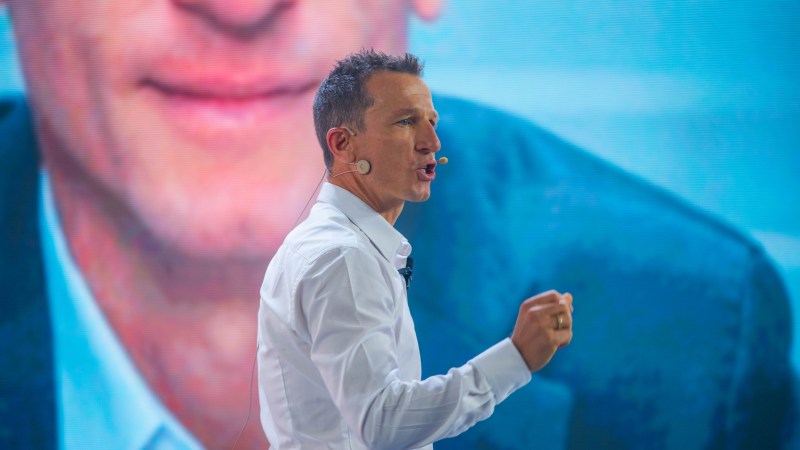
Falko Krismayr
You're reading Entrepreneur United Kingdom, an international franchise of Entrepreneur Media.
Ski jumping gives spectators only a few seconds of visible performance. Those seconds conceal years of training, repetition, physical control, and decisions made when no audience is watching. Long before Falko Krismayr entered network marketing, the sport taught him the lesson that now defines his approach to business: extraordinary success rarely comes from a burst of motivation. It is built through disciplined effort, consistent execution, and a willingness to invest long before the results become visible.
Falko grew up as the third of six children on a mountain farm in the Austrian Alps. A few years after watching a Finnish ski jumper compete at the Calgary Winter Olympics, he left home at 12 to pursue the sport himself. He started later than many of his peers and finished last in his first season. Nothing about that beginning suggested rapid success. Improvement required him to return to the work, repeat the fundamentals, and accept that effort and reward would not arrive at the same time.
He eventually competed at international level, but the deeper lesson was formed during the years before that result. An athlete cannot train only when motivation is high or conditions are favourable. Technical ability develops through ordinary sessions, difficult days, and corrections repeated until they become instinctive. Short periods of intensity may create momentum. Sustained discipline builds the capacity to perform when the moment finally arrives.
When his competitive career ended, Falko moved into coaching. He worked first with young athletes and later with olympic and national teams in Austria, Germany, and Finland. The role expanded his understanding of performance. As an athlete, he was responsible primarily for his own execution. As a coach, he had to observe, communicate, adapt, and help both individual athletes and entire teams improve under pressure.

Coaching showed him that leadership cannot depend on the leader’s personal drive alone. Standards must be understood by others, knowledge has to be transferable, and development must continue after the initial excitement disappears. This became relevant when Falko entered network marketing in 2014 as a customer and a sceptic. After studying the profession, he committed to building a business in April of that year.
He recognised a familiar gap between visible outcomes and the work required to produce them. People may be attracted by stories of income, growth, or personal freedom, just as spectators remember the successful jump. Far less attention is given to the years of learning, rejection, service, and repetition that can precede a meaningful result. For Falko, understanding the time horizon from the very beginning is an important building block of a sustainable network marketing business.
The principle was tested early. About a year after starting, Falko left professional sport to focus on network marketing full time. Three months later, the company shut down, and his income disappeared. He then had to find a new network marketing company, help those who wanted to continue transitioning to the new company, and create a foundation from which they could rebuild together.
Sport had taught Falko that emotion alone could not overcome a setback. He had learned to analyse what went wrong, make the necessary adjustments, and apply those changes consistently. A failed jump is reviewed before the athlete returns to the hill. Falko brought the same discipline to the transition to the new company. Resilience, in this context, meant remaining useful to other people while beginning again himself.
The experience also explains his resistance to the more theatrical side of entrepreneurship. Lifestyle imagery, rapid transformation, and exceptional income stories can attract attention, but they can also hide the work and deepen public scepticism. Falko calls himself a network marketer and believes the profession should be judged by education, consistency, service, and the quality of leadership it develops.
“You have to invest long before you see visible results,” Falko says. “If you want outstanding success, you have to be willing to put in outstanding effort.”
This philosophy now informs Network Marketing Mastery, the public platform he shares with Esther Wilhelm. It includes a book, a free online course, educational content, and a free monthly coaching call focused on sustainable business building. Its purpose is not to promise a particular outcome. Effort alone cannot guarantee success. The aim is to make the standards and time horizon clear, because an exceptional outcome cannot reasonably be expected from inconsistent commitment.
Ski jumping and business operate in different worlds, but both expose the discrepancy between temporary interest and genuine commitment. Motivation may help someone begin. Discipline determines whether the work continues after the novelty fades and before external validation arrives. The lesson Falko carried from elite sport is therefore relevant far beyond network marketing. Anyone who wants to build something exceptional must be prepared to invest before the evidence appears, execute consistently when the work feels ordinary, and understand that outstanding ambition demands a serious standard of effort.
Ski jumping gives spectators only a few seconds of visible performance. Those seconds conceal years of training, repetition, physical control, and decisions made when no audience is watching. Long before Falko Krismayr entered network marketing, the sport taught him the lesson that now defines his approach to business: extraordinary success rarely comes from a burst of motivation. It is built through disciplined effort, consistent execution, and a willingness to invest long before the results become visible.
Falko grew up as the third of six children on a mountain farm in the Austrian Alps. A few years after watching a Finnish ski jumper compete at the Calgary Winter Olympics, he left home at 12 to pursue the sport himself. He started later than many of his peers and finished last in his first season. Nothing about that beginning suggested rapid success. Improvement required him to return to the work, repeat the fundamentals, and accept that effort and reward would not arrive at the same time.
He eventually competed at international level, but the deeper lesson was formed during the years before that result. An athlete cannot train only when motivation is high or conditions are favourable. Technical ability develops through ordinary sessions, difficult days, and corrections repeated until they become instinctive. Short periods of intensity may create momentum. Sustained discipline builds the capacity to perform when the moment finally arrives.
Entrepreneur UK
Entrepreneur Staff