Britain’s Untapped Advantage: Why Women Remain Our Most Underleveraged Economic Asset
UK progress in female leadership masks structural barriers to power.
Satellite Energy Systems
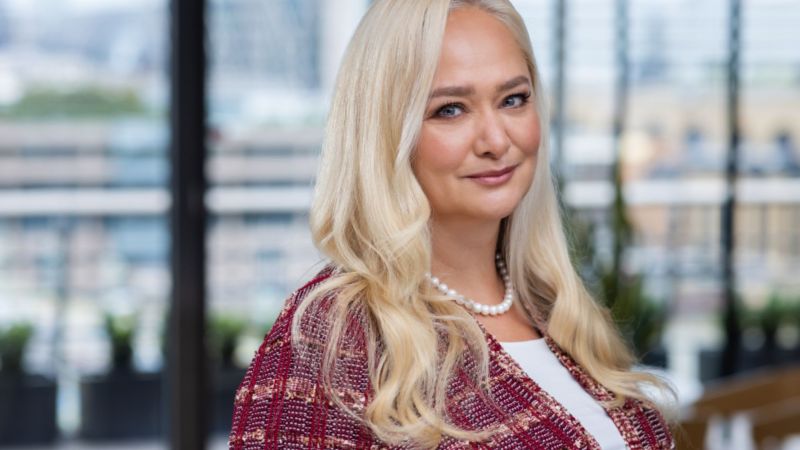
Lubov Chernukhin, a British businesswoman, investor and philanthropist
Opinions expressed by Entrepreneur contributors are their own.
You're reading Entrepreneur United Kingdom, an international franchise of Entrepreneur Media.
The UK can rightly celebrate progress. The latest FTSE Women Leaders Review shows women now hold more than 43% of board roles across the FTSE 350 and around 35% of leadership positions. Nearly three quarters of FTSE 350 boards have 40% or above leadership positions held by women. This is an international success story. However, statistics can flatter to deceive; representation is not the same as power. Women remain underrepresented in the four roles that truly shape corporate direction: Chair, Chief Executive Officer, Finance Director and Senior Independent Director. It may appear, that in compliance with externally imposed targets and to appear to march with the times, big business has filled Board Rooms with more women, but those women continue to have marginal influence on the business itself. Female Chief Executive numbers have even edged down. If we are serious about growth, productivity and competitiveness, we must stop treating female leadership as a diversity metric and start treating it as an economic strategy driven by economic and educational incentives.
The problem is structural. Our economic system was designed around a linear, uninterrupted education and career model, including early acceleration, continuous full-time employment, peak earnings and retirement. This model is aimed at men and does not reflect the lived reality of most women. Instead of adjusting the economic system to reflect this reality, women were hoodwinked into an impossible challenge of “having it all”. Women are now expected to combine professional contribution with primary responsibility for family life. These unrealistic demands have never been faced by men. The reality of this straddled position for women is a constant compromise on all fronts leading to poorer quality outcomes both at work and at home resulting in lower pay and work positions and reduced quality of family life, child rearing and collapsing birth rates.
Motherhood continues to carry a structural economic penalty, which narrows the executive pipeline to force an “either/or” choice for women between career or family. Highly capable women step off the corporate ladder just as they approach senior leadership or avoid high-growth sectors altogether because the risk of interruption is too high. This is not a social issue; it is a capital allocation failure. It is also a profound social challenge that goes to the heart of our societal survival. An economy that structurally sidelines mothers is not only inefficient, but also unsustainable. When 50% of the society doesn’t contribute to an economy to their full potential and the society cannot maintain replacement population growth model, the society will fail, its culture will fade away and both will invariably be replaced by the imported economic contributors.
As a country we invest heavily in educating women and then fail to retain and fully deploy that talent. This destroys economic value and social coherence. Businesses lose experienced employees with a varied perspective, investors lose returns, the state loses tax revenue, and productivity suffers. In an era of constrained growth, leaving half the talent pool partially utilised is a strategic financial and political error. If we want to unlock the billions in potential growth associated with fuller female participation, we need structural reform, not just celebration of percentages. We need practical shifts that make a meaningful difference.
First, we must normalise and promote the concept of a second career. Careers should not be a single uninterrupted race. Women should be able to build one career early on and another later, after raising children, without being economically penalised. Some countries already recognise this. Hungary, for example, offers lifelong income-tax reductions for working mothers of 25% per child for life when women return to work after raising their children. The UK should adopt this example as well as design its own model, such as state-backed university or professional education loans specifically for women re-entering the workforce. That is not a subsidy, it is an investment. Expecting women to re-enter competitive sectors without funded access to updated qualifications and technical skills is economically short-sighted and structurally unfair. Experienced women returning in their late thirties or forties bring sound judgement and maturity, strong work ethic, fresh perspective, and leadership capabilities that strengthen organisations.
Second, we need to make it easier for women who chose to do so to combine work and motherhood without paying a long-term financial penalty. Too many women lose momentum and income at the point they have children. Practical measures such as tax-deductibility of private childcare and tax incentives for employers for retention during and after maternity leave would make a real difference. The employers alone cannot shoulder the burden of retention especially in a struggling economic climate. They should be incentivised to create work-place nurseries and day-care like in Belgium and Denmark. If those were tax deductible or even partially subsidised by the State, it would go a very long way to close the national childcare shortage gap, allow companies to retain their valuable employees and permit women to continue uninterrupted professional growth.
Third, we must move beyond representation and focus on real economic power. Influence does not come from titles alone; it comes from controlling budgets, leading revenue and making investment decisions. More women need to run profit and loss divisions, lead major projects and sit where capital is allocated. If business knew that investment in women over their careers is net positive, it would back women into revenue generating roles early and not steer them into support functions due to the current view that they will “marry, get pregnant and leave anyway”.
Fourth, given the number of women who choose entrepreneurship over the unfairly stacked and often misogynistic corporate career path, financial regulators must explore the process of small business loan approvals for female applicants. While the World Bank micro lending programmes, in for example Africa, lend exclusively to women based on their high statistical repayment rate, in the UK women are less likely to receive business funding than men. In early stage/seed funding, one report found female founders were about 31% less likely to be successful in getting funding than male founders. Female entrepreneurs also receive less in small business loans. Data from analysis of the UK Start Up Loans programme (a key small business lending scheme) shows female-led firms got nearly £30m less than men in 2023, and all-female founder teams only raised 162 deals worth £232m versus 1,413 deals worth £6.5bn for all-male teams. As a result, on average, female founder teams’ share of total investment value remained around 2.0-2.8% of equity investment. Indeed, LSE report women may be less likely to apply for finance or are perceived differently by lenders due to stereotypes and risk assessments, resulting in lower access to credit despite similar business viability.
This brings us back to the first point of this article. We must change the stereotypical career progression model so that it suits the other 50% of our productive population. We need to elevate the role of motherhood in the survival of our culture and preservation of our country. We must incentivise employers to accommodate women who chose to combine motherhood and work. We need to have education funding available for women who re-enter workforce after raising their children. Education that would enable them to be a competitive up to date economic participant, able to get business finance, progress to executive roles, and to drive growth and prosperity for our country.
Through my long and varied career, I have seen capital deployed at scale and watched what happens when the right people are trusted with responsibility. Opportunity is everywhere, but it chooses the well prepared. My advice to women is simple. Build competence that cannot be questioned and trust your experience and knowledge. Choose roles that teach you how money is made and decisions are taken. Deliver results consistently. Be clear about your point of view and defend it calmly with evidence. Do not rely on being liked; rely on being valuable. Find mentors who will challenge you, not flatter you, and be brave enough to take calculated risks when opportunity appears. Confidence is not a personality trait it is the by-product of preparation and performance. Most importantly take your career very seriously and plan it out. Include years of motherhood in your planned life path if that is what you want and make sure to plan your return to a self-fulfilling role in the workforce.
The UK has made progress, and we should acknowledge it, but board statistics are not the destination. If we want faster growth, stronger companies, a more resilient economy and cultural cohesion we cannot afford to waste capability. Gender balance is not about optics or fairness alone; it is about economic strength and the UK’s future. It is not about showcasing fairness and equality; it is about the UK thriving and preserving its cultural identity and economic security. In a world that is becoming more competitive and less forgiving, we should be using every advantage available to us. Fully backing women in business is not a concession, but rather a strategic decision that will determine whether we lead or fall behind.
The UK can rightly celebrate progress. The latest FTSE Women Leaders Review shows women now hold more than 43% of board roles across the FTSE 350 and around 35% of leadership positions. Nearly three quarters of FTSE 350 boards have 40% or above leadership positions held by women. This is an international success story. However, statistics can flatter to deceive; representation is not the same as power. Women remain underrepresented in the four roles that truly shape corporate direction: Chair, Chief Executive Officer, Finance Director and Senior Independent Director. It may appear, that in compliance with externally imposed targets and to appear to march with the times, big business has filled Board Rooms with more women, but those women continue to have marginal influence on the business itself. Female Chief Executive numbers have even edged down. If we are serious about growth, productivity and competitiveness, we must stop treating female leadership as a diversity metric and start treating it as an economic strategy driven by economic and educational incentives.
The problem is structural. Our economic system was designed around a linear, uninterrupted education and career model, including early acceleration, continuous full-time employment, peak earnings and retirement. This model is aimed at men and does not reflect the lived reality of most women. Instead of adjusting the economic system to reflect this reality, women were hoodwinked into an impossible challenge of “having it all”. Women are now expected to combine professional contribution with primary responsibility for family life. These unrealistic demands have never been faced by men. The reality of this straddled position for women is a constant compromise on all fronts leading to poorer quality outcomes both at work and at home resulting in lower pay and work positions and reduced quality of family life, child rearing and collapsing birth rates.
Motherhood continues to carry a structural economic penalty, which narrows the executive pipeline to force an “either/or” choice for women between career or family. Highly capable women step off the corporate ladder just as they approach senior leadership or avoid high-growth sectors altogether because the risk of interruption is too high. This is not a social issue; it is a capital allocation failure. It is also a profound social challenge that goes to the heart of our societal survival. An economy that structurally sidelines mothers is not only inefficient, but also unsustainable. When 50% of the society doesn’t contribute to an economy to their full potential and the society cannot maintain replacement population growth model, the society will fail, its culture will fade away and both will invariably be replaced by the imported economic contributors.