How to Build a Hybrid Team That Actually Works
Building aligned hybrid teams through clarity, trust, communication, and intentional culture.
Branding London
Opinions expressed by Entrepreneur contributors are their own.
You're reading Entrepreneur United Kingdom, an international franchise of Entrepreneur Media.
Hybrid working is no longer a trend. It is the default for many modern organisations, and yet most teams are still getting it wrong. Not because of where people work, but because of how teams are designed, led, and experienced. Hybrid has not created new problems. It has exposed the ones that were already there. It does not fail at the logistical level, but at the behavioural one. Building a team that actually works in a hybrid model requires more than policies and platforms. It requires intention. Much like building a strong brand, it starts from within. From building Branding London to advising scaling businesses and global organisations, one thing has remained consistent. High performing teams do not happen organically. They are designed. The patterns are consistent, regardless of industry, size, or stage.
Clarity over flexibility
Flexibility is often positioned as the defining feature of hybrid work, but in reality it is the most
misunderstood. Too much flexibility without structure fragments teams. You get unclear
expectations, inconsistent communication, and a diluted experience. High performing teams prioritise clarity, with clear expectations, defined rhythms, and shared standards. Flexibility only works within a well understood framework, and without that, teams lose coherence. I learned this the hard way early on. When I first started my company, I leaned too far into flexibility. It felt right, but it created inconsistency. Different expectations, different ways of working, different interpretations of what good looked like. It was not until we introduced clearer structure that things started to click. Not less flexible, just more aligned.
Outcomes over visibility
In office environments, visibility often becomes a proxy for performance, but hybrid breaks that
model. The best teams measure impact, not activity, because being busy is not the same as being
effective. That requires clear outcomes, alignment on what success looks like, and trust in how
people get there. When you focus on outcomes, performance improves and ownership increases. This is something I see consistently, especially with early stage founders. The difference between traction and stagnation is rarely effort. It is clarity of direction. I have always believed this. Clarity scales. Ambiguity does not.
Communication as infrastructure
Most hybrid teams do not have a communication problem. They have a design problem, with too
many channels, no clear rules, and important information lost in noise. Across different organisations, the pattern is the same. Teams assume communication is happening because messages are being sent, but alignment is missing. Decisions are unclear, context is lost, and what follows is not a lack of communication, but a lack of structure. I remember a point where two people in the same team delivered completely different outputs to the same brief. Not because they were incapable, but because they had interpreted it differently. That was not a performance issue. It was a clarity issue. Strong teams treat communication like infrastructure. Clear channels, documented decisions, and structured check ins. If it matters, it should be visible.
Culture by design
In an office, culture is absorbed through proximity. In hybrid, that disappears, which means culture has to be intentional. Left alone, it weakens, but designed properly, it strengthens. One of the biggest shifts I noticed moving into hybrid environments was how quickly culture can drift when it is not reinforced. In an office, you pick things up without thinking, but in hybrid, nothing is absorbed by default. Everything has to be made visible. Strong cultures are built from the inside out. They are not what you say. They are what is consistently experienced.
Managers define the experience
In a hybrid model, managers carry more weight than ever. They define the day to day experience
of the organisation. I often say this to leadership teams. Your managers are not just delivering work, they are delivering the experience of your organisation. And in a hybrid model, that experience is often the only thing people consistently interact with. That requires managing outcomes, communicating clearly, and reinforcing values through behaviour. When leadership is aligned, the experience is consistent. Without that, everything drifts.
Discipline over noise
Technology enables hybrid working, but without discipline it creates noise. More tools lead to more duplication, more distraction, and more complexity. More does not create clarity, it dilutes it. Effective teams use fewer tools more intentionally, creating clarity on where work lives and reducing unnecessary meetings. The goal is alignment, not activity.
Trust as the foundation
Hybrid working runs on trust. Without it, organisations default to control, creating more check ins, more monitoring, and more friction. With it, teams operate with autonomy, speed, and
accountability. Trust is built through consistency, transparency, and delivery over time, and it compounds.
A more intentional way of working
Hybrid working is not just about where people sit. It is about how organisations think, forcing clarity in direction, expectations, and performance. That is why I approach this through a brand lens. Whether you are building a company, a team, or a brand, the principles are the same. What you tolerate becomes the standard. What you repeat becomes the culture. What you design becomes the experience. I have seen the same pattern again and again. The teams that perform are not the most flexible, they are the most aligned. They know what they are building, how they operate, and they are consistent in both.
Hybrid exposes the gaps, which also creates the opportunity to build something more intentional,
more focused, and more effective. If your internal experience is inconsistent, your external brand is already broken. Hybrid just makes that visible.
Hybrid working is no longer a trend. It is the default for many modern organisations, and yet most teams are still getting it wrong. Not because of where people work, but because of how teams are designed, led, and experienced. Hybrid has not created new problems. It has exposed the ones that were already there. It does not fail at the logistical level, but at the behavioural one. Building a team that actually works in a hybrid model requires more than policies and platforms. It requires intention. Much like building a strong brand, it starts from within. From building Branding London to advising scaling businesses and global organisations, one thing has remained consistent. High performing teams do not happen organically. They are designed. The patterns are consistent, regardless of industry, size, or stage.
Clarity over flexibility
Flexibility is often positioned as the defining feature of hybrid work, but in reality it is the most
misunderstood. Too much flexibility without structure fragments teams. You get unclear
expectations, inconsistent communication, and a diluted experience. High performing teams prioritise clarity, with clear expectations, defined rhythms, and shared standards. Flexibility only works within a well understood framework, and without that, teams lose coherence. I learned this the hard way early on. When I first started my company, I leaned too far into flexibility. It felt right, but it created inconsistency. Different expectations, different ways of working, different interpretations of what good looked like. It was not until we introduced clearer structure that things started to click. Not less flexible, just more aligned.
Outcomes over visibility
In office environments, visibility often becomes a proxy for performance, but hybrid breaks that
model. The best teams measure impact, not activity, because being busy is not the same as being
effective. That requires clear outcomes, alignment on what success looks like, and trust in how
people get there. When you focus on outcomes, performance improves and ownership increases. This is something I see consistently, especially with early stage founders. The difference between traction and stagnation is rarely effort. It is clarity of direction. I have always believed this. Clarity scales. Ambiguity does not.

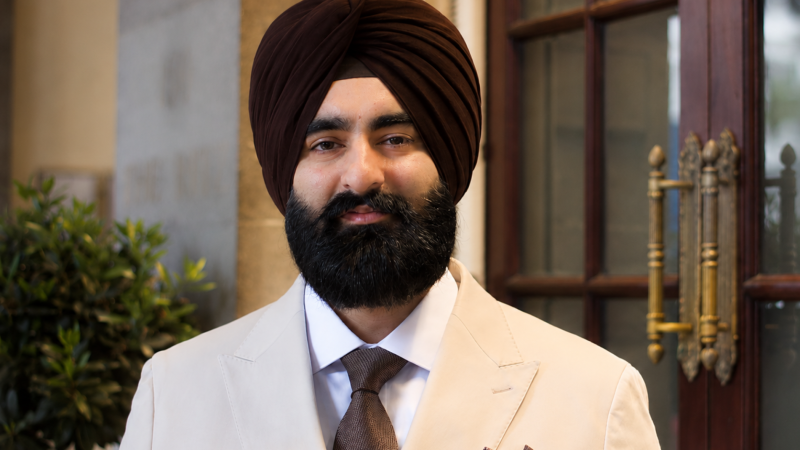
Sukhy Singh Cheema is a Non-Executive Director and Founder & CEO of Branding London, a... Read more