Why Britain’s SMEs Are Chasing Growth the Wrong Way
HSBC UK on why scalable businesses are built through resilience, cashflow discipline and steady momentum — not headline-making leaps
HSBC
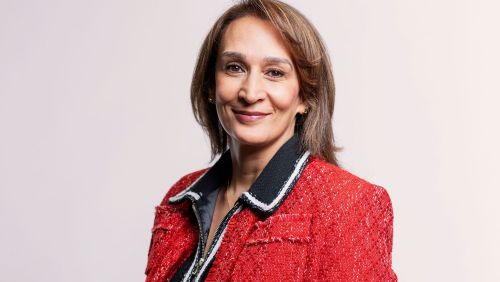
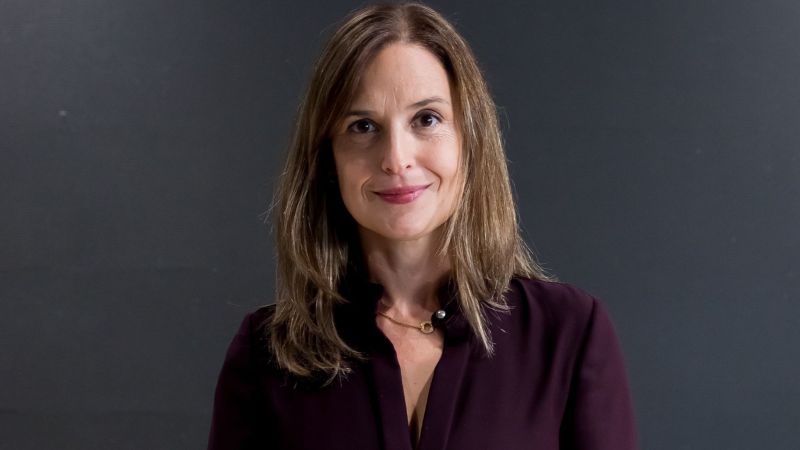
Anabela Figueiredo, Head of Revenue and Growth SME Business Banking HSBC UK
Opinions expressed by Entrepreneur contributors are their own.
You're reading Entrepreneur United Kingdom, an international franchise of Entrepreneur Media.
For years, the mythology around business growth has centred on scale at speed: the breakthrough launch, the transformative funding round, the expansion that changes everything overnight. But in Britain’s current economic climate, that thinking is starting to look outdated. As geopolitical instability, rising costs and fragile consumer confidence continue to reshape the landscape for SMEs, the businesses outperforming the market are often not the loudest or the fastest-growing. They are the most disciplined. The most operationally clear. The most financially resilient.
From inside HSBC UK, a different picture of “high-growth” is emerging – one less obsessed with spectacle and more focused on sustainable momentum. In practice, that means businesses tightening their proposition, understanding cashflow in forensic detail, and scaling in ways that do not create fragility. It also exposes a widening disconnect between how founders think funding works and how banks actually assess risk. Because while many entrepreneurs still approach growth as a single defining moment, lenders are increasingly looking for something less dramatic but more valuable: clarity, control, and the ability to grow without breaking the business underneath it. We talk to Anabela Figueiredo, Head of Revenue and Growth SME Business Banking HSBC UK to find out more…
From your role at HSBC UK, what is the single biggest misconception SMEs have about what it takes to grow right now?
That growth has to come from one defining step-change — a landmark deal, a major launch, a new site. In today’s environment, that can be a risky way to think. With the geopolitical landscape continuing to drive economic uncertainty, many SMEs are operating with less predictability around costs, demand and confidence. The businesses that are growing best are the ones building momentum through steady, repeatable progress: tightening their proposition, improving conversion, testing adjacent customer segments, and scaling delivery capacity in line with demand — all while keeping a close eye on cash. Uncertainty doesn’t make growth impossible; it changes how you do it. And it’s often in periods like this that the most adaptable businesses sharpen their focus, innovate faster, and find ways to thrive.
What actually makes a business “high-growth ready” in a bank’s eyes today – and what doesn’t matter as much as founders think?
Often it is less about a perfect pitch and more about whether the fundamentals are in place to scale with control.
First, the team. We look for leaders who can execute: they understand the moving parts of the business, they’re realistic about risks, and they’re prepared to back the plan with real commitment — including meaningful skin in the game.
Second, proof the model works. A proposition customers will pay for, evidence of demand through trading, and an operating set-up that can deliver at higher volumes — whether that’s suppliers, fulfilment, systems, or people.
Third, a clear near-term plan. The strongest cases are focused on the next 12–18 months: where growth will come from, what it will cost to deliver, and how funding will be used and repaid. What tends to matter less than founders expect is the current size of the business or a polished five-year forecast. In a more uncertain environment, credibility comes from clarity, traction, and a plan that stands up when you stress-test the assumptions.
Where do strong businesses most often fail in funding conversations, despite looking good on paper?
Working capital and cashflow clarity — not because they’re poorly run, but because growth can hide the pressure points. They’ll present a compelling story and healthy margins, but struggle to explain, in practical terms, how cash moves through the business: when money comes in, when it goes out, and what happens if one or two assumptions shift. In the current climate, that uncertainty is amplified — longer payment cycles, input cost volatility, or a single delayed customer receipt can quickly change the picture. What makes the difference is being able to show:
- a clear view of day-to-day cash needs and key dependencies (sales volumes, payment terms, stock cycles, supplier costs)
- a simple cashflow forecast with scenarios (base case, downside, and “growth is faster than expected”)
- and a funding ask that matches the timing of the cash cycle, not just the ambition.
That’s often the point where a good business becomes a fundable one.
When you assess SMEs, what tends to carry more weight in reality: the numbers, the narrative, or the team – and when does that change?
In reality it’s all three, but the order is usually team, narrative, then numbers — because growth is delivered by people, not spreadsheets.
- Start with the team: Are we looking at capable, motivated, and dynamic people who also have realistic expectations about what it’ll take to deliver?
- Then the narrative: Does the business plan clearly set out a genuine opportunity, and does it feel well thought through rather than just optimistic?
- Finally, the numbers: Do the forecasts look credible when you compare them with current and past trading, and do they make sense given the size of the opportunity? Also, is there meaningful skin in the game to show commitment?
What changes is the stage of the business. Earlier-stage SMEs lean more heavily on the team and the story. As a business becomes more established, the numbers carry more weight — particularly cash generation, resilience under stress, and how predictable the model is in a more uncertain environment.
What is the most common reason a funding application is quietly declined, even when it appears solid?
An application can look solid, but if there are gaps in the information or the assumptions can’t be evidenced it becomes difficult to get comfortable. In today’s environment, where conditions can change quickly, that need for clarity is even sharper. To help us assess an application as quickly and as smoothly as possible it is important we have all the relevant information and documents so we can gain a full understanding of the business, working capital needs, repayment capacity, customer concentration or margin sustainability.
If the opportunity isn’t the right fit right now, that insight can still be genuinely useful — it can help a founder reshape the ask, strengthen the evidence, or choose a more suitable type of funding next time. And sometimes it’s more practical than that: the application just needs a bit more detail to clear up expectations and the finer nuances. Founders may need extra support to answer follow-up questions, and frustratingly, if that detail doesn’t come through, it can become the blocker — even for an otherwise strong business.
How has your definition of a “scalable” business shifted in the past five years – and what’s driving that change?
It has shifted from “can you grow fast?” to “can you grow reliably without creating fragility — and do it in a way that gets easier and more efficient over time.” The last five years have made that unavoidable. Cost inflation, supply chain disruption, labour constraints — and a geopolitical backdrop that continues to drive economic uncertainty — have all exposed where growth plans rely on perfect conditions. So today, scalability looks like:
- margin resilience as volumes increase, not margin erosion
- operational maturity (processes, systems, controls) so delivery keeps pace with sales
- economies of scale that are real — unit costs coming down, productivity improving, overhead not rising linearly
- ecosystem-led growth: using your network of customers, suppliers and partners to spot adjacent opportunities — new routes to market, bundled offers, referrals, or partnerships that open up new segments without a big fixed-cost leap
- and a funding structure that matches the cash cycle, so growth doesn’t starve the business of working capital
Sometimes the most cost-efficient growth isn’t a major reinvention — it’s a smart extension. A bit of creativity, plus the right connections, can unlock expansion that’s quicker, lower-risk, and easier to execute.
From your position at HSBC UK, what structural gap do you still see between how SMEs think funding works and how it actually works?
Many SMEs still see funding as a single event — “I need a loan” — when in reality it’s a matching exercise between the need, the timing, and the right tool. Businesses might be trying to solve very different challenges: smoothing cashflow, bridging payment terms, buying equipment, funding stock, investing in growth, or protecting against volatility. Each of those points to different solutions, different evidence, and different ways of assessing affordability and risk. Without clear guidance, SMEs can end up asking for something that’s the wrong fit — or more expensive than it needs to be. The other part of the gap is expectations. Founders often underestimate how much the conversation is about cashflow and resilience, not just profitability — especially in a more uncertain environment. Closing the gap means simpler, practical signposting: plain-English options, what each is for, what “good” looks like, and what information will be needed upfront so businesses can move faster with more confidence.
If you could change one thing about how SMEs and banks interact today, what would make the biggest difference to business growth in the UK?
If I could change one thing, it would be to make the journey clearer and more joined-up — so SMEs can get to the right funding option quickly, with fewer surprises along the way. That starts with a more transparent, digital-first experience where businesses can compare suitable options. Then, as they scale, banks can lean in with the human value that really moves the needle: proactive support on cashflow, scenario planning, and making sure the funding structure keeps pace with the business. Less time decoding the process; more time focused on customers, growth, and creating value We’re always looking at where owners can be more efficient so they can focus on growing their business. My Business Finances is just one example – powered by Sage – it is now available in the HSBC UK business account and designed to easily manage finances and accounting in one place and allows the filing of tax returns directly to HMRC from the HSBC UK business account.
For years, the mythology around business growth has centred on scale at speed: the breakthrough launch, the transformative funding round, the expansion that changes everything overnight. But in Britain’s current economic climate, that thinking is starting to look outdated. As geopolitical instability, rising costs and fragile consumer confidence continue to reshape the landscape for SMEs, the businesses outperforming the market are often not the loudest or the fastest-growing. They are the most disciplined. The most operationally clear. The most financially resilient.
From inside HSBC UK, a different picture of “high-growth” is emerging – one less obsessed with spectacle and more focused on sustainable momentum. In practice, that means businesses tightening their proposition, understanding cashflow in forensic detail, and scaling in ways that do not create fragility. It also exposes a widening disconnect between how founders think funding works and how banks actually assess risk. Because while many entrepreneurs still approach growth as a single defining moment, lenders are increasingly looking for something less dramatic but more valuable: clarity, control, and the ability to grow without breaking the business underneath it. We talk to Anabela Figueiredo, Head of Revenue and Growth SME Business Banking HSBC UK to find out more…
From your role at HSBC UK, what is the single biggest misconception SMEs have about what it takes to grow right now?
That growth has to come from one defining step-change — a landmark deal, a major launch, a new site. In today’s environment, that can be a risky way to think. With the geopolitical landscape continuing to drive economic uncertainty, many SMEs are operating with less predictability around costs, demand and confidence. The businesses that are growing best are the ones building momentum through steady, repeatable progress: tightening their proposition, improving conversion, testing adjacent customer segments, and scaling delivery capacity in line with demand — all while keeping a close eye on cash. Uncertainty doesn’t make growth impossible; it changes how you do it. And it’s often in periods like this that the most adaptable businesses sharpen their focus, innovate faster, and find ways to thrive.

Patricia Cullen • Features Writer
Entrepreneur Staff