What school doesn’t always teach you about success
Adam Thornhill believes schools must better prepare young people for life.
You're reading Entrepreneur United Kingdom, an international franchise of Entrepreneur Media.
Adam Thornhill left school at 15 and started his first business at 17. Now 27, he has built a seven-figure portfolio in Dubai – and believes young people need an education that goes well beyond exam results. Born to a single mother in Anfield, Liverpool, and leaving school at 15 without passing his GCSEs, Thornhill took a route into business that few would recommend. Today, he has built a portfolio of businesses in Dubai, with his consultancy, Relate, on course to generate £2m in turnover. “I think I’ve always had big ambitions. I was drawn to building something for the future, and I knew right from the start that I wasn’t going to follow the traditional path,” he says. His story might suggest an argument for doing things differently. But his message to the next generation is rather different: stay in school, by all means, but make sure you leave knowing how the real world works.

While Thornhill may have missed out on a typical education, he has spent the past decade acquiring an intensely practical one. Contracts, credit scores, insurance, financial decisions and commercial risk have all been part of the learning curve, sometimes at a considerable cost. The experience has given him a perspective on the realities of working life that he believes many young people are not adequately prepared for. What he had to learn through experience, he argues, should be part of the preparation every teenager receives before entering the world of work.
There was no grand entrepreneurial blueprint, nor some carefully choreographed leap into the unknown. His first business, launched at 17, was born of a simple calculation: he wanted greater control over his earning potential. “It was a mix of ambition and money. I felt there was a ceiling on what I could earn working for someone else. Starting a business at 17 was a leap of faith, but I wanted to back myself and see how far I could go.” For Thornhill, business offered something more compelling than a salary: the freedom to determine his own direction and shape his own future. That instinct has taken him a long way. Britain’s NEET challenge remains significant. According to the Office for National Statistics, an estimated 981,000 young people aged 16 to 24 – equivalent to 13% of the age group – were not in education, employment or training between April and June 2026. The figures have brought renewed scrutiny of how well the country prepares teenagers for working life. It is tempting to search for a single explanation, or to interpret the numbers as evidence of a generation lacking ambition. Thornhill, however, is more interested in the talent that risks being overlooked. “I think we can overlook a lot of talent when we put too much weight on exam results,” he says. “I’ve seen plenty of people who struggled academically but had real strengths in other areas. Young people need more chances to find out what they’re good at and see where it could take them.” His argument is not that everyone should become an entrepreneur, or that academic achievement has little value. Rather, it is that examination results offer only one measure of a young person’s potential. Entrepreneurship is no universal solution to youth disengagement, and commercial success is never guaranteed. The challenge, as Thornhill sees it, is to give young people more opportunities to discover their strengths and develop them into something meaningful.
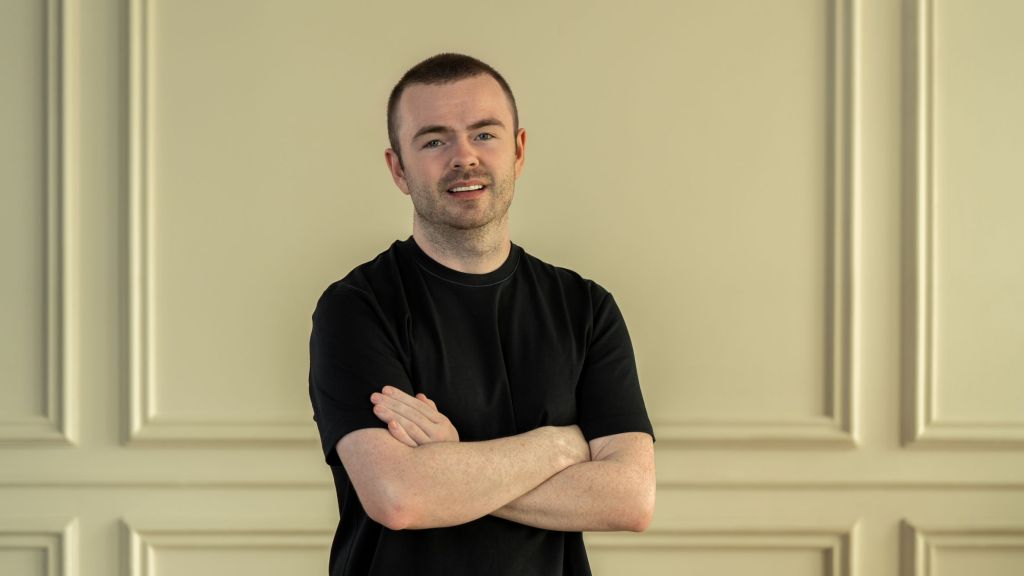
Thornhill knows this from experience. He also knows that leaving school early is not the shortcut to independence it might appear to a restless teenager. “I often say I started learning when I left school because that’s when I had to make my own decisions and live with the mistakes,” he says. What followed was a less forgiving education. Contracts, credit, insurance and the mechanics of establishing a company were no longer abstract subjects, but matters with real financial and professional consequences. There was nobody to explain the small print after the fact. “I wish someone had sat me down and gone through the basics with me. What am I agreeing to when I sign a contract? Why does my credit score matter? What do I actually need to do to set up a business?” It is a deceptively simple curriculum. Understanding an agreement, recognising your employment rights or navigating the financial obligations of running a business can shape the course of a working life. These are not peripheral skills to be picked up by chance; they are fundamental to navigating adulthood. “I’d have gone into work with a lot more confidence if I’d had the chance to learn some of those things before I needed them,” he says. For Thornhill, the answer lies in making practical knowledge a more meaningful part of education. Young people need to understand the commitments they take on when entering employment, the financial decisions they will face and the responsibilities that come with running a business. These are lessons that matter whether someone eventually becomes an entrepreneur, joins a company or pursues an entirely different career. His own journey has involved plenty of learning by doing, and the route from Anfield to Dubai has come at a personal cost. He is candid about the less glamorous side of building a business while his contemporaries were enjoying their youth. “The successes and also the failures along the way have given me confidence in myself. Whatever comes up in work or in life, I trust myself to handle it.”
That confidence has been hard-won. While friends were out enjoying themselves, he was working. “I did miss out on a lot of time with my mates, especially when I was younger. There were plenty of days when they were out and I was working on the businesses.” It is an admission that gives his story some necessary perspective. Entrepreneurship is often presented as an escape from the constraints of ordinary employment, but the freedom it promises can be conditional. Being your own boss does not necessarily mean having more time; in the early years, it can mean having considerably less. That early investment in learning the business has since begun to pay off. Relate began with Thornhill offering his services for free, using the experience to learn the business from the ground up. Today, the consultancy is targeting £2m in turnover. “I’m always thinking about what more we can do, but I do take pride in how far Relate has come. I started out offering my services for free so I could learn as I went. To have built a business that’s now targeting £2m in turnover feels like a real achievement.”
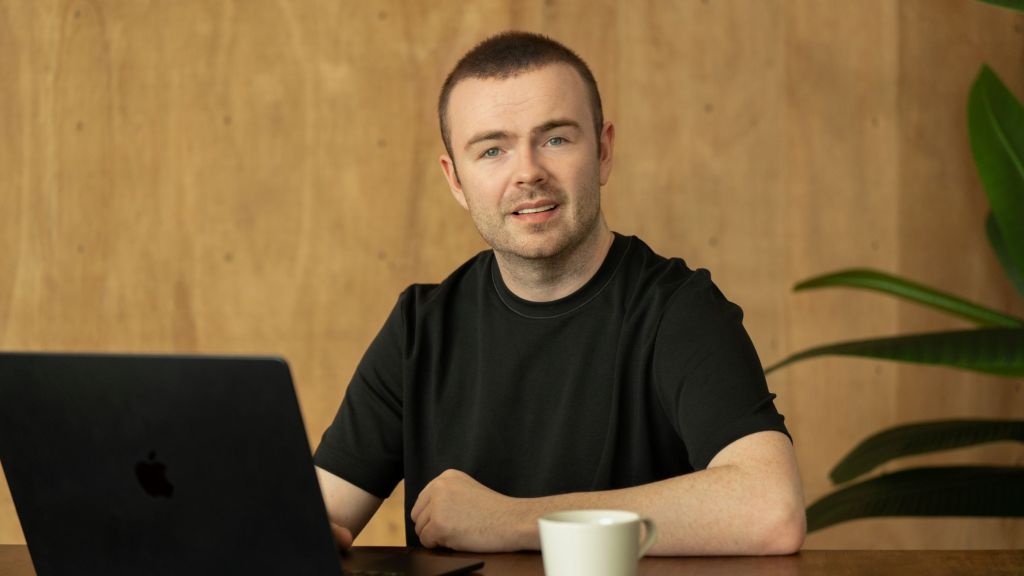
Thornhill has little intention of standing still. For entrepreneurs, success rarely means the end of the ambition; more often, it creates the appetite for the next challenge. He is proud of what he has built, but already has his sights set on what comes next. He intends to make 2027 a landmark year, beginning with the launch of his fifth company, Player Two, an online coaching platform for gamers that will pair players with coaches to help them improve at their chosen games. The idea goes beyond gaming itself. Thornhill credits it with helping him maintain friendships and wants Player Two to give others similar opportunities to connect, build confidence and socialise. The company also plans to donate 20% of its profits to charities and projects supporting mental health and tackling cyberbullying. It is an interesting extension of his business interests, bringing a social purpose to an otherwise commercial venture. Alongside this, he is planning further expansion for Relate and hopes to devote more time to the causes he cares about. Balancing all three ambitions may prove to be a challenge in itself.
For someone who started out with little more than the belief that he could earn more by backing himself, the scale of what has followed is striking. Yet the most revealing aspect of Thornhill’s story may not be the seven-figure portfolio, the move to Dubai or the £2m turnover target. It is what he wants other young people to take from his experience. He has no desire to romanticise leaving school at 15. The independence he gained came with responsibilities for which he was poorly prepared, and he believes the next generation deserves a better starting point. His advice to teenagers is refreshingly unambiguous: stay in school, take the opportunities available and learn the things that will matter when the classroom door closes. Thornhill may have found his education in the world of business. He would rather the next generation did not have to learn quite so much of it the hard way.
Adam Thornhill left school at 15 and started his first business at 17. Now 27, he has built a seven-figure portfolio in Dubai – and believes young people need an education that goes well beyond exam results. Born to a single mother in Anfield, Liverpool, and leaving school at 15 without passing his GCSEs, Thornhill took a route into business that few would recommend. Today, he has built a portfolio of businesses in Dubai, with his consultancy, Relate, on course to generate £2m in turnover. “I think I’ve always had big ambitions. I was drawn to building something for the future, and I knew right from the start that I wasn’t going to follow the traditional path,” he says. His story might suggest an argument for doing things differently. But his message to the next generation is rather different: stay in school, by all means, but make sure you leave knowing how the real world works.
While Thornhill may have missed out on a typical education, he has spent the past decade acquiring an intensely practical one. Contracts, credit scores, insurance, financial decisions and commercial risk have all been part of the learning curve, sometimes at a considerable cost. The experience has given him a perspective on the realities of working life that he believes many young people are not adequately prepared for. What he had to learn through experience, he argues, should be part of the preparation every teenager receives before entering the world of work.
There was no grand entrepreneurial blueprint, nor some carefully choreographed leap into the unknown. His first business, launched at 17, was born of a simple calculation: he wanted greater control over his earning potential. “It was a mix of ambition and money. I felt there was a ceiling on what I could earn working for someone else. Starting a business at 17 was a leap of faith, but I wanted to back myself and see how far I could go.” For Thornhill, business offered something more compelling than a salary: the freedom to determine his own direction and shape his own future. That instinct has taken him a long way. Britain’s NEET challenge remains significant. According to the Office for National Statistics, an estimated 981,000 young people aged 16 to 24 – equivalent to 13% of the age group – were not in education, employment or training between April and June 2026. The figures have brought renewed scrutiny of how well the country prepares teenagers for working life. It is tempting to search for a single explanation, or to interpret the numbers as evidence of a generation lacking ambition. Thornhill, however, is more interested in the talent that risks being overlooked. “I think we can overlook a lot of talent when we put too much weight on exam results,” he says. “I’ve seen plenty of people who struggled academically but had real strengths in other areas. Young people need more chances to find out what they’re good at and see where it could take them.” His argument is not that everyone should become an entrepreneur, or that academic achievement has little value. Rather, it is that examination results offer only one measure of a young person’s potential. Entrepreneurship is no universal solution to youth disengagement, and commercial success is never guaranteed. The challenge, as Thornhill sees it, is to give young people more opportunities to discover their strengths and develop them into something meaningful.

Patricia Cullen • Features Writer
Entrepreneur Staff