Why Small Individual Donations May Hold More Collective Power Than Many People Realise in Community Change
Vineyard India Compassion Trust
You're reading Entrepreneur United Kingdom, an international franchise of Entrepreneur Media.
Large fundraising campaigns and corporate philanthropy often dominate conversations surrounding charitable giving. Yet individual donors continue to represent the largest source of charitable contributions across the United States. Individual giving accounts for the majority of charitable donations nationwide each year, reinforcing the significant role collective community support continues to play even during periods of economic uncertainty.
At the same time, many nonprofit organisations continue navigating challenges tied to declining donor confidence and financial pressure affecting households globally. Charitable giving in the United States fell by nearly $20 billion following changes tied to the Tax Cuts and Jobs Act, reflecting a broader decline in donor participation and smaller household contributions in recent years. Within that environment, organisations focused on long-term community support are increasingly emphasising the importance of collective individual action and sustained grassroots participation.
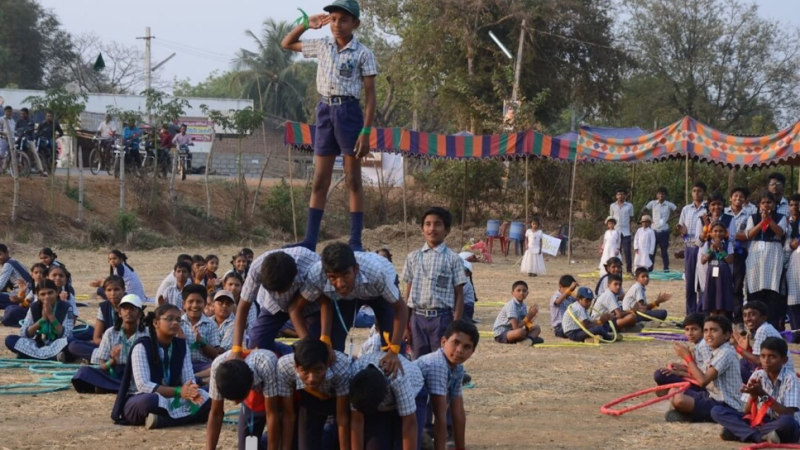
Tim Wilbur, co-founder of Vineyard India Compassion Trust, believes part of that decline is connected to how people perceive the value of small contributions. Vineyard India Compassion Trust is an organisation focused on supporting education for children in underserved communities throughout rural India. According to him, many individuals want to help but often assume meaningful impact requires large financial resources.
“A lot of people feel hopeless because they think their small contribution cannot truly change anything,” Wilbur says. “What many do not realise is that collective action has always been one of the strongest forces behind long-term change.”
From Wilbur’s perspective, this mindset becomes especially important in communities where relatively small amounts of funding can create substantial educational opportunities. He explains that Vineyard India Compassion Trust can provide a child with education for an entire year for approximately $300. In practical terms, that means 60 people contributing a one-time donation of $5 each can collectively support a child’s education for a full academic year.
“We are not talking about enormous financial commitments,” Wilbur says. “We are talking about ordinary people coming together in a way that completely changes the direction of a child’s life.”
According to Wilbur, the impact of those contributions often extends well beyond tuition itself. The organisation’s initiatives include educational support, school resources, and community-focused programs through the New Song Community School. From his experience, access to stable education frequently influences nutrition, confidence, family stability, and future career opportunities.
Wilbur notes that many families within rural communities have historically faced limited access to consistent educational pathways. Over time, he has watched students pursue opportunities in professional industries that previous generations within their families never imagined possible. According to him, those transitions gradually influence how entire communities think about education, employment, and long-term opportunity.
“The effects continue long after the classroom experience ends,” Wilbur explains. “Education influences families, future generations, and the confidence communities carry into the future.”
Research increasingly supports the broader societal value of education-focused investment. One additional year of education can bring a 10% increase in an individual’s earnings, while each additional year is also associated with an 18% higher gross domestic product per capita. These long-term effects help explain why education-focused giving is often viewed as one of the most sustainable forms of social investment.
Wilbur also believes there is an emotional dimension connected to giving that is sometimes overlooked in financial discussions. From his perspective, generosity carries significance beyond the numerical value attached to a donation. He suggests that people who contribute despite financial pressure often strengthen a broader sense of shared responsibility within communities.
“There is something powerful about someone choosing to give even when resources are limited,” Wilbur says. “That act reminds people they still have the ability to create positive change in another person’s life.”
According to Wilbur, collective giving also helps people recognise that meaningful social progress is rarely dependent on a single large contribution. “More often, sustainable change develops gradually through many individuals participating in small but consistent ways,” he says.
For Vineyard India Compassion Trust, that philosophy continues shaping how the organisation approaches its mission. Wilbur explains that each contribution represents more than financial support alone. It represents access to opportunity, expanded confidence, and the possibility of long-term transformation for children and families who may otherwise remain excluded from those opportunities.
“When people understand that even a small contribution can help open the door to education, it changes how they view their own ability to make a difference,” Wilbur says. “That realisation can become powerful far beyond a single donation.”
Large fundraising campaigns and corporate philanthropy often dominate conversations surrounding charitable giving. Yet individual donors continue to represent the largest source of charitable contributions across the United States. Individual giving accounts for the majority of charitable donations nationwide each year, reinforcing the significant role collective community support continues to play even during periods of economic uncertainty.
At the same time, many nonprofit organisations continue navigating challenges tied to declining donor confidence and financial pressure affecting households globally. Charitable giving in the United States fell by nearly $20 billion following changes tied to the Tax Cuts and Jobs Act, reflecting a broader decline in donor participation and smaller household contributions in recent years. Within that environment, organisations focused on long-term community support are increasingly emphasising the importance of collective individual action and sustained grassroots participation.
Tim Wilbur, co-founder of Vineyard India Compassion Trust, believes part of that decline is connected to how people perceive the value of small contributions. Vineyard India Compassion Trust is an organisation focused on supporting education for children in underserved communities throughout rural India. According to him, many individuals want to help but often assume meaningful impact requires large financial resources.
Entrepreneur UK
Entrepreneur Staff