Waste Not, Want Tech
How Greyparrot built a global AI powerhouse in under five years

Greyparrot
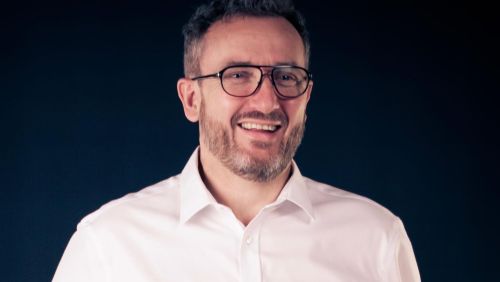
Mikela Druckman, co-founder, Greyparrot
Opinions expressed by Entrepreneur contributors are their own.
You're reading Entrepreneur United Kingdom, an international franchise of Entrepreneur Media.
In the tech world, ‘waste’ rarely makes the shortlist of blue-chip market opportunities. But for Mikela Druckman, co-founder and CEO of Greyparrot, a clean-tech company using artificial intelligence (AI) to revolutionise waste sorting and recycling, the status quo was a glaring omission. “Depth over breadth has been hugely important for us. From day one, we made a deliberate decision to focus on the waste industry – an under-digitised sector with massive environmental and economic impact.” The bet on waste paid off – and fast. By focusing tightly on what she calls “deep domain expertise in waste analytics,” Greyparrot turned ignorance into insight and insight into impact.
The power of focus
Rather than spreading thin, Greyparrot doubled down on a single sector and on one type of technology. “A big early bet was our approach to hardware. While we do deploy hardware to gather data, we made a conscious decision not to build robotic arms or complex recycling plant machinery ourselves.” Their team built software that works with existing hardware in recycling plants – from Bollegraaf to Van Dyk – enabling rapid scale without reinventing industrial infrastructure. “That choice set us apart. It allowed us to scale faster, stay agile, and focus on what we do best: building industry-leading AI models, data infrastructure, and integrations that work across any plant setup. We recognised early on that access to large-scale, high-quality data would be one of the most valuable assets we could build – and that’s become a core strength.”
Building with partners
Greyparrot’s growth model rests on collaboration. By partnering with established players the company expanded from day one – globally. “Greyparrot is an AI and data software specialist, and we partner with the best in the business when it comes to plant builders, robotics, and system integration.” These alliances were strategic turbochargers. Together with Bollegraaf and Van Dyk, Greyparrot deployed its systems across 20 countries, analysing tens of billions of waste objects annually. “Today, we’re proud to be a global clean tech leader.”
Reframing waste as gold
The world’s fastest-growing consumer goods sector was generating almost no intelligence, and Druckman turned that ignorance into opportunity with hard metrics: “In one instance, a single contamination alert from our system saved a European facility £47,000 in reprocessing costs and fines. In another, our AI identified an aluminium sorting issue in minutes – saving £48,000 on a single batch of material.” Those case studies became proof. And with packaging under regulatory pressure, Greyparrot’s ability to trace material flow upstream – into manufacturing – unlocked a new narrative: “We’re helping brands understand the downstream consequences of their packaging design decisions… Insights don’t just enhance recycling – they directly inform packaging design, support regulatory compliance, and accelerate progress toward circularity goals.” Greyparrot’s Deepnest platform takes consumer goods companies into live-feedback mode. Instead of theoretical recyclability, they can now see what happens to packaging post-consumption – data that could prompt rapid design shifts.
Eyes wide open
When AI meets real-world complexity, blind spots reveal themselves. Greyparrot found wasted money hiding in unexpected places: “I was surprised by the scale of invisible inefficiencies…Over the last year alone, our systems detected and categorised over 40bn waste objects into 111 categories, revealing massive shifts in quality and contamination over the course of a single day.” Packing shrink sleeves and resistant materials like Tetra Pak – designed without recycling in mind – became tangible examples of downstream effects. “Take Lucozade bottles – their full plastic shrink sleeve meant that they weren’t being recognised by recycling machinery, so they spent £6m to redesign more sustainable products.” With real-time data, companies can emerge with 10–20% recovery gains in a single shift.
Opportunities in the $3tn waste sector
Waste’s disruptability is debated, but Druckman points to three major shifts driving this opportunity:
1. Smarter hardware integration, with AI embedded into the sorting process.
2. AI retrofits for legacy plants, offering high ROI without new infrastructure.
3. Emerging data-driven compliance, led through platforms like Deepnest – connecting material flow to brand decisions.
“Analysing 15 tonnes of waste typically takes a trained staff member around 375 hours. With AI, it takes six.” For entrepreneurs, this suggests embedding your tech, retrofitting old systems, or influencing upstream incentives – while leaving physical assets in place.
The reality check
Greyparrot’s success isn’t a fairy tale. The company has survived pandemics, downturns, and hyper-cautious fundraising environments. “One of the biggest lessons that’s shaped how we’ve built Greyparrot is the importance of resilience – not just in the technology, but in the business itself.” Steady growth and autonomy in her team proved that momentum didn’t rely on a singular figure. “During my second maternity leave, the team not only kept things running – they delivered growth in both headcount and revenue.” That’s not just good leadership; it’s a replicable organisational structure fit for start-ups scaling globally.
A circular future
Looking ahead, Druckman sees AI as the operating system for recycling plants, but the bigger play lies elsewhere: “AI is laying the foundation for circular decision-making. Data from waste is now flowing upstream to inform how products are designed, tested, and improved – closing the loop between packaging innovation and recyclability.” Plants are just the beginning. The next layer is connecting recycling feedback to packaging, design, and supply chains. “Entrepreneurs will play a huge role in scaling this transformation, and that’s what we’re doing with Deepnest.” By rethinking rubbish, Greyparrot shows how innovation can recycle old problems into new possibilities – a truly circular success story.
In the tech world, ‘waste’ rarely makes the shortlist of blue-chip market opportunities. But for Mikela Druckman, co-founder and CEO of Greyparrot, a clean-tech company using artificial intelligence (AI) to revolutionise waste sorting and recycling, the status quo was a glaring omission. “Depth over breadth has been hugely important for us. From day one, we made a deliberate decision to focus on the waste industry – an under-digitised sector with massive environmental and economic impact.” The bet on waste paid off – and fast. By focusing tightly on what she calls “deep domain expertise in waste analytics,” Greyparrot turned ignorance into insight and insight into impact.
The power of focus
Rather than spreading thin, Greyparrot doubled down on a single sector and on one type of technology. “A big early bet was our approach to hardware. While we do deploy hardware to gather data, we made a conscious decision not to build robotic arms or complex recycling plant machinery ourselves.” Their team built software that works with existing hardware in recycling plants – from Bollegraaf to Van Dyk – enabling rapid scale without reinventing industrial infrastructure. “That choice set us apart. It allowed us to scale faster, stay agile, and focus on what we do best: building industry-leading AI models, data infrastructure, and integrations that work across any plant setup. We recognised early on that access to large-scale, high-quality data would be one of the most valuable assets we could build – and that’s become a core strength.”
Building with partners
Greyparrot’s growth model rests on collaboration. By partnering with established players the company expanded from day one – globally. “Greyparrot is an AI and data software specialist, and we partner with the best in the business when it comes to plant builders, robotics, and system integration.” These alliances were strategic turbochargers. Together with Bollegraaf and Van Dyk, Greyparrot deployed its systems across 20 countries, analysing tens of billions of waste objects annually. “Today, we’re proud to be a global clean tech leader.”