How One Founder Is Taking on a Billion-Person Problem
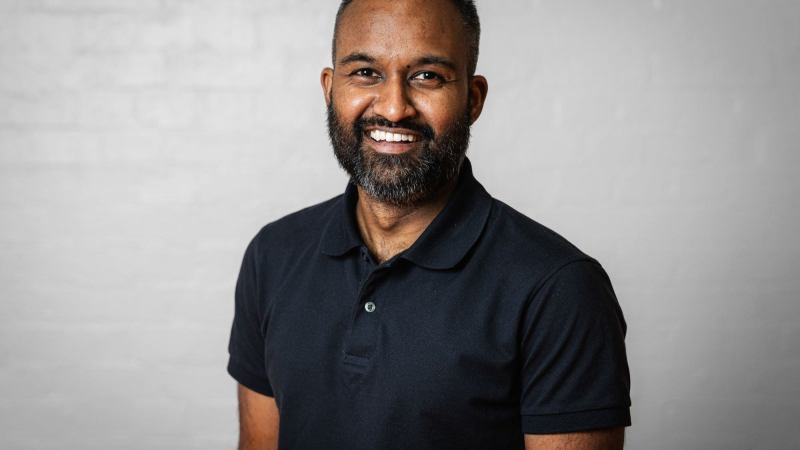
When Nelson Sivalingam co-founded HowNow, it wasn’t because he spotted a gap in the market. It was because he saw a much bigger hole in the future.
Opinions expressed by Entrepreneur contributors are their own.
You're reading Entrepreneur United Kingdom, an international franchise of Entrepreneur Media.
“I watched friends and family failing to invest in their own upskilling,” he recalls, with concern. For Sivalingam, the danger was clear: “something I feared would ultimately lead to social and economic obsolescence.” That personal perspective has since grown into a much larger mission. HowNow, a London-headquartered learning and upskilling platform powered by AI, now serves organisations across sectors – from farming to fintech – and is aiming to upskill 10m people by 2030. That’s just 1% of the billion people who, according to the World Economic Forum, need to be reskilled over the next five years.
It’s a bold goal. But for Sivalingam, boldness isn’t optional. “Having the right skills to solve these problems is the limiting factor,” he says, pointing to climate change, poverty and inequality – global crises that could all, in his view, be addressed more effectively if the right people had the right knowledge at the right time. That’s the premise HowNow is built on: upskilling not just as a business opportunity, but as an act of societal responsibility. This isn’t the standard origin story of a tech company. In a start-up landscape often obsessed with scale and speed, HowNow is trying to scale impact. “To achieve our goal,” Sivalingam explains, “we know we need to support learning and upskilling for organisations across the board.” The company’s platform is intentionally sector-agnostic – a deliberate move in service of something larger than market share.
That said, starting a business with social intent doesn’t mean you’re exempt from the usual start-up pressures. “In the early days the biggest challenge was figuring out the product, customer and Go-To-Market strategy – and all before we ran out of money,” he says. Later, the hurdles evolved. “As the business grew, the challenge then shifted towards scaling culture and communication.” His solution to those early pressures was unglamorous but effective: resourcefulness. “We secured our first investment via a cold outreach on LinkedIn to Fuel Ventures,” he says. “I had never raised funding before so I did a lot of reading around it. I also found a mentor who guided me through the process and that was really helpful.”
It’s a reminder that behind even the most high-concept mission is a familiar grind of trial and error – and often, rejection. “Over time you realise you get more things wrong than you get right,” Sivalingam admits. “But when you get the right things right, it makes up for all the wrongs.” He treats failure less as a threat than a feedback loop: “Every time I fail, I reflect on the learning from it and what I could have done to learn that sooner.” That instinct – to learn, reflect and repeat – is, in many ways, the company’s operating system. It’s also the core of Sivalingam’s advice to others trying to scale a UK business to multi-million-pound revenues. “I used to go to talks, listen to podcasts, and read blogs – hoping someone would share the secret sauce… but quite often they would just say the ‘boring’ things such as needing to build focus, perseverance, resilience, and curiosity.” He smiles at the irony. “In hindsight, I’ve realised doing the boring things consistently is the secret sauce.”
That approach – methodical, reflective, purpose-led – may not make for the loudest headlines. But in an age of workforce transformation and technological upheaval, it might just be what millions of people need most.
“I watched friends and family failing to invest in their own upskilling,” he recalls, with concern. For Sivalingam, the danger was clear: “something I feared would ultimately lead to social and economic obsolescence.” That personal perspective has since grown into a much larger mission. HowNow, a London-headquartered learning and upskilling platform powered by AI, now serves organisations across sectors – from farming to fintech – and is aiming to upskill 10m people by 2030. That’s just 1% of the billion people who, according to the World Economic Forum, need to be reskilled over the next five years.
It’s a bold goal. But for Sivalingam, boldness isn’t optional. “Having the right skills to solve these problems is the limiting factor,” he says, pointing to climate change, poverty and inequality – global crises that could all, in his view, be addressed more effectively if the right people had the right knowledge at the right time. That’s the premise HowNow is built on: upskilling not just as a business opportunity, but as an act of societal responsibility. This isn’t the standard origin story of a tech company. In a start-up landscape often obsessed with scale and speed, HowNow is trying to scale impact. “To achieve our goal,” Sivalingam explains, “we know we need to support learning and upskilling for organisations across the board.” The company’s platform is intentionally sector-agnostic – a deliberate move in service of something larger than market share.
That said, starting a business with social intent doesn’t mean you’re exempt from the usual start-up pressures. “In the early days the biggest challenge was figuring out the product, customer and Go-To-Market strategy – and all before we ran out of money,” he says. Later, the hurdles evolved. “As the business grew, the challenge then shifted towards scaling culture and communication.” His solution to those early pressures was unglamorous but effective: resourcefulness. “We secured our first investment via a cold outreach on LinkedIn to Fuel Ventures,” he says. “I had never raised funding before so I did a lot of reading around it. I also found a mentor who guided me through the process and that was really helpful.”