The Hidden Cost of Getting Ahead: Why Women Still Pay More to Progress
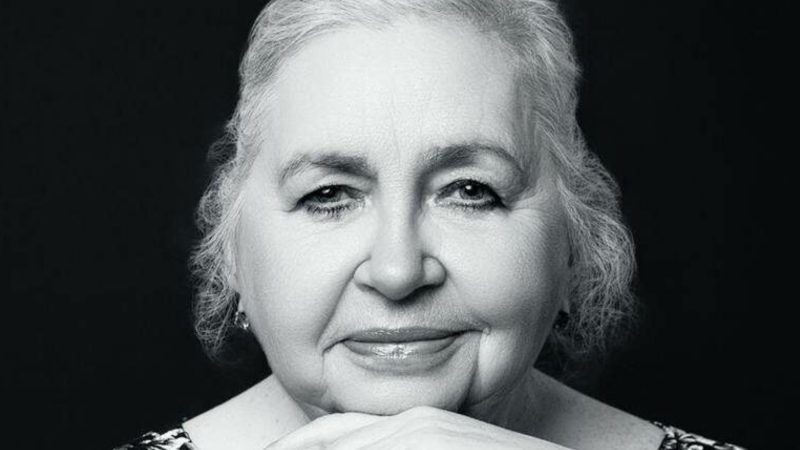
Diane Faben
Opinions expressed by Entrepreneur contributors are their own.
You're reading Entrepreneur United Kingdom, an international franchise of Entrepreneur Media.
I sat down to prepare a career presentation for a group of women expecting to talk about progress and opportunity. Instead, the conversation quickly revealed something else. Many were not asking how to advance, but how to sustain their careers. That shift captures the reality of work for many women more clearly than any statistic.
There is real progress to acknowledge, however. In the United Kingdom, close to half of new FTSE 100 board appointments now go to women. This is a meaningful milestone built over decades. Yet they do not reflect the full picture. In day-to-day conversations, a gap remains between visible progress and lived experience.
That gap becomes clearer when we look beyond headline figures. PwC’s Women in Work Index 2026 shows that progress on gender equality across OECD countries has slowed to its weakest level since the pandemic. In the UK, female unemployment has risen, particularly among younger women, and full-time employment rates remain below the OECD average. Progress continues, but at a reduced pace, and the impact is visible in how people experience their work.
Beyond access or representation, the issue is the additional effort many women invest to be recognised, trusted, and promoted. I describe this as an invisible entry tax. It does not appear in salary data or formal reports, but it shapes how long advancement takes and how much energy is required to achieve it.
In my own career, I went through three rounds of interviews for a role I had already been performing in practice. Each stage required me to prove the capability that had already been demonstrated. When I secured the position, I was told it was a significant achievement because I was the first woman to hold that role. It was framed as progress, yet it followed a process that demanded repeated validation. Experiences like this are common. They are subtle, but their consistency affects outcomes over time.
This pattern extends beyond formal processes. Many women take on responsibility without receiving the corresponding title. Access to informal networks, where influence and opportunity often develop, remains uneven. Ideas can be overlooked until they are echoed by someone else. These moments are rarely dramatic, but their accumulation shapes how careers unfold.
There is also an emotional dimension that is often misunderstood. I have cried at work more than once, not because of the workload itself, but because of the conditions surrounding it. Frustration can be interpreted as a lack of resilience, even when it reflects commitment and accountability. Managing that perception becomes part of the job, adding another layer of effort that is rarely acknowledged.
This is not about individual blame. Many men, for instance, actively support, advocate, and open doors. The challenge lies in structures and expectations that have not evolved at the same pace as representation. Systems built without a full range of experiences in mind continue to place uneven demands on those navigating them.
A simple question helps bring this into focus: Would this path have been shorter or more straightforward if the person were male? In many cases, the answer is yes. The difference often appears in time, energy, and consistency of opportunity rather than in a single measurable outcome.
The consequences are visible in the choices women make. Many step away from corporate roles because sustaining progress requires too much effort. Others rebuild their careers after personal disruption without adequate support. Some choose self-employment to gain control over their time and environment, even with financial uncertainty. These decisions reflect experience rather than capability.
Research supports these patterns. Deloitte’s Women at Work 2024 report found that 47% of women in the UK report increased stress levels, driven by long hours, return-to-office expectations, and unequal responsibilities at home. Nearly 39% have taken time off for mental health reasons, yet many do not feel comfortable discussing it at work due to concerns about career impact. Participation in the workforce does not guarantee a sustainable or equitable experience.
Progress in representation matters, but it does not remove the additional demands that shape career progression. As long as this entry tax exists, women will continue to spend more time and energy maintaining their position and advancing within it.
The cost is tangible. It appears in delayed promotions, missed opportunities, and years spent navigating avoidable barriers. It also affects confidence, as repeated friction can lead people to question their own capabilities despite strong performance. Over time, this influences the broader talent landscape as experienced women move toward roles and environments that offer greater control and sustainability.
There is still reason for optimism. Change becomes more likely when women can share experiences, build networks, and support each other openly. Being recognised for who you are, not just what you deliver, has a measurable impact on confidence and direction. That sense of recognition can reshape how individuals see their own potential.
Mentorship, community, and honest conversations help counterbalance environments that demand constant proof. They do not remove every barrier, but they make those barriers easier to navigate and reduce isolation. Over time, collective awareness can influence the systems themselves.
Improving outcomes requires a broader focus. Access alone is not enough. The real measure of progress is whether women can advance without carrying additional, unspoken costs. Opening the door was an important step. Ensuring that staying and progressing do not require disproportionate effort is what comes next.
I sat down to prepare a career presentation for a group of women expecting to talk about progress and opportunity. Instead, the conversation quickly revealed something else. Many were not asking how to advance, but how to sustain their careers. That shift captures the reality of work for many women more clearly than any statistic.
There is real progress to acknowledge, however. In the United Kingdom, close to half of new FTSE 100 board appointments now go to women. This is a meaningful milestone built over decades. Yet they do not reflect the full picture. In day-to-day conversations, a gap remains between visible progress and lived experience.
That gap becomes clearer when we look beyond headline figures. PwC’s Women in Work Index 2026 shows that progress on gender equality across OECD countries has slowed to its weakest level since the pandemic. In the UK, female unemployment has risen, particularly among younger women, and full-time employment rates remain below the OECD average. Progress continues, but at a reduced pace, and the impact is visible in how people experience their work.