How the Best Business Leaders Are Built During Times of Volatility
Volatility is the new normal, demanding brave, focused and resilient leadership.

Sam_Seigler
Opinions expressed by Entrepreneur contributors are their own.
You're reading Entrepreneur United Kingdom, an international franchise of Entrepreneur Media.
If recent years have taught us anything, the lesson we genuinely need to learn is that volatility has evolved from being an episodic occurrence into an almost constant ‘new normal,’ according to the 2026 View from the C-Suite Research, carried out by LHH. No sector is immune to the capricious nature of global events. Yes, it’s critical to ensure survival in the face of adversity but adversity can also be a time of opportunity where leadership qualities come to the fore.
When business as usual is anything but business as usual
Disruption to business-as-usual (BAU) exposes the gap between managers and leaders. Managers will help keep the lights on, maintain the business, and steady the ship in hostile waters. They’re more likely to become risk averse, seek to consolidate what they already have, and potentially postpone difficult decisions until what they perceive as more favourable conditions emerge.
Leaders are much more likely to respond radically to changing circumstances and reimagine their role to ensure the organisation continues to make progress – not stand still hoping for better times. Effective leaders can embrace volatility as an opportunity, drive change more quickly, prioritise more decisively, and communicate new, responsive ideas with much greater transparency.
Reacting to circumstances beyond the organisation’s control
Deloitte’s recent European Hotel Industry survey noted that hospitality and travel sector leaders have faced seismic shifts in customer expectations, unpredictable demand cycles and labour shortages caused by circumstances beyond their immediate control. Those who have successfully plotted a route through the chaos haven’t just survived – they’ve illustrated their capacity to deliver leadership maturity in the most demanding of circumstances.
Leadership requires bravery and focus in volatile times
While it’s hard to make brave decisions in straitened times, crises often create conditions for encouraging a single-minded focus on organisational priorities, according to Elsbeth Johnson and Fiona Murray of the MIT Sloan School of Management. Effective leaders are clear about what constitutes a critical outcome and what can be deprioritised in the current circumstances. While this will often entail reducing the level of high priority goals an organisation is working towards, it will also introduce some much-needed clarity and focus. Leaders will then need to display discipline to determine which parts of the organisation should carry out the activities needed to fulfil the revised goals they’re working towards. The role of the leader in such circumstances is to focus on consistently and repeatedly communicating these first order priorities across the organisation and driving positive outcomes.
High demand for resilient leaders that work well under pressure
From an executive search perspective, leaders that have clearly demonstrated calmness, clarity and creativity under the most pressured circumstances are, rightly, in high demand. In the travel and hospitality sector, a track record of not just surviving, but thriving in recent years holds tremendous value. These sectors have experienced significant disruption over the last decade. Those leaders that have succesfully ‘come out the other side’ of turbulent periods will only have done so by exhibiting a broad understanding of the sector’s nuances and the focus required to pursue strategic goals, despite the challenges faced.
Volatility as a catalyst for leadership development
Far from being a barrier to effective leadership, Forrester’s How to Thrive Through Volatility research, suggested that volatility can be viewed as a catalyst helping to shape the leaders of tomorrow. Long after the challenges and disruption of any given period are forgotten, those leaders that responded with intelligence, bravery and the strategic foresight needed to guide their organisation through disruptive times will be valued more highly than those that merely managed to keep the business going. And those organisations that had the courage and foresight to invest in their people and trust them to rise to the occasion will reap the reward through stronger, more agile and better equipped leaders, ready to meet the next set of challenges head on.
If recent years have taught us anything, the lesson we genuinely need to learn is that volatility has evolved from being an episodic occurrence into an almost constant ‘new normal,’ according to the 2026 View from the C-Suite Research, carried out by LHH. No sector is immune to the capricious nature of global events. Yes, it’s critical to ensure survival in the face of adversity but adversity can also be a time of opportunity where leadership qualities come to the fore.
When business as usual is anything but business as usual
Disruption to business-as-usual (BAU) exposes the gap between managers and leaders. Managers will help keep the lights on, maintain the business, and steady the ship in hostile waters. They’re more likely to become risk averse, seek to consolidate what they already have, and potentially postpone difficult decisions until what they perceive as more favourable conditions emerge.
Leaders are much more likely to respond radically to changing circumstances and reimagine their role to ensure the organisation continues to make progress – not stand still hoping for better times. Effective leaders can embrace volatility as an opportunity, drive change more quickly, prioritise more decisively, and communicate new, responsive ideas with much greater transparency.

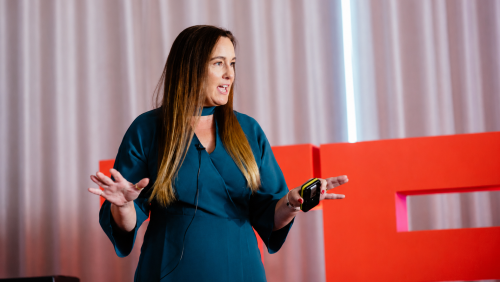
Sam Seigler • CEO of executive search firm Trinity Bridge
Sam Seigler, CEO of executive search firm Trinity Bridge