The Global Company: Why the Next Generation of Businesses Will Be Built for the World From Day One
British businesses are going global faster as technology removes traditional barriers.
Revenue for Revolut Business
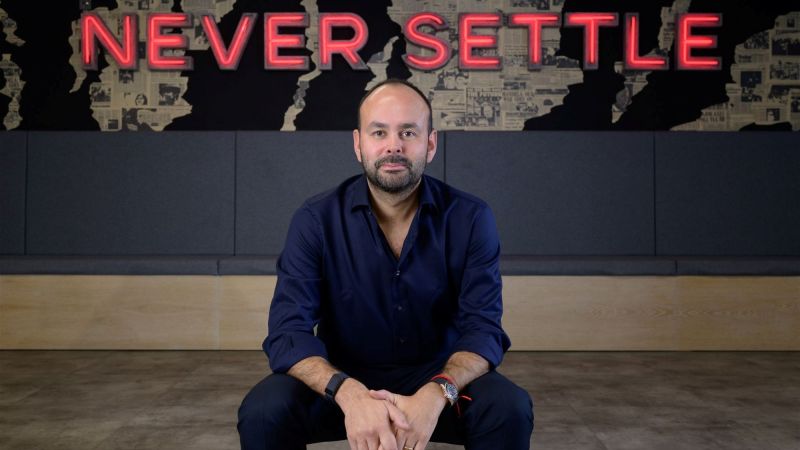
Matt Acton Davis, Partner and VP
Opinions expressed by Entrepreneur contributors are their own.
You're reading Entrepreneur United Kingdom, an international franchise of Entrepreneur Media.
For decades, the conventional route for a company with global ambitions was predictable: build at home, prove that customers want it, raise money and then begin the slow, expensive process of expanding overseas. First, the UK. Then, Europe. Then perhaps the US. That playbook is starting to look increasingly dated. For internet-native businesses, the world can be the market from the moment they launch. Payments, foreign exchange, international employment and digital infrastructure are becoming easier to access, while artificial intelligence is reducing the cost of tasks such as translation, localisation and customer support. The result is a fundamental change in how companies can be built.
“International for me isn’t just about selling in many places,” says Matt Acton Davis, Partner and VP, Revenue at Revolut Business. “A global business is one that thinks from a platform perspective.” A company can sell into several countries without truly being global. Its technology, operations and culture may still be designed around its home market, with international expansion added on afterwards. A genuinely global company, by contrast, builds with multiple markets in mind from the outset. “Truly global companies think globally from the moment they build,” says Acton Davis. “They don’t bolt it on later when they expand.”
Global by design
Revolut itself is an example of the model. Founded in 2015, the company initially tackled the cost and inconvenience consumers faced when exchanging currencies while travelling or sending money abroad. It subsequently expanded its product range and geographical footprint, building a financial platform designed to operate across markets. Revolut Business followed in 2017, after business customers began asking for the same kind of experience in their professional lives. The problems were familiar: expensive foreign exchange, cumbersome international payments and the difficulty of managing cards, employees and finances across multiple countries. Today, businesses can use Revolut Business for payments, foreign exchange, cards and other financial services, bringing functions that might previously have required multiple providers into a single platform. That matters because the nature of the modern company is changing too.
An app, software company or online marketplace can acquire a customer in another country almost immediately. The customer can arrive long before the business has established a traditional physical presence there. “Companies launching nowadays aren’t stuck in one market,” says Acton Davis. “If you think like an app or a marketplace or a SaaS product, typically they’ll launch globally from day one.” Historically, that would have created a significant operational problem. Entering a new country might require local banking relationships, payment providers, payroll infrastructure, foreign exchange capability and a host of administrative arrangements. Increasingly, those layers can be accessed digitally. “You’re actually contracting that all into one motion very early on,” Acton Davis says, “which means the business can scale much quicker than they would have previously.” But geography has not stopped mattering. If technology can make international expansion cheaper and faster, what remains difficult?
For Acton Davis, the durable advantage increasingly lies in understanding the market itself: trust, regulation, customer expectations, cultural nuance and what he describes as ‘taste.’ Global infrastructure can get a company into a market. It cannot necessarily tell the company how to win customers there. When Revolut launched in New Zealand, for example, its central teams brought the company’s existing product and technology infrastructure into the market. But it also hired locally, including in marketing and operations, to develop what he calls “that sense of taste, that sense of connection to the local market”. The lesson for founders is important: globalisation does not necessarily mean making every market identical. It means separating the things that should be globally consistent from the things that need to be locally understood.
The AI effect
That distinction is becoming even more important as AI changes the economics of running a company. AI can reduce the time and cost involved in translation, localisation, customer support and producing market-specific content. Tasks that once required additional employees, agencies or specialist providers can increasingly be handled with software. Acton Davis believes this means a relatively small team can operate with the reach and responsiveness that would previously have required a much larger organisation. At some point, growth isn’t about adding more employees; it’s about having people who deeply understand the local market, culture, and customers. In other words, the scarce resource is moving. For years, one of the principal constraints on international growth was the cost of doing business across borders. Banking relationships had to be established. Employees had to be paid. Currency had to be converted. Customers had to be supported. As those costs fall, the competitive question becomes less about whether a company can technically enter a market and more about whether it understands the people already operating there. That could have profound consequences for British entrepreneurship. The internet weakened the traditional barriers to international growth. Cloud computing weakened more. AI is now attacking another layer. Financial infrastructure is following the same trajectory.
Revolut Business says it now has more than 800,000 business customers globally and operates across the UK, Europe, the US, Australia, Singapore and New Zealand. In 2025, Revolut Business accounted for $365bn (£277bn) of transaction volume. The company is therefore both a participant in and a beneficiary of the shift it describes: building infrastructure that allows smaller businesses to operate in ways previously associated with multinational companies. But access to better technology does not guarantee success. Instead, Acton Davis sees the emerging formula as a combination of global efficiency and local relevance. “The winning formula from my perspective would be the global efficiency,” he says, “which is driven by one platform that caters to all of the fundamentals that a business will require, and then the local relevance.” That may be the more important lesson for founders than simply ‘go global’. The opportunity is to design a company so that international growth does not require it to reinvent itself every time it crosses a border. “We underestimate how fast global business will become the default,” says Acton Davis. The next generation of companies may therefore be defined less by how many offices they have or how many people they employ, and more by how easily they can move into their next market. The question for the next British founder may no longer be when to expand overseas. It may be why the business was designed as a domestic one in the first place.
For decades, the conventional route for a company with global ambitions was predictable: build at home, prove that customers want it, raise money and then begin the slow, expensive process of expanding overseas. First, the UK. Then, Europe. Then perhaps the US. That playbook is starting to look increasingly dated. For internet-native businesses, the world can be the market from the moment they launch. Payments, foreign exchange, international employment and digital infrastructure are becoming easier to access, while artificial intelligence is reducing the cost of tasks such as translation, localisation and customer support. The result is a fundamental change in how companies can be built.
“International for me isn’t just about selling in many places,” says Matt Acton Davis, Partner and VP, Revenue at Revolut Business. “A global business is one that thinks from a platform perspective.” A company can sell into several countries without truly being global. Its technology, operations and culture may still be designed around its home market, with international expansion added on afterwards. A genuinely global company, by contrast, builds with multiple markets in mind from the outset. “Truly global companies think globally from the moment they build,” says Acton Davis. “They don’t bolt it on later when they expand.”
Global by design
Revolut itself is an example of the model. Founded in 2015, the company initially tackled the cost and inconvenience consumers faced when exchanging currencies while travelling or sending money abroad. It subsequently expanded its product range and geographical footprint, building a financial platform designed to operate across markets. Revolut Business followed in 2017, after business customers began asking for the same kind of experience in their professional lives. The problems were familiar: expensive foreign exchange, cumbersome international payments and the difficulty of managing cards, employees and finances across multiple countries. Today, businesses can use Revolut Business for payments, foreign exchange, cards and other financial services, bringing functions that might previously have required multiple providers into a single platform. That matters because the nature of the modern company is changing too.

Patricia Cullen • Features Writer
Entrepreneur Staff