How Do Creative Ideas Become Global Brands?
Ecomcy’s founder shares how technology and strategy scale ambitious brands globally.
Ecomcy
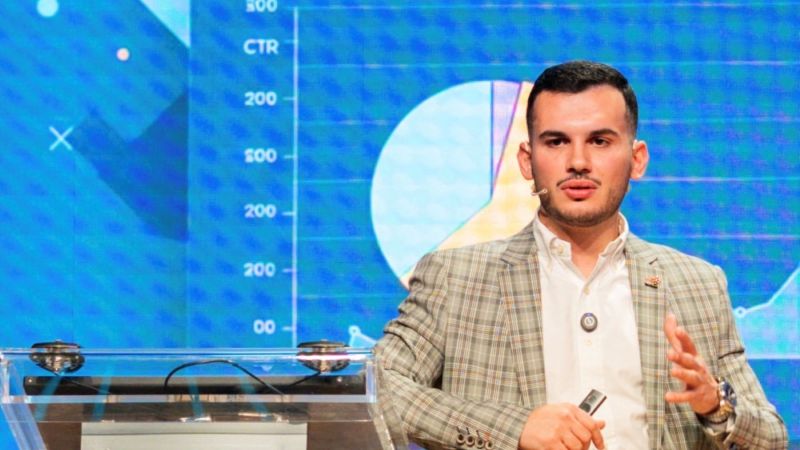
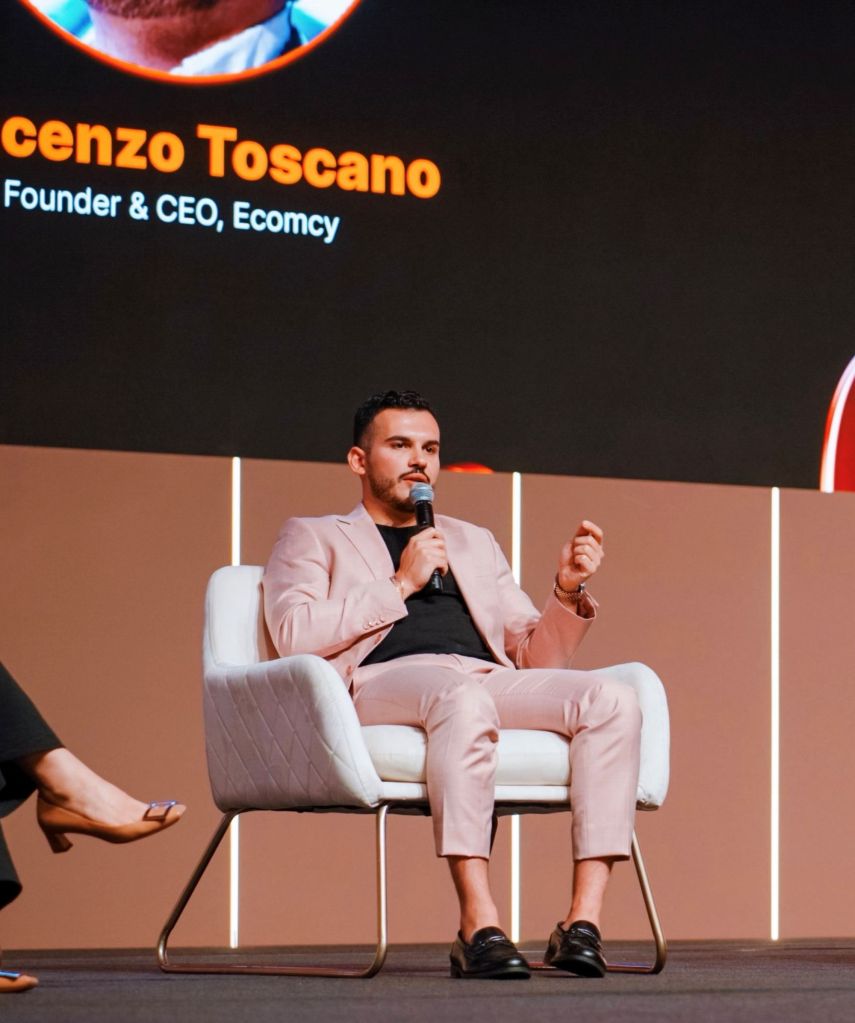
Ecomcy founder & CEO, Vincenzo Toscano
Opinions expressed by Entrepreneur contributors are their own.
You're reading Entrepreneur United Kingdom, an international franchise of Entrepreneur Media.
For ambitious brands, going global can feel both exciting, yet overwhelming. The challenge is no longer simply reaching new customers, but understanding who are the customers, the markets they come from, how they shop and what are their true needs. For Ecomcy founder & CEO, Vincenzo Toscano, the future of international growth lies in combining technology with cultural intelligence: knowing what can travel, and what must be reimagined.
You’ve built Ecomcy around helping brands expand globally. What gap did you see in the market that inspired you to start the company?
When I started Ecomcy, I noticed that most brands treated international expansion as an afterthought rather than a core growth strategy. Agencies were either purely domestic specialists or generic “global” shops that didn’t understand the nuances of each marketplace. I wanted to build something different: a team that could genuinely operate inside Amazon, Walmart, and TikTok Shop across the US, UK, and Europe with the same depth of expertise in every market, not just a US playbook copied and pasted elsewhere. That’s grown into a team of over 80 specialists having worked with over 1,000 brands, and today we manage over $500m in revenue across all our brands.
Having lived and worked across different countries, how has your international background shaped your approach to building a business?
Working across both US and Europe, in countries such as the UK, Italy and many more, has taught me early on that we cannot simply translate the needs of one marketplace into another, whether we’re talking about consumer behavior, marketplace algorithms, or even how you build trust with a client. It made me build Ecomcy as global digital agency, where both the team and the clients are from all over the world and all backgrounds, rather than a single physical headquarters. We are communicating with our clients in English, Italian and Spanish and we’re proud of our multicultural approach.
Many businesses still rely heavily on one market. Why do you believe having a global growth mindset is becoming increasingly important for entrepreneurs today?
Relying on a single market concentrates all of your risk in one place: one algorithm change, one regulatory shift, one economic downturn, and your entire revenue is exposed. I’ve seen brands that were completely dependent on one Amazon marketplace suddenly need to diversify overnight. Beyond risk, the upside is enormous: the tools to sell internationally have never been more accessible, whether that’s Amazon’s global infrastructure, TikTok Shop’s rapid international rollout, or marketplaces like Walmart and Target opening up. Entrepreneurs who build global thinking into their strategy from day one, rather than bolting it on later, end up with far more resilient and scalable businesses.
For a founder looking to take their business online or enter new markets, what are the biggest mistakes they should avoid?
The most common mistake is assuming that a strategy that works for a specific marketplace, or for launching a product into a marketplace will automatically translate to a new market. Pricing, compliance, logistics, even the tone of your listing copy all need to be localized properly, not just translated. Second is underestimating operational complexity: things like account structure, tax, and fulfilment need to be right from day one, because unwinding mistakes later is expensive and slow. And third is trying to do everything at once. I always advise founders to prove the model in one or two markets with real data before spreading themselves thin across ten.
E-commerce has made it possible for smaller brands to reach customers worldwide. What separates the businesses that successfully scale from those that struggle?
The brands that scale are treating e-commerce as a full ecosystem, not a side channel. They invest properly in advertising strategy, whether that’s PPC, DSP, or AMC-level data analysis, and they use that data to make decisions rather than guessing. They also build the right team or partner around them early, instead of trying to manage twelve marketplaces with one generalist. The businesses that struggle usually spread themselves too thin, under-invest in the operational and advertising fundamentals, and don’t adapt fast enough to how quickly each platform changes.
Technology and AI are rapidly changing how brands operate online. How do you see these developments shaping the future of e-commerce?
AI is moving e-commerce from reactive to predictive. We’re already using AI and tools like Amazon Marketing Cloud to understand customer journeys in far more depth than manual analysis ever allowed, and that’s only going to accelerate. At Ecomcy we’ve positioned ourselves as a genuinely data-driven agency built around these capabilities, because the brands that win over the next few years will be the ones using AI to personalize, forecast, and optimize faster than their competitors, not just the ones with the biggest ad budgets.
What’s next for Ecomcy?
We’re developing two large directions at the same time. One is expanding powerfully across new channel, especially TikTok Shop, where we’re strengthening our partnerships across US, UK, Mexico and Europe. The second is pursuing a wider M&A strategy under the Ecomcy Group, bringing together strong E-commerce agencies & AI solutions to build something bigger to support all our clients globally. It’s an exciting stage for our business!
For ambitious brands, going global can feel both exciting, yet overwhelming. The challenge is no longer simply reaching new customers, but understanding who are the customers, the markets they come from, how they shop and what are their true needs. For Ecomcy founder & CEO, Vincenzo Toscano, the future of international growth lies in combining technology with cultural intelligence: knowing what can travel, and what must be reimagined.
You’ve built Ecomcy around helping brands expand globally. What gap did you see in the market that inspired you to start the company?
When I started Ecomcy, I noticed that most brands treated international expansion as an afterthought rather than a core growth strategy. Agencies were either purely domestic specialists or generic “global” shops that didn’t understand the nuances of each marketplace. I wanted to build something different: a team that could genuinely operate inside Amazon, Walmart, and TikTok Shop across the US, UK, and Europe with the same depth of expertise in every market, not just a US playbook copied and pasted elsewhere. That’s grown into a team of over 80 specialists having worked with over 1,000 brands, and today we manage over $500m in revenue across all our brands.
Having lived and worked across different countries, how has your international background shaped your approach to building a business?
Working across both US and Europe, in countries such as the UK, Italy and many more, has taught me early on that we cannot simply translate the needs of one marketplace into another, whether we’re talking about consumer behavior, marketplace algorithms, or even how you build trust with a client. It made me build Ecomcy as global digital agency, where both the team and the clients are from all over the world and all backgrounds, rather than a single physical headquarters. We are communicating with our clients in English, Italian and Spanish and we’re proud of our multicultural approach.

Patricia Cullen • Features Writer
Entrepreneur Staff