The Founder’s Formula
Michalis Papadakis explains building AI healthcare solutions through evidence and purpose.
Aug 05, 2026

Brainomix
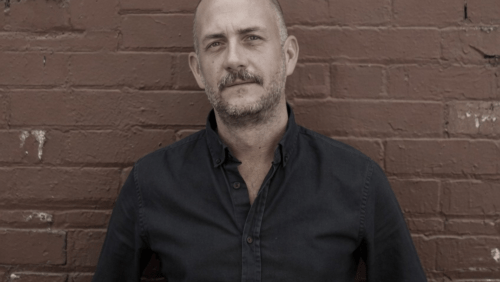
Michalis Papadakis, CEO and Co-Founder at Brainomix
Michalis Papadakis did not set out to build an artificial intelligence (AI) company. He set out to solve a healthcare problem. His journey from Oxford research to building an international health technology company has reinforced a lesson familiar to many founders: innovation is only the beginning. Lasting businesses are built around purpose, evidence and the ability to adapt.
For many entrepreneurs, the starting point is a market opportunity. For Papadakis, it was a clinical problem that could not be ignored. After more than two decades working within Oxford’s academic and research ecosystem, his career had been shaped by a single question: how can innovation close the gap between medical capability and patient outcomes? When he arrived in Oxford, Papadakis joined the university as an academic and became involved in stroke research through the Oxford Stroke Laboratory, exploring how new approaches could help transform the way patients are diagnosed and treated.
Stroke is a race against time. Although life-saving treatments exist, many patients still miss out because diagnosis and treatment decisions can be delayed, particularly when specialist expertise is not immediately available. That gap between what medicine can achieve and what patients receive became the foundation for Brainomix, the Oxford-based healthcare technology company Papadakis co-founded. “The idea back then, and what drove me and the other co-founders to create Brainomix, was starting from the clinical unmet need,” says Papadakis. “How do we use innovation? How do we use AI? How do we ultimately develop a technology that helps frontline clinicians with diagnosis and treatment decisions?” For Papadakis, this principle has remained central to the company’s journey. Brainomix was not built around AI as an end in itself; it was built around solving a healthcare challenge. “The technology was a means to an end, and the end is the clinical unmet need,” he says.
That philosophy has guided Brainomix through more than a decade of development, taking it from an academic spin-out into an international medical technology company. Today, its AI-powered imaging solutions are used across hundreds of hospitals, supporting clinicians in analysing patient scans and making faster, more informed treatment decisions.But for Papadakis, the company’s biggest achievement is not simply developing advanced technology – it is proving that the technology delivers meaningful impact. “One of the most important things we have achieved is evidence,” he says. “We don’t just claim that we are improving patient care, but we can back it up with hard evidence.” That evidence-first approach has become a defining principle of how Papadakis believes founders should build, particularly in complex industries such as healthcare. Innovation cannot rely on promise alone; it must demonstrate value to regulators, clinicians and healthcare systems before it can achieve widespread adoption. “Scientific rigour is a driver. It is a must,” says Papadakis. “Ultimately, the evidence is what convinces healthcare systems to create a budget.”
For founders, particularly those building deep technology companies, this is one of the biggest lessons: a great idea is only the beginning. Turning innovation into a sustainable business requires proving that it creates measurable value. The challenge, however, extends far beyond the science. Scaling healthcare technology means navigating regulation, procurement and the complex realities of large healthcare systems. Papadakis believes the UK has significant advantages, particularly through its world-class research institutions, access to talent and investors, as well as growing expertise in health technology. Brainomix has benefited from being part of the Oxford ecosystem, bringing together specialists across artificial intelligence, medicine and engineering. “Being based in Oxford and being a spin-out from the university, it is a privilege,” he says. “We have access to high calibre talent and expertise to ensure that what we are developing is technologically robust and clinically relevant.” However, he believes the journey from breakthrough innovation to widespread adoption still needs to become easier for companies operating in healthcare. “The thing that is missing is having an end-to-end pathway from regulatory clearance to deployment and ultimately to reimbursement and procurement,” he says.
For entrepreneurs, this highlights a reality that is often underestimated: building a healthcare company requires understanding not only the technology, but also the systems and people that determine whether that technology creates real impact. Another important lesson from Brainomix’s journey has been building trust around artificial intelligence. When the company began more than a decade ago, AI in healthcare was still met with uncertainty, with some clinicians concerned that technology could replace rather than support medical expertise. Papadakis says the company’s role was to demonstrate a different vision. “The purpose of this technology is not to replace a physician, but to assist and augment them,” he says. That belief has shaped how Brainomix approaches product development. For Papadakis, even the most advanced technology will fail if the people using it do not trust it or cannot easily integrate it into their daily work. “One lesson that was underestimated when we started is the importance of how this technology is presented to the physician,” he says. “The user interface, the interaction between the physician and the machine, is as important as performance.” It is a lesson that extends far beyond healthcare. For founders building technology companies, success depends not only on what a product can do, but on whether people understand it, trust it and can use it effectively.
Looking ahead, Papadakis sees AI playing a transformative role in creating more personalised medicine. The next generation of healthcare technology will combine different sources of information – from medical imaging and clinical data to biomarkers and genetics – to deliver more precise insights and support better treatment decisions. Brainomix is already expanding beyond stroke, applying its technology to other serious conditions where earlier diagnosis could significantly change patient outcomes. “It is extremely promising,” says Papadakis. “The pace and timing is unclear, but it will be a game changer.”
After more than a decade building a company at the intersection of science, medicine and technology, Papadakis’s advice to aspiring entrepreneurs comes back to one principle: purpose. “Be clear on why you are doing what you are doing,” he says. For Papadakis, that clarity of mission is what allows founders to navigate the uncertainty and challenges of entrepreneurship. “Technology is not the end product. It is a tool to solve a real clinical problem.” But purpose must be matched with the ability to evolve. Building a lasting company requires conviction in the problem being solved, while remaining open to changing how that solution is delivered. “Be very clear on your vision, on your roadmap and on your pathway, but also listen, learn and adapt,” he says.
Michalis Papadakis did not set out to build an artificial intelligence (AI) company. He set out to solve a healthcare problem. His journey from Oxford research to building an international health technology company has reinforced a lesson familiar to many founders: innovation is only the beginning. Lasting businesses are built around purpose, evidence and the ability to adapt.
For many entrepreneurs, the starting point is a market opportunity. For Papadakis, it was a clinical problem that could not be ignored. After more than two decades working within Oxford’s academic and research ecosystem, his career had been shaped by a single question: how can innovation close the gap between medical capability and patient outcomes? When he arrived in Oxford, Papadakis joined the university as an academic and became involved in stroke research through the Oxford Stroke Laboratory, exploring how new approaches could help transform the way patients are diagnosed and treated.
Stroke is a race against time. Although life-saving treatments exist, many patients still miss out because diagnosis and treatment decisions can be delayed, particularly when specialist expertise is not immediately available. That gap between what medicine can achieve and what patients receive became the foundation for Brainomix, the Oxford-based healthcare technology company Papadakis co-founded. “The idea back then, and what drove me and the other co-founders to create Brainomix, was starting from the clinical unmet need,” says Papadakis. “How do we use innovation? How do we use AI? How do we ultimately develop a technology that helps frontline clinicians with diagnosis and treatment decisions?” For Papadakis, this principle has remained central to the company’s journey. Brainomix was not built around AI as an end in itself; it was built around solving a healthcare challenge. “The technology was a means to an end, and the end is the clinical unmet need,” he says.