The Luxury of Being Understood
Luxury begins with understanding people, not products, prices or technology alone.
Negotiate with Style: 17 True Stories of Negotiation from Inside the World of Luxury
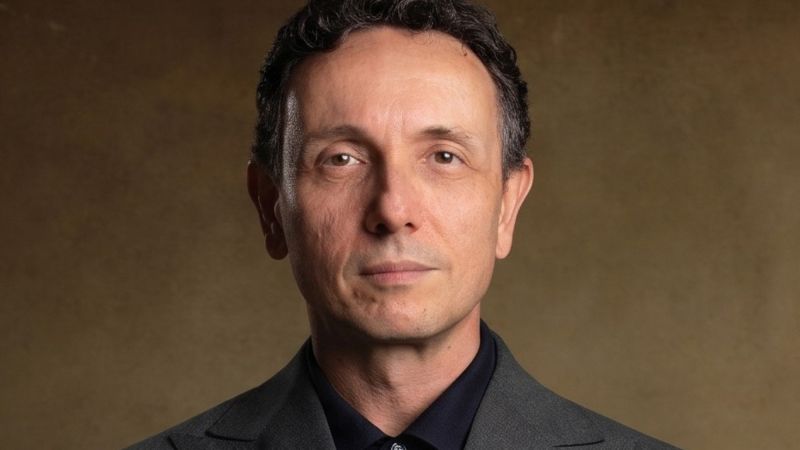
International business consultant Carlo Pignataro,
Opinions expressed by Entrepreneur contributors are their own.
You're reading Entrepreneur United Kingdom, an international franchise of Entrepreneur Media.
People ask me, often, what luxury is. I have spent my career in the luxury industry, and the closest thing I have to an answer is another question: what would you like it to be?
That is not evasion. It is the whole point. Luxury has never been a fixed property of an object. It is a relationship between a person and the meaning they find in a thing. Which means the only way to know what luxury is, is to ask the person in front of you. In fact, asking is not enough. You need to understand them. And understanding means observing, anticipating, mirroring, asking the right question at the right moment, and responding with a promptness that shows you have grasped something before they had the words for it.
The industry has largely stopped doing this. For too many consecutive years, the numbers were extraordinary, and this persuaded executives that they had understood something when in fact they had simply been carried by the tide. Volumes rose, margins held, and the conversation turned inward. We began crowning creative directors as cultural icons, measuring ourselves in follower counts, and staging shows that generated content rather than meaning. We started asking what we wanted luxury to be, rather than what it meant to the people we serve. The community that actually buys, wears and lives the product slipped quietly out of the frame.
I was reminded of the cost of that drift while watching an interview with a young and talented actress at the Venice Film Festival this September, who said, without hesitation, that she hated capitalism. She was wearing a plain white T-shirt. It was Prada, and it retails somewhere in the region of a thousand euros.
The internet did what the internet does, and called it hypocrisy. I do not think it was. More likely it was a contradiction, an oversight, a gift she pulled on without thinking. But the reaction is worth our attention, not the T-shirt. Because underneath the pile-on sits something we cannot afford to ignore: a rising wave of indignation among the young. Climate change, widening inequality, wars and technology that threatens the very fabric of work and knowledge. A generation that thinks in decades is beginning to conclude that the system is broken, and they will act on that conclusion as consumers. For a long time, we confused democracy with capitalism, and there are plenty of twenty year olds reminding us that the two are not the same. So, the honest question for anyone selling anything premium is this. Will they reject luxury outright, as a symbol of everything they are protesting against? My answer is: some of it, yes. Not the whole category. The kind of luxury too many companies have chased over the past ten years.
Start with the obvious, which the industry has somehow made contentious. Extreme quality is not a feature of luxury. It is the foundation. The craftsmanship, the materials, the hours of skilled hands: this is the ground the whole thing stands on, and the client takes it as given, which is exactly why it became so easy to quietly give away. Through a long boom, too many houses learned to treat quality as a number to manage rather than a standard to hold, raising the price while thinning the substance. The young are not rejecting craft. They are rejecting its absence dressed up as presence, and they can tell, always, the difference between a thing made with conviction and a thing priced with cynicism. Quality is the ground. What rises above it is the feeling of being understood. And that feeling is not soft, sentimental language. It is measurable in the body.
Consider what actually happens when a person walks into a boutique, or opens a conversation with a brand. They arrive carrying the invisible weight of their day, their decisions, their guard. Long before their conscious mind has finished assessing the product or the price, their nervous system is doing something older and faster: scanning the person in front of them for signals of safety or threat. We regulate one another through cues we barely notice, tone, pace, steadiness. When the person serving them is genuinely present, unhurried, and not silently desperate to close, that steadiness is transmitted and received beneath the level of thought. In that moment, the client is not only buying an object. They are buying the rare permission to lower their guard. No material can manufacture that. It happens, or it does not, in the space between two people.
This is why the deepest act of understanding in this business does not happen in the campaign, the atelier, or the boardroom. It happens in the relationship. In the exchange between a client and whoever is standing in front of them, in the store or on a screen. And here is the thing a machine cannot copy. The human being in that exchange has something at stake. They can misread the room. They can be rejected. They feel the tension of the objection in their own body, because the outcome matters to them. That exposure is not a weakness in the system. It is the entire value of it. We trust the person across from us precisely because they have skin in the game, because they can lose something, because their attention is not infinitely scalable and therefore not cheap. An algorithm can simulate warmth flawlessly and endlessly, and we sense, without being able to name it, that it costs the algorithm nothing. What costs nothing is worth nothing. The bond forms in the risk.
I once watched a seasoned salesperson serve two men on the same afternoon, each buying the same bracelet for his wife’s birthday, each unknown to the other. The first was a romantic who wanted to talk, to dream, to be guided through the beauty of the thing. The salesperson gave him exactly that, and gained a client for life. The second was a busy man who disliked shopping and wanted the problem solved, quickly and without ceremony. The salesperson, still glowing from the first encounter, gave him the same passion, the same detail, the same enthusiasm. The man bought nothing. He returned the next day and bought the identical bracelet from someone else, someone who understood that being understood, for him, meant being left alone with a confident recommendation and a graceful exit. Same object. Same price. Opposite ways of reading reality. The product was never the point.
So, if you take one practical thing from this, let it be the least glamorous line in your budget. You will spend fortunes on product, on stores, on the campaign. Spend as seriously on the people who stand at the final point of contact, and on the culture that lets them be genuinely present rather than merely efficient. That is not a cost. It is the place where everything else you have built either becomes real or quietly dissolves.
Because in the end, the young are not asking us to be cheaper. They are asking us to be honest. They are watching what we make, how we price it, and how we treat them when they walk through the door. And luxury, stripped of the emptiness, was only ever this: the feeling, increasingly rare and therefore increasingly precious, of being truly seen by another human being.
People ask me, often, what luxury is. I have spent my career in the luxury industry, and the closest thing I have to an answer is another question: what would you like it to be?
That is not evasion. It is the whole point. Luxury has never been a fixed property of an object. It is a relationship between a person and the meaning they find in a thing. Which means the only way to know what luxury is, is to ask the person in front of you. In fact, asking is not enough. You need to understand them. And understanding means observing, anticipating, mirroring, asking the right question at the right moment, and responding with a promptness that shows you have grasped something before they had the words for it.
The industry has largely stopped doing this. For too many consecutive years, the numbers were extraordinary, and this persuaded executives that they had understood something when in fact they had simply been carried by the tide. Volumes rose, margins held, and the conversation turned inward. We began crowning creative directors as cultural icons, measuring ourselves in follower counts, and staging shows that generated content rather than meaning. We started asking what we wanted luxury to be, rather than what it meant to the people we serve. The community that actually buys, wears and lives the product slipped quietly out of the frame.
Carlo Pignataro is an author, consultant and speaker with more than 20 years’ experience in... Read more