Founders Lose Millions by Waiting Too Long to Ask These Questions
Your £20m exit could be worth far less than expected.

Thomas & Co International
Opinions expressed by Entrepreneur contributors are their own.
You're reading Entrepreneur United Kingdom, an international franchise of Entrepreneur Media.
If someone offered you £20m for your business tomorrow, would you know how much you’d actually walk away with? Most founders would say yes. They know their revenue, their Earnings Before Interest, Taxes, Depreciation, and Amortisation (EBITDA) and the valuation they think the business deserves. The number a buyer puts on the table and the amount that ultimately changes your life can be very different. I’ve spent years advising founders through exits, and one of the most expensive mistakes I see is waiting until a buyer is already at the door to work that out.
This increasingly matters as foreign takeovers of UK companies surge to a two-decade high.
A conversation that once seemed years away can arrive tomorrow, so you want to be making decisions from a position of choice. Here are key questions founders should ask sooner.
What does the valuation actually mean for you?
When a buyer says your business is worth £20m, the first question should be: £20m of what?
Enterprise value and actual shareholder proceeds can differ after debt, cash, and adjustments. Then there is ownership – the founder may not own 100% of the equity.
The payment itself matters too. Is it all cash at completion, partly deferred, subject to an earn-out, or partly rolled into the acquiring group? Two £20m exits can leave founders in very different positions. I had a client with £13m in EBITDA who came to us ready to appoint a broker and take the business to market. We advised him to wait. Instead, we spent time restructuring the business and building an exit plan, including relocating part of the group. That work ultimately saved him approximately £26m through tax structuring and relocation.
How can tax move the number by millions?
Imagine a UK-resident founder sells their shares for £20m, with negligible base cost, no material losses, and their full £1m Business Asset Disposal Relief lifetime allowance available.
From 6 April 2026, qualifying gains within that £1m allowance are taxed at 18%. Gains above the allowance would, for a higher-rate taxpayer, generally be taxed at 24%.
Here is a simplified example, based on what you would walk away with if you owned the whole company:
£1m at 18% = £180,000
£19m at 24% = £4.56m
Illustrative Capital Gains Tax (CGT) = £4.74m
£20m proceeds after CGT = approximately £15.26m
That’s before transaction costs and other adjustments, and the actual liability will vary by founder. Business Asset Disposal Relief (BADR) is valuable, but on a substantial exit it is not the whole strategy. On a £20m transaction, the 18% rate only applies to the first £1m. The much bigger questions are how you own the business, what exactly is being sold and how you will receive the proceeds.
Is the highest offer always best?
Founders naturally focus on the biggest number, but an exit is more complicated than headline valuations. A trade sale, private equity deal, management buyout, employee ownership trust or partial sale can produce very different outcomes in terms of tax, control, risk, and what happens next. Imagine two buyers both describing their proposal as a £20m deal.
Buyer A) offers £20m, predominantly in cash at completion
Buyer B) offers £12m in cash, £3m deferred consideration, £2m dependent on an earn-out and £3m of rollover equity.
The headlines are the same, but the economics differ. Under Buyer A, the founder has substantially de-risked. Under Buyer B, £5m has not yet been received, and the rollover remains exposed to the future performance of another business. An earn-out can be particularly complicated. A founder might agree to a target that looks achievable, only to find that decisions they no longer control affect whether it is reached. The question shouldn’t simply be, “Which buyer is offering the most?” It should be, “What am I receiving, when will I receive it, how certain is it, and what will I actually have left after tax?”
If the business depends on you, will the buyer notice?
If you’re indispensable, your business is harder to sell on your terms.
If you make every decision and hold all key relationships, buyers see more risk – hurting valuation and deal terms. A buyer may want you to stay for 18+ months, especially if proceeds depend on future performance. The problem is that founders often discover this during due diligence, when there is little time left to fix it. Businesses run by capable management teams, with shared knowledge and customer relationships, avoid this problem.
What is your freedom number?
Most founders know their targets, but not their ‘freedom number’: the amount needed after tax and debt to make work optional and secure their family’s future. A founder might spend another five years taking significant business and personal risk trying to turn a £15m company into a £25m company. But if a £13m deal already gives that founder and their family everything they realistically need, they should understand they are choosing potential upside over certainty.
A founder may also think they’ve reached their magic number, only to discover that debt, dilution, deal structure and tax leave them with considerably less than expected. That is why I tell founders to work backwards from the life they want, rather than forwards from a valuation target.
What can you do now?
The usual sequence is to build the business, engage in exit conversations, negotiate the valuation and then ask about tax, but I think that’s backwards. Some reliefs have qualifying conditions, and ownership structures take time to change. Once a deal is in play, your options are limited. Planning early can reduce your tax bill, but more importantly, it gives you more choices.
Founders build financial models for revenue, margins and growth. They should do the same for the transaction that could create the majority of their lifetime wealth. Ultimately, the real question isn’t “What’s my business worth?” It’s “If someone bought it tomorrow, what would I actually walk away with, and would that be enough to achieve what I spent all those years building the business for?” If you don’t know, you’re not as exit-ready as you think.
If someone offered you £20m for your business tomorrow, would you know how much you’d actually walk away with? Most founders would say yes. They know their revenue, their Earnings Before Interest, Taxes, Depreciation, and Amortisation (EBITDA) and the valuation they think the business deserves. The number a buyer puts on the table and the amount that ultimately changes your life can be very different. I’ve spent years advising founders through exits, and one of the most expensive mistakes I see is waiting until a buyer is already at the door to work that out.
This increasingly matters as foreign takeovers of UK companies surge to a two-decade high.
A conversation that once seemed years away can arrive tomorrow, so you want to be making decisions from a position of choice. Here are key questions founders should ask sooner.
What does the valuation actually mean for you?
When a buyer says your business is worth £20m, the first question should be: £20m of what?
Enterprise value and actual shareholder proceeds can differ after debt, cash, and adjustments. Then there is ownership – the founder may not own 100% of the equity.
The payment itself matters too. Is it all cash at completion, partly deferred, subject to an earn-out, or partly rolled into the acquiring group? Two £20m exits can leave founders in very different positions. I had a client with £13m in EBITDA who came to us ready to appoint a broker and take the business to market. We advised him to wait. Instead, we spent time restructuring the business and building an exit plan, including relocating part of the group. That work ultimately saved him approximately £26m through tax structuring and relocation.
How can tax move the number by millions?
Imagine a UK-resident founder sells their shares for £20m, with negligible base cost, no material losses, and their full £1m Business Asset Disposal Relief lifetime allowance available.
From 6 April 2026, qualifying gains within that £1m allowance are taxed at 18%. Gains above the allowance would, for a higher-rate taxpayer, generally be taxed at 24%.
Here is a simplified example, based on what you would walk away with if you owned the whole company:
£1m at 18% = £180,000
£19m at 24% = £4.56m
Illustrative Capital Gains Tax (CGT) = £4.74m
£20m proceeds after CGT = approximately £15.26m
That’s before transaction costs and other adjustments, and the actual liability will vary by founder. Business Asset Disposal Relief (BADR) is valuable, but on a substantial exit it is not the whole strategy. On a £20m transaction, the 18% rate only applies to the first £1m. The much bigger questions are how you own the business, what exactly is being sold and how you will receive the proceeds.

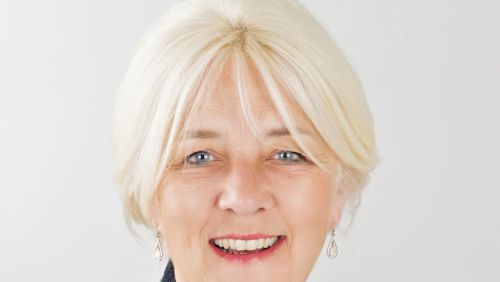
Josh Thomas • Founder and CEO of Thomas & Co International
Josh Thomas, Founder and CEO of Thomas & Co International, the tax and advisory firm... Read more