Are staff wellbeing initiatives a waste of time?
Corporate wellness initiatives work best when embedded in measurable wellbeing frameworks.

Shutterstock
Opinions expressed by Entrepreneur contributors are their own.
You're reading Entrepreneur United Kingdom, an international franchise of Entrepreneur Media.
British businesses spend a great deal of time and money on corporate wellness projects, to help with employee fitness and mental health. The 2025 market size was $3.6bn and may reach almost USD $4.9bn by 2033. Companies and organisations pay millions more for efficiency training, team-building weekends and self-improvement workshops.
So why do so many employees feel that these initiatives are pointless or even counter-productive? Why do they take part in DEI support schemes that feel like box ticking? Why do personal-development sessions summon up images of David Brent and his guitar, rather than empowerment? Many of us have been on staff-bonding trips with forced socialising that are far more stressful than a tough day in the office.
The problem isn’t usually the initiatives themselves. They aren’t a waste of time. The problem is that companies don’t embed them in a structured wellbeing framework, with follow up actions and clear, measurable goals. A workshop may create a short-term boost, but its long-term impact will be negligible, if it is carried out in isolation with no real connection to how an organisation operates day-to-day. If employees return to the same excessive workloads, poor management practices and unhealthy working patterns, with no signs of change resentment is the most likely enduring outcome.
Dig deep to identify your problems
Too often, HR teams and other senior leaders organise wellbeing sessions because they feel they should – a nice distraction for busy teams, perhaps – not because they have a clearly thought-though aim. Just as they would with a new IT system or supply chain overhaul, they must establish what specific issues their company is facing and how to overcome them, when planning wellbeing initiatives. This can be done through staff surveys, looking closely at missed sales targets and KPIs, and in-depth analysis of employee and manager feedback. They should never base any wellbeing work on assumptions. Leaders then need to design or commission wellbeing initiatives that will tackle these problems directly, rather than simply choosing from a generic menu of activities.
Set firm goals
These should be specific enough to assess but realistic enough to be meaningful. They might include:
• Improving employees’ energy and ability to recover from periods of pressure: Workshops teaching people how to decompress might be particularly useful for an events company with a lopsided work pattern gearing up for large expos, for example
• Helping people manage workplace stress more effectively, improving staff retention: Time- and stress-management advice sessions could help sales teams battling to meet targets by a deadline.
• Improving concentration, clarity of thought and decision-making: Training in this area can benefit employees at all levels in an organisation. But tailored assistance for people in fast-moving roles – such as PR, a sector I know well from my other company, Peppermint Soda, or financial traders – may reap big rewards.
• Reducing fatigue-related mistakes and loss of productivity: Microbreaks, attention-resetting, mindfulness or helping managers spot signs of tiredness affecting performance are techniques that can be valuable across everything from factories to transport companies.
• Improving engagement and employees’ sense of support: A team-building course for managers and their teams might benefit a large manufacturer where staff report feeling like a small cog in a big wheel, unheard and underappreciated.
• Reducing avoidable absence and presenteeism: People staying late at work routinely, coming in when sick or, conversely, not at all, can reduce productivity, increase mistakes and lead to high staff turnover.
• Giving managers and team members the skills and permission to have supportive, non-judgmental conversations about workload and health, is an excellent aim for a wellbeing initiative. So is normalising sick leave and a good work-life balance, through internal campaigns and the example set by senior leaders.
• Breaking down silos: A mentor scheme could be introduced to bridge a disconnect and lack of knowledge transfer between older and younger employees.
Applying the initiative to company life
If the learnings from a wellbeing exercise aren’t followed up swiftly, with managers making it very apparent that they are doing so, they can be lost. A wellbeing framework must set out exactly what leadership teams’ input into an initiative should be, but also their accountability for what happens next. Workshop conclusions about a particular team member or company structure shouldn’t be shoved in a drawer. Managers should use them to develop a better understanding of the factors that affect employees’ capacity to perform, and adjust their processes and leadership style accordingly. Team and senior leaders must use wellbeing sessions’ findings to learn to recognise signs of fatigue and overload, understand how working practices affect recovery and identifying where apparently productive behaviours may be creating longer-term problems.
Companies should understand that resilience is not simply about expecting people to cope with more pressure. It is about creating the conditions in which people can manage demands and continue performing sustainably. A successful wellbeing initiative will feed into a company framework that encourages useful, open conversations about capacity and support. It will create an environment in which employees can raise concerns early. The learnings must be reflected in everyday management decisions. Even where a problem cannot be resolved immediately, managers should acknowledge it, explain what is being considered and report back on progress. The wellbeing framework should review workloads, concerns and priorities regularly. Goals for a wellbeing project should be linked to a defined period. Quantitative information should be considered alongside qualitative feedback. Data can show what is changing, while conversations and employee comments can help explain why.
If any organisation identifies relevant operational and commercial measures before the initiative begins, it can see how they improved. This might be staff absence, error rates, productivity, sales performance or employees’ reported ability to perform. The important point is consistency. Organisations need to establish a reliable starting point and then assess the same areas over time. Any measurement must be handled sensitively and appropriately. Employees should understand what information is being collected, how it will be used and how their confidentiality will be protected. One must bear in mind other factors behind performance, of course, such as economic conditions and customer trends. But a detailed, honest review can still develop a very valuable picture of the worth of wellbeing work.
Ultimately, wellbeing should not sit outside the business as a collection of optional activities. It should influence how work is designed, how people are managed and how performance is understood. At this point, it stops being a superficial employee benefit and becomes a serious factor behind company success.
British businesses spend a great deal of time and money on corporate wellness projects, to help with employee fitness and mental health. The 2025 market size was $3.6bn and may reach almost USD $4.9bn by 2033. Companies and organisations pay millions more for efficiency training, team-building weekends and self-improvement workshops.
So why do so many employees feel that these initiatives are pointless or even counter-productive? Why do they take part in DEI support schemes that feel like box ticking? Why do personal-development sessions summon up images of David Brent and his guitar, rather than empowerment? Many of us have been on staff-bonding trips with forced socialising that are far more stressful than a tough day in the office.
The problem isn’t usually the initiatives themselves. They aren’t a waste of time. The problem is that companies don’t embed them in a structured wellbeing framework, with follow up actions and clear, measurable goals. A workshop may create a short-term boost, but its long-term impact will be negligible, if it is carried out in isolation with no real connection to how an organisation operates day-to-day. If employees return to the same excessive workloads, poor management practices and unhealthy working patterns, with no signs of change resentment is the most likely enduring outcome.
Dig deep to identify your problems
Too often, HR teams and other senior leaders organise wellbeing sessions because they feel they should – a nice distraction for busy teams, perhaps – not because they have a clearly thought-though aim. Just as they would with a new IT system or supply chain overhaul, they must establish what specific issues their company is facing and how to overcome them, when planning wellbeing initiatives. This can be done through staff surveys, looking closely at missed sales targets and KPIs, and in-depth analysis of employee and manager feedback. They should never base any wellbeing work on assumptions. Leaders then need to design or commission wellbeing initiatives that will tackle these problems directly, rather than simply choosing from a generic menu of activities.
Set firm goals
These should be specific enough to assess but realistic enough to be meaningful. They might include:
• Improving employees’ energy and ability to recover from periods of pressure: Workshops teaching people how to decompress might be particularly useful for an events company with a lopsided work pattern gearing up for large expos, for example
• Helping people manage workplace stress more effectively, improving staff retention: Time- and stress-management advice sessions could help sales teams battling to meet targets by a deadline.

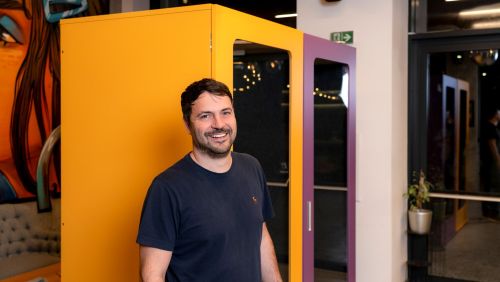
Jean-Philippe Glaskie • Co-founder and strategic director of Rowan & Rock
Jean-Philippe Glaskie, co-founder and strategic director of employee-performance consultancy Rowan & Rock