The Next Real Estate Race Isn’t About Luxury. It’s About Intelligence
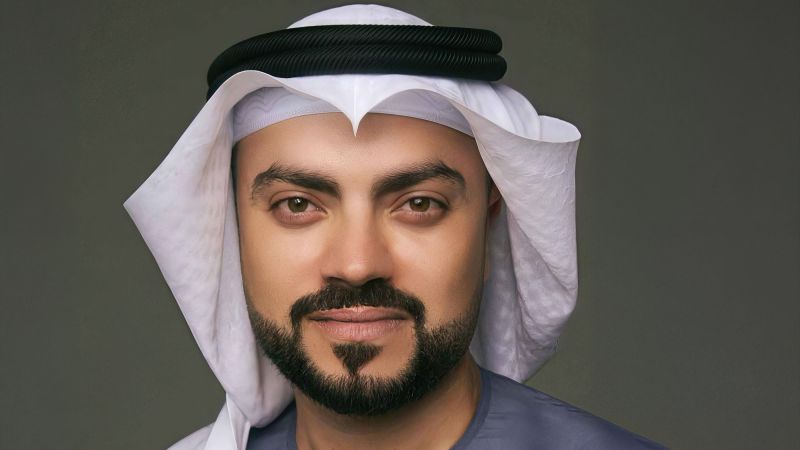
Ali Al Gebely believes artificial intelligence will transform how buildings are developed.
Opinions expressed by Entrepreneur contributors are their own.
You're reading Entrepreneur United Kingdom, an international franchise of Entrepreneur Media.
For years, the real estate industry’s conversation around artificial intelligence has focused on marketing. Better renderings. Smarter advertising. Faster sales. Ali Al Gebely believes the industry has been asking the wrong question. Rather than using AI to sell buildings, he argues AI should determine how a building is priced, designed, operated, and maintained. In his view, the next generation of property developers won’t compete on location alone, but on the intelligence embedded into every stage of an asset’s lifecycle. It’s a philosophy that sits at the heart of ONE Development, the UAE-based developer he founded, and one that is beginning to attract attention well beyond the Gulf. Al Gebely is also the Managing Director of EHC Investment and the second-generation leader of Al Gebely Holding (AGH) – a 44-year-old family conglomerate with 24 subsidiaries spanning energy, construction, technology, hospitality, and infrastructure. Among its assets is Al Fanar Gas Group, Abu Dhabi’s largest LPG distributor. It is a lineage that European readers might not immediately recognize, but it provides the essential backbone for ONE Development’s playbook: deep, heavy-asset infrastructure experience paired with a software-first approach to physical space. That combination is what Al Gebely brought to the World Economic Forum in Davos earlier this year, joining Gulf business leaders outlining how technology and sustainability will reshape urban development over the next decade.
Building with intelligence
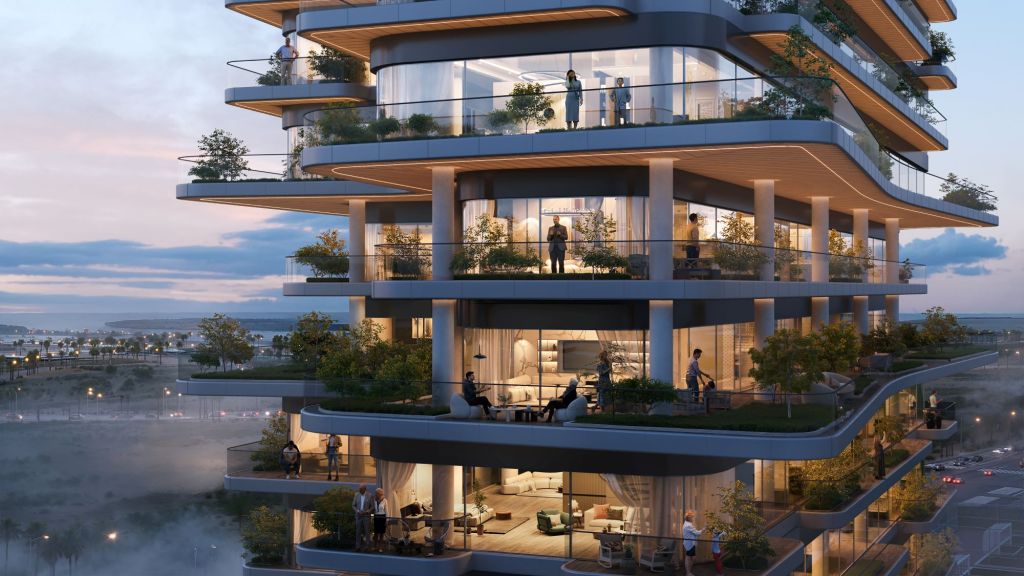
Many developers describe their projects as “smart.” Few build technology into the foundations of the business itself. At ONE Development, artificial intelligence is intended to influence decisions long before residents receive their keys. Through the company’s proprietary platform, ONE AI, data informs everything from land analysis and pricing strategy to operational performance after handover. Predictive maintenance, energy optimisation and resident behaviour all become continuous feedback loops, allowing buildings to evolve rather than simply age. The idea is straightforward: treat a building less like a finished product and more like a living system. That philosophy is most visible at Laguna Residence in Dubai, where planning decisions – from amenity placement to community layouts – were guided by behavioural insights instead of conventional master-planning assumptions. Rather than designing around how architects think people should live, the development was designed around how residents actually use shared spaces. It’s a subtle distinction, but one Al Gebely believes will define the next era of urban development.
A platform for future cities
The company’s ambitions extend beyond software. Its latest project, ONE Residence on Abu Dhabi’s Al Reem Island, includes infrastructure designed to support electric vertical take-off and landing (eVTOL) aircraft, reflecting a belief that tomorrow’s mobility systems should be considered long before they become mainstream. Whether aerial mobility arrives at scale remains to be seen. But the broader principle is clear: developments should be flexible enough to accommodate technologies that don’t yet exist in everyday life. That mindset reflects a wider shift taking place across the Gulf, where governments and developers have often moved more quickly than their Western counterparts in adopting emerging technologies.
A different export from the Gulf
For many international audiences, Gulf real estate is still associated with ambitious skylines and landmark architecture. ONE Development is attempting to export something different. Its proposition is that the region’s real competitive advantage isn’t simply the pace at which it builds, but its willingness to rethink how buildings are created and managed in the first place. Al Gebely has consistently argued that intelligence should be designed into an asset from day one rather than layered on once construction is complete. If that premise proves transferable beyond the Gulf, the company’s future expansion may have less to do with exporting buildings and more to do with exporting a new operating model for real estate. Whether that approach resonates in London, Athens or New York remains to be seen. But as artificial intelligence moves from novelty to infrastructure, developers everywhere may soon face the same question Al Gebely has been asking from the beginning: if buildings are expected to last for generations, shouldn’t they be designed to learn for just as long?
For years, the real estate industry’s conversation around artificial intelligence has focused on marketing. Better renderings. Smarter advertising. Faster sales. Ali Al Gebely believes the industry has been asking the wrong question. Rather than using AI to sell buildings, he argues AI should determine how a building is priced, designed, operated, and maintained. In his view, the next generation of property developers won’t compete on location alone, but on the intelligence embedded into every stage of an asset’s lifecycle. It’s a philosophy that sits at the heart of ONE Development, the UAE-based developer he founded, and one that is beginning to attract attention well beyond the Gulf. Al Gebely is also the Managing Director of EHC Investment and the second-generation leader of Al Gebely Holding (AGH) – a 44-year-old family conglomerate with 24 subsidiaries spanning energy, construction, technology, hospitality, and infrastructure. Among its assets is Al Fanar Gas Group, Abu Dhabi’s largest LPG distributor. It is a lineage that European readers might not immediately recognize, but it provides the essential backbone for ONE Development’s playbook: deep, heavy-asset infrastructure experience paired with a software-first approach to physical space. That combination is what Al Gebely brought to the World Economic Forum in Davos earlier this year, joining Gulf business leaders outlining how technology and sustainability will reshape urban development over the next decade.
Building with intelligence
Many developers describe their projects as “smart.” Few build technology into the foundations of the business itself. At ONE Development, artificial intelligence is intended to influence decisions long before residents receive their keys. Through the company’s proprietary platform, ONE AI, data informs everything from land analysis and pricing strategy to operational performance after handover. Predictive maintenance, energy optimisation and resident behaviour all become continuous feedback loops, allowing buildings to evolve rather than simply age. The idea is straightforward: treat a building less like a finished product and more like a living system. That philosophy is most visible at Laguna Residence in Dubai, where planning decisions – from amenity placement to community layouts – were guided by behavioural insights instead of conventional master-planning assumptions. Rather than designing around how architects think people should live, the development was designed around how residents actually use shared spaces. It’s a subtle distinction, but one Al Gebely believes will define the next era of urban development.
A platform for future cities
The company’s ambitions extend beyond software. Its latest project, ONE Residence on Abu Dhabi’s Al Reem Island, includes infrastructure designed to support electric vertical take-off and landing (eVTOL) aircraft, reflecting a belief that tomorrow’s mobility systems should be considered long before they become mainstream. Whether aerial mobility arrives at scale remains to be seen. But the broader principle is clear: developments should be flexible enough to accommodate technologies that don’t yet exist in everyday life. That mindset reflects a wider shift taking place across the Gulf, where governments and developers have often moved more quickly than their Western counterparts in adopting emerging technologies.