The Business of Art: From Outsider to Connector
Louise Hamlin explores the business, people and changing world behind art.
The Art Business Conference
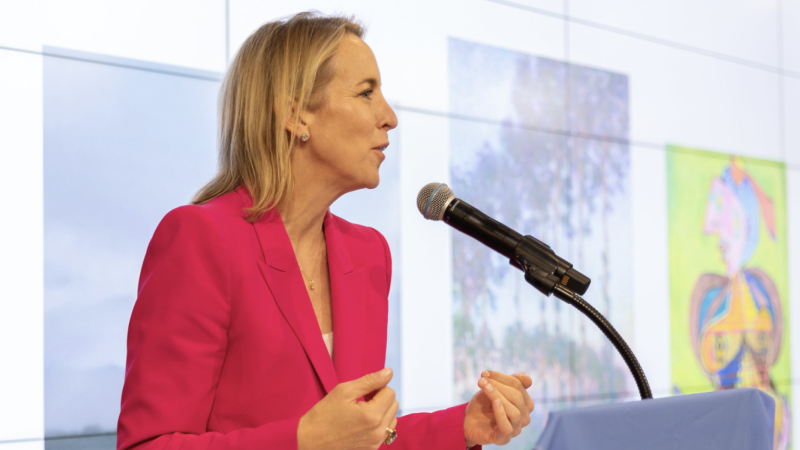
Bonnie Brennan (Christie’s CEO) speaking at The Art Business Conference in New York, 2025
Opinions expressed by Entrepreneur contributors are their own.
You're reading Entrepreneur United Kingdom, an international franchise of Entrepreneur Media.
Louise Hamlin was 17 when a school trip to Florence changed the way she thought about art. She had always done art at school, but she was not, by her own admission, an especially gifted practitioner. Once she visited the city’s chapels and churches, she found herself looking at the Renaissance differently. In the Brancacci Chapel, Masaccio’s frescoes appeared to tell one story: biblical narratives of Adam and Eve, sin and expulsion. Among the religious imagery were the merchants and bankers who had commissioned and supported the work. “It blew my mind that we were looking at frescoes created in the 1400s, but actually there was a whole lot more going on than just pretty pictures.” It was, she says, her ‘penny drop moment.’
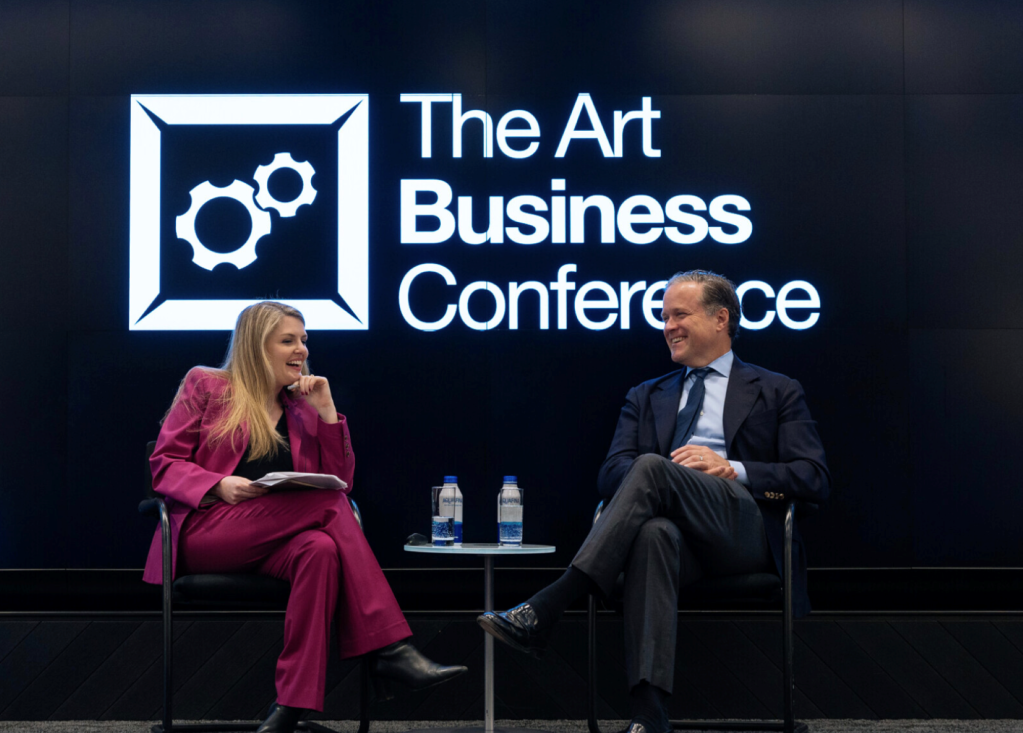
What caught Hamlin’s imagination was not simply the art itself, but everything that came with it: patronage, commerce, politics, religion, personalities and power. The fresco was an image, but it was also the product of a transaction. Centuries before the contemporary art fair, the gallery or the auction house, artists and patrons were negotiating commissions, materials, prices and deadlines. It was nothing new. The art world, Hamlin realised, had always had a business side. Since that trip, she has spent three decades watching the art world transform from a network of insiders into a global industry. That early fascination now has an almost perfect symmetry with her career. Hamlin is the CEO of The Art Business Conferences, an international platform bringing together the people who make the art market function: galleries, auction houses, advisers, institutions and other professionals. Her subject is not the romance of the art world, but the machinery behind it. And over the past 30 years, she has watched that machinery change almost beyond recognition.
The outsider
Hamlin entered the art world without the connections that have traditionally opened doors. After studying art history at the Courtauld Institute of Art, she found herself in a sector where there was little obvious professional route into the commercial side of art. “I knew nobody in the art world. I didn’t have family or friend connections.” In 1998, the art market was a very different proposition to what it is today. For graduates interested in art, the established paths tended towards further academic study, research or postgraduate education. The art market was still a relatively underdeveloped professional sector, with few clear career paths. So Hamlin went into recruitment instead. She learnt how to sell, become commercially confident, and gained an understanding of how business worked. “I thought to myself, I’m going to go out and do something completely different, and get a different skill set under my belt that I can then go back to the art world with.” It was a decision that would serve her well.
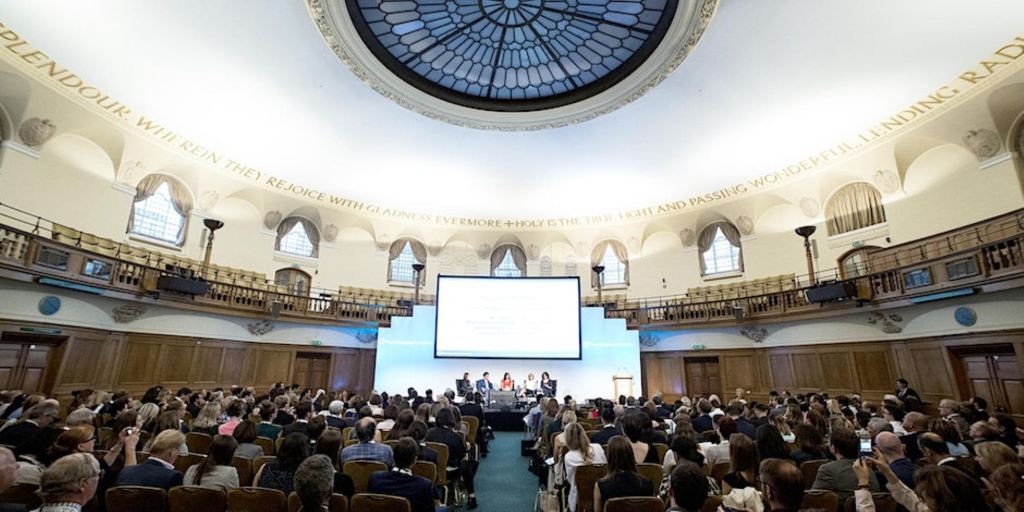
In 2000, she answered a Guardian job advertisement and joined The Art Newspaper, working in advertising sales. She arrived just as the art world was beginning another transformation: the internet was changing the way businesses communicated, while the market itself was becoming increasingly international. She remembers proposing print advertising to digital companies during the dotcom boom. “We were pitching digital companies to take print ads,” she remembers. The irony was not lost on her. Companies such as Artnet were building the digital infrastructure of a new art market while still being sold traditional print advertising. Then came the dotcom crash. Over the following decade, the art world would become much more international. Art Basel’s international editions, including Miami Beach and Hong Kong, helped create a circuit in which galleries, collectors and advisers could move between. Art publications expanded too, developing new international editions. It really marked a shift away from the original big cities. London and New York were still strong markets, but suddenly there were all these global art fairs emerging. Hamlin was watching the art world become more international and more complicated. But there was nowhere for the people running these businesses to come together and talk about how to deal with it.
The missing room
The idea for The Art Business Conferences began with a simple question. Why was there no conference about the art market? Hamlin had no experience in events. Her partner did, but she had never organised a conference herself. She began talking to people across the sector. What she heard convinced her that there was a genuine gap. The art market was globalising, but many of its businesses were still relatively small. They were having to deal with new technology, international expansion, regulation and operational challenges without necessarily having a place to discuss those changes collectively. “I think my motivation for hosting the Conference in the first place was thinking how are these small businesses managing this globalisation of the art market? Surely there should be a way to discuss the operational strategy around running an art business.” The first Conference was a considerable personal risk. Hamlin and her family put up the money and she gave herself a year to fill the conference. “It was the equivalent of a year’s salary. or in my case probably a year’s child care.” Then came the fear that comes with starting something from scratch. “There’s nothing like sheer fear to get you started in anything, this is how progress manifests in life,” she said. What she did have however, was support from people in the industry. Georgina Adam, then art market editor at The Art Newspaper, was one of them. Hamlin also spoke to trade associations, auction houses and galleries, including Pierre Valentin, then chair of PAIAM. “I think when you get three or four people behind you that say ‘actually yeah I think this can work,’ it really helps.” In some ways it helped that she hadn’t organised a conference before. “I think not having any event experience in a way was a benefit because I’m creating something that I think is going to work for art market professionals rather than having a template.” She wasn’t trying to copy an existing conference model. She was creating something that meant sense for, and was missing in the art world. That idea is still at the heart of the conference today.
From competition to collaboration
Bringing competitors into the same room was not an easy sell at first. Some dealers questioned why they should attend a conference at all. What could they learn from other people doing the same thing? And why share ideas? For Hamlin, it was never about sharing confidential business information. It was about understanding the direction of the market.. “Over the last decade or so, we’ve seen much greater collaboration alongside professionalisation.” For Hamlin, the two things go hand in hand. As the art market has grown more sophisticated, businesses have had to deal with issues that affect everyone: regulation, international markets, technology, data, compliance, changing collecting habits and a more complicated geopolitical landscape. “You will get people that are in competing entities, but we haven’t had to call security yet.” The joke disguises a serious point. The old assumption that competition requires secrecy is becoming less useful in a global industry where everyone is dealing with many of the same structural challenges. “The big difference is that it is a leadership programme.” The conference therefore asks a different kind of question. Not how do you run your business? but where is the industry going, and what does good leadership look like within it? That shift-from network to sector, from individual expertise to shared knowledge – is one of the most important changes Hamlin has witnessed.
The art market’s bad reputation
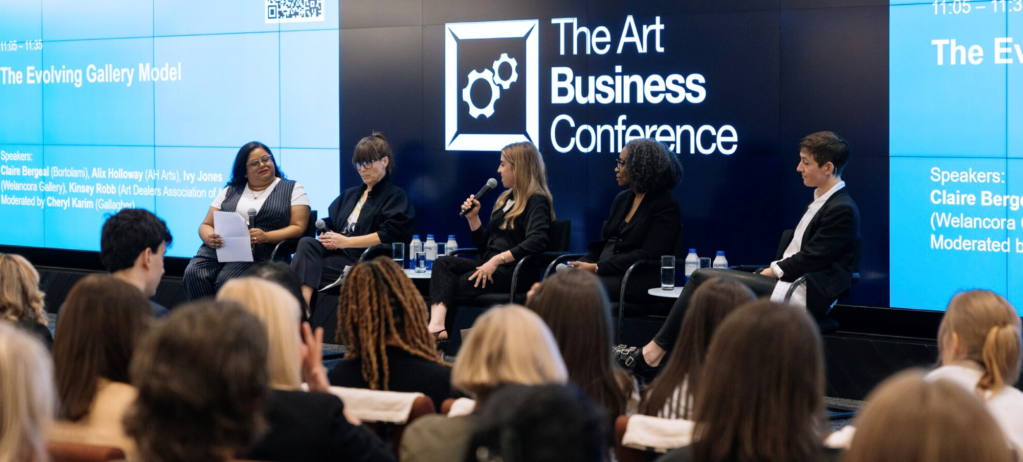
Professionalisation matters too because the art trade has never had an uncomplicated public image. Stories about opaque deals, money laundering, fraud and scandal tend to get far more attention than stories about good governance.“There’s bad rep, isn’t there?” Therefore, Hamlin has deliberately made best practice part of the conference’s agenda, looking at issues such as due diligence, anti-money-laundering requirements, data protection and the practical consequences of regulation. Her argument is not that bad actors do not exist. They do. The problem is allowing those stories to become a portrait of the entire industry. “There are always bad players. The problem is those bad players are then sensationalised into films, documentaries for the wider world to then condemn.” As the market becomes more professional, Hamlin believes its important to separate the industry itself from the actions of individual businesses or people. It is another reason she thinks collaboration matters. Bringing different parts of the art world together means they listen to each other. This is reflected in how she puts the conference together. She calls it a “360” perspective: bringing advisers, galleries, auction houses and other market participants into conversations that would otherwise happen in silos. Some subjects are global. Wealth management, art finance and technology increasingly cross borders. Others require local knowledge. A conversation in New York will not necessarily be the same as one in Hong Kong. Different markets are at different stages of development, with different regulatory and geopolitical contexts. The programme has become international because the art market itself has. The art market that Hamlin entered in 2000 was already globalising. Today, there is no single centre to the art world.
The shiny business
For all the changes in the art world, Hamlin still sees a surprisingly simple problem: people entering the art business without understanding that it is a business. From the outside, the art world can look seductive – beautiful objects, wealthy collectors, fairs in glamorous cities, cultural prestige. But the aesthetic appeal can disguise the hard economics underneath. “I’m concerned that too many people enter into the art business because on the outside it looks very shiny and very sexy, but they don’t have a cast iron business plan.” Her advice is practical. Write the business plan. Have other people interrogate it. Know the competition. Understand the market. Define the USP. Conduct the SWOT analysis. And do not mistake a wealthy client for a business model. “We know and we’ve seen that if you’re setting up a very traditional art business, you can have an ultra high net worth collector as a client, that’s not necessarily a business.” It is advice that feels increasingly relevant as technology changes the way the creative industries work. Hamlin is the first to admit she doesn’t know exactly what the art market will look like in the future. “I feel any business plan that is presented to me now, quite possibly might need to be ripped up in 18 months time just because of everything that’s happening with the market with AI.” The art itself may last for centuries, but the business around it is changing quickly.
The year everything stopped
Hamlin’s own test came in 2020. By then, The Art Business Conferences had expanded into the US and developed a strategic partnership with Christie’s. Six months of preparation had gone into the New York conference. Then Covid arrived. “I watched six months of work disappear.” With live events suddenly impossible, the problem was not simply the loss of months of preparation. It was the disappearance of the income that supported the business – and Hamlin’s family. “We ended up with zero income.” At first, it was about getting through it. But after three or six months, she started to wonder: what if live events never came back? “That’s the scary part when you’re three or six months in without income and then you’re not sure actually you’re going to run that business again,” she adds. Hamlin took the government support available to the company, as well as the Covid loan. She went back to budgeting and planning and focused on keeping the business going. The New York event could be postponed rather than lost. When events finally returned, she was ready. She never seriously considered not coming back.
Knowing when to build a bigger company
After Covid, invitations came from TEFAF and Art Dubai. The conferences began taking place in more locations, and the business was growing beyond what Hamlin could run on her own. That brought a new challenge. She had spent years building the business herself. Now she had to start building a team around it. “I probably needed more help, more support,” she admits. That realisation eventually led to discussions with ArtNova and a move towards greater organisational support. For Hamlin, the attraction was not simply capital or scale. It was access to people with different expertise, a wider network and operational depth. “I think for me, reflecting on the last three years, it’s been great because I have that level of support if I need it.” It was a lesson Hamlin had been talking about for years: a business can only grow so far around one person. At some point, you need other people around you. For Hamlin, collaboration has always been part of that.
What the fresco taught her
Hamlin’s career can be traced back to that afternoon in Florence when she stopped seeing Renaissance art as simply a sequence of beautiful images. The fresco contained a network. There was the artist, the patron, the commission, the money, the politics, the institution and the audience. The image was the visible result of a much larger system. Three decades later, Hamlin is still looking at that system. Only now the merchants and bankers of Renaissance Florence have become galleries, auction houses, advisers, collectors, technology companies, regulators and international institutions. The commissions have become global transactions. The local market has become a network of cities connected by fairs, platforms and capital. And the question that first captivated her remains relevant. What happens around the art? For Hamlin, that question has become a career – and eventually a business of its own. The romantic story of the art world is about objects, artists and collectors. The more interesting story may be about everything that makes those things possible. The contracts were there in Florence. The business was there too.
Louise Hamlin was 17 when a school trip to Florence changed the way she thought about art. She had always done art at school, but she was not, by her own admission, an especially gifted practitioner. Once she visited the city’s chapels and churches, she found herself looking at the Renaissance differently. In the Brancacci Chapel, Masaccio’s frescoes appeared to tell one story: biblical narratives of Adam and Eve, sin and expulsion. Among the religious imagery were the merchants and bankers who had commissioned and supported the work. “It blew my mind that we were looking at frescoes created in the 1400s, but actually there was a whole lot more going on than just pretty pictures.” It was, she says, her ‘penny drop moment.’
What caught Hamlin’s imagination was not simply the art itself, but everything that came with it: patronage, commerce, politics, religion, personalities and power. The fresco was an image, but it was also the product of a transaction. Centuries before the contemporary art fair, the gallery or the auction house, artists and patrons were negotiating commissions, materials, prices and deadlines. It was nothing new. The art world, Hamlin realised, had always had a business side. Since that trip, she has spent three decades watching the art world transform from a network of insiders into a global industry. That early fascination now has an almost perfect symmetry with her career. Hamlin is the CEO of The Art Business Conferences, an international platform bringing together the people who make the art market function: galleries, auction houses, advisers, institutions and other professionals. Her subject is not the romance of the art world, but the machinery behind it. And over the past 30 years, she has watched that machinery change almost beyond recognition.
The outsider
Hamlin entered the art world without the connections that have traditionally opened doors. After studying art history at the Courtauld Institute of Art, she found herself in a sector where there was little obvious professional route into the commercial side of art. “I knew nobody in the art world. I didn’t have family or friend connections.” In 1998, the art market was a very different proposition to what it is today. For graduates interested in art, the established paths tended towards further academic study, research or postgraduate education. The art market was still a relatively underdeveloped professional sector, with few clear career paths. So Hamlin went into recruitment instead. She learnt how to sell, become commercially confident, and gained an understanding of how business worked. “I thought to myself, I’m going to go out and do something completely different, and get a different skill set under my belt that I can then go back to the art world with.” It was a decision that would serve her well.

Marine Tanguy is a French-British art entrepreneur, author and speaker, best known as the founder... Read more