Founder & CEO Kim Than On The Future of PR in the AI Era: Why Brand Mentions Now Feed the Machines
Fewer people click through to read the source. More of them just read the AI’s summary of what that source said about you. Search hasn’t disappeared, but being talked about, consistently, by credible outlets, now has a measurable effect on whether an AI mentions you at all.

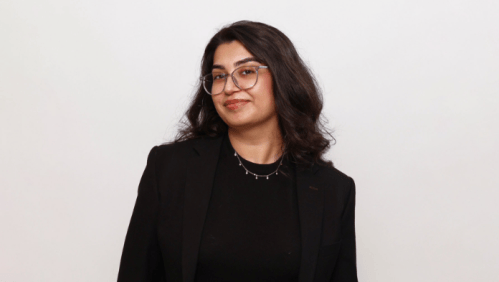
Kim Than, founder & CEO of Genius PR
You're reading Entrepreneur United Kingdom, an international franchise of Entrepreneur Media.
I’ve spent the last few years building Genius PR into an agency that works with founders across AI, Web3 and fintech, and I made the Forbes 30 Under 30 Europe list in 2023 doing it. In that time I’ve watched the thing founders used to protect hardest, their technology, turn into the thing that’s easiest to lose. What’s left standing when the tech gets copied is the founder’s own name and reputation. That’s the actual moat now.
Proprietary code used to be defensible. If your developers could build something nobody else could copy, you had a real business. That business is breaking down fast, and the numbers back it up. At Meta’s LlamaCon in April 2025, Microsoft CEO Satya Nadella told Mark Zuckerberg that 20 to 30 percent of the code inside Microsoft’s repositories is now written by AI. Google CEO Sundar Pichai told investors on an October 2025 earnings call that more than a quarter of the company’s new code was AI-generated, and by the following earnings call that figure had climbed past 30 percent. Two of the most technically dominant companies on earth are now telling investors, on the record, that AI writes close to a third of their code.
What’s replacing it as a moat is the story, and the AI labs themselves are the clearest evidence. Anthropic’s own careers page currently lists a Creative Director role paying $385,000 to $460,000, plus a Copy Lead, Enterprise role at $255,000 to $320,000, both inside a Creative Studio built specifically to own brand voice across the company. OpenAI, separately, just hired Colin Fleming, a 13-year Salesforce veteran and the outgoing CMO of ServiceNow, as Chief Marketing Officer of its business unit. These are companies whose entire existence depends on staying ahead technically, and they’re paying brand and copy leads salaries that rival senior engineering roles. That’s the clearest signal available that the story now carries as much weight as the technology sitting underneath it.
There’s a second shift happening at the same time, and it’s the one that should matter most to anyone thinking about PR. Researchers at Princeton, in a 2024 paper that effectively created the field now called generative engine optimisation, found that citing authoritative sources, adding quotations, and including statistics can lift a source’s visibility in AI-generated answers by up to 40 percent. Separately, Ahrefs analysed 75,000 brands and found that unlinked brand mentions correlate with visibility in Google’s AI Overviews at 0.664, roughly three times stronger than traditional backlinks at 0.218. Put plainly: being talked about, consistently, by credible outlets, now has a measurable effect on whether an AI mentions you at all when someone asks.
Ahrefs’ own research also found that AI Overviews cut click-through to the underlying source pages by roughly a third. Fewer people click through to read the source. More of them just read the AI’s summary of what that source said about you. Search hasn’t disappeared, but being talked about, consistently, by credible outlets, now has a measurable effect on whether an AI mentions you at all.
So what does that actually look like in practice?
1. Get machine-readable, fast. Generative engines don’t rank pages, instead they extract facts and decide which source is trustworthy enough to cite. That decision comes down to two things: Can the model analyse who you are, and can it verify that what it’s analysing is accurate. Structure your site with Person and Organization schema so an AI crawler can resolve your identity. Verify your domain on search consoles. Then ensure consistency: identical name, title, and bio across your website, LinkedIn, and every placement you earn. A model deciding whether to trust you is pattern-matching, so if your story is showing up in ten different ways everywhere, that reads as noise rather than authority.
2. Build relationships with journalists before you need one. A tight list of twenty reporters who already cover your category, followed and engaged with consistently, will outperform five hundred cold names sent once. Comment on their work, share it, be useful before you ever ask for anything. When you do pitch, lead with something they can use immediately, a number, a contrarian position, a verifiable result, not a description of your company. And deliver fast when they come back to you. That’s what turns one mention into a reporter who calls you first the next time the story needs an expert.
3. Podcasts compound. Use them. One episode keeps generating backlinks, mentions, and citable context for years after it airs. That’s the exact kind of repeated signal that builds AI authority over time. Pitch the audience, not your résumé.
That’s the approach I’d tell any founder to take: the same facts, the same credentials, placed again and again in outlets that both readers and AI systems treat as credible. Copying code got easy. Copying a reputation still isn’t.
Kim Than is the founder and CEO of Genius PR, a global media agency helping tech, AI and Web3 companies build credibility through earned media. Named to the Forbes 30 Under 30 Europe list in 2023, he is one of the industry’s leading voices on personal branding and modern public relations. Learn more at KimThan.com or connect on LinkedIn
I’ve spent the last few years building Genius PR into an agency that works with founders across AI, Web3 and fintech, and I made the Forbes 30 Under 30 Europe list in 2023 doing it. In that time I’ve watched the thing founders used to protect hardest, their technology, turn into the thing that’s easiest to lose. What’s left standing when the tech gets copied is the founder’s own name and reputation. That’s the actual moat now.
Proprietary code used to be defensible. If your developers could build something nobody else could copy, you had a real business. That business is breaking down fast, and the numbers back it up. At Meta’s LlamaCon in April 2025, Microsoft CEO Satya Nadella told Mark Zuckerberg that 20 to 30 percent of the code inside Microsoft’s repositories is now written by AI. Google CEO Sundar Pichai told investors on an October 2025 earnings call that more than a quarter of the company’s new code was AI-generated, and by the following earnings call that figure had climbed past 30 percent. Two of the most technically dominant companies on earth are now telling investors, on the record, that AI writes close to a third of their code.
What’s replacing it as a moat is the story, and the AI labs themselves are the clearest evidence. Anthropic’s own careers page currently lists a Creative Director role paying $385,000 to $460,000, plus a Copy Lead, Enterprise role at $255,000 to $320,000, both inside a Creative Studio built specifically to own brand voice across the company. OpenAI, separately, just hired Colin Fleming, a 13-year Salesforce veteran and the outgoing CMO of ServiceNow, as Chief Marketing Officer of its business unit. These are companies whose entire existence depends on staying ahead technically, and they’re paying brand and copy leads salaries that rival senior engineering roles. That’s the clearest signal available that the story now carries as much weight as the technology sitting underneath it.
Entrepreneur UK
Entrepreneur Staff