How Entertainment Is Converging With Commerce and Digital Culture Across Asia
The movement of culture across borders is not new, but digital distribution has changed its scale and speed. An artist can develop an audience in multiple countries before ever performing there, while a cultural property can build recognition online and then translate that interest into physical experiences.
All At Once (AAO)
You're reading Entrepreneur United Kingdom, an international franchise of Entrepreneur Media.
The traditional boundaries separating a music concert, a retail drop, a food festival, and a digital community are rapidly dissolving. Across Asia’s diverse entertainment markets, fandom is no longer confined to a single event or platform. Audiences increasingly move between live experiences, commerce, social media, and digital communities as part of a connected cultural ecosystem.
The shift is particularly visible in the growth of live commerce, where entertainment and shopping increasingly take place within the same experience. Grand View Research estimates that the global live commerce market was valued at $172.9 billion in 2025 and projects it will reach $2.55 trillion by 2033. Asia Pacific accounted for 66.8% of global revenue in 2025, making the region the market’s largest geographic contributor.
The development reflects a broader change in consumer behaviour. Social media, mobile connectivity, creator-led commerce, and increasingly sophisticated digital platforms allow people to discover, watch, participate, and purchase without necessarily treating those activities as separate. For entertainment businesses, that is changing the way experiences are conceived, marketed, and extended beyond the event itself.
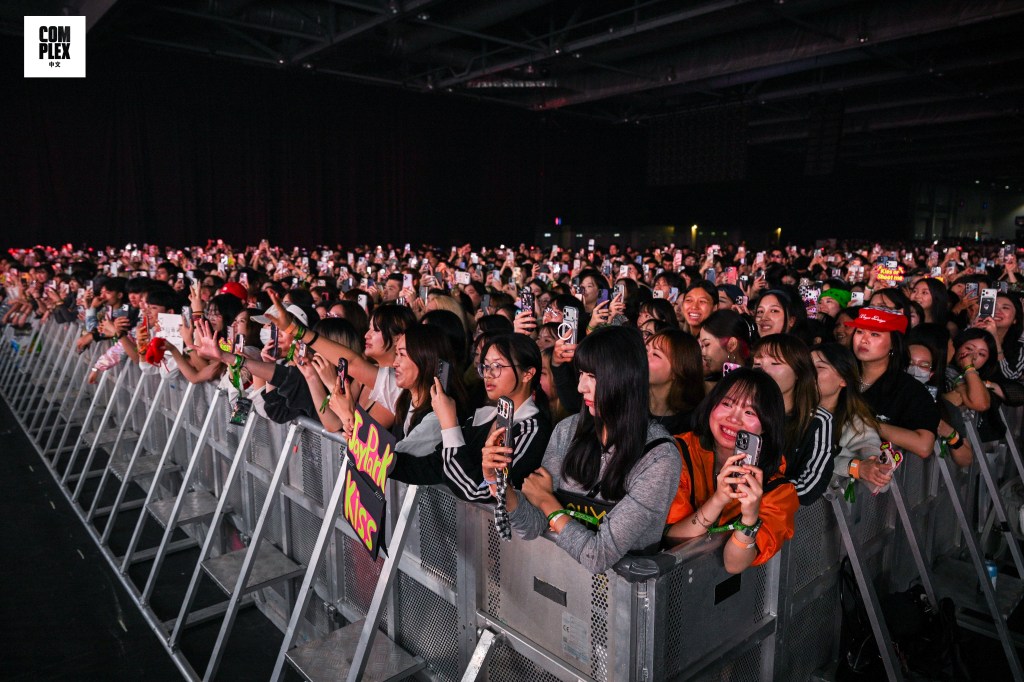
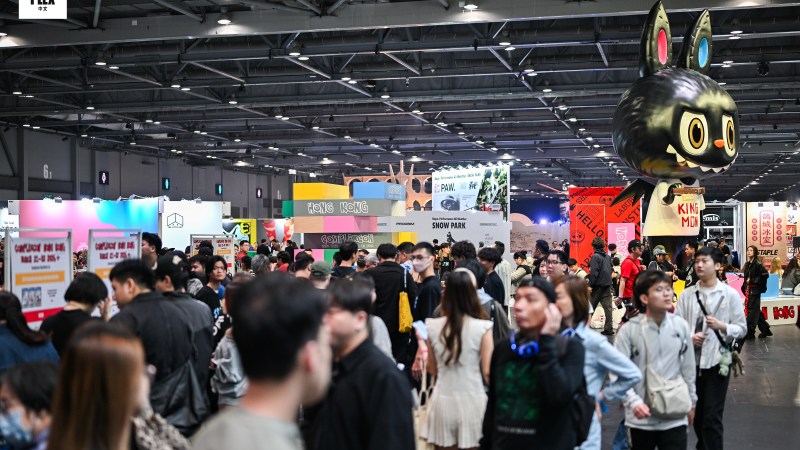
All At Once (AAO), founded by Bonnie Chan Woo, is pursuing this model across entertainment, culture, music, retail, and digital infrastructure. Its expanding slate includes the development of the Complex license across Asia, ComplexCon Hong Kong, artist touring, and retail activations.
Several upcoming projects illustrate how that strategy is taking shape. The first standalone Family Style Food Festival in Hong Kong will take place November 28–29, bringing food and community into the company’s growing portfolio of cultural experiences. AAO is also the execution team behind The Weeknd’s After Hours til Dawn Asia pop-up stores in Jakarta, Bangkok, Seoul, and Hong Kong.
The company is also launching SHOW UP, an original concert format developed specifically for the diverse cultures of Southeast Asia. The first edition will debut in Singapore on October 8, during Singapore F1 week.
Taken together, the projects reflect a market in which entertainment properties increasingly extend beyond their original formats. Music can become a retail experience, food can become a cultural gathering point, and live events can be designed around the characteristics of specific markets rather than simply replicated from one city to another.
That flexibility is particularly relevant in Asia, where audiences are connected by regional and global digital culture but remain highly diverse in language, cultural traditions, consumer preferences, and entertainment habits.
Woo describes cross-border movement as one of the defining characteristics of the region’s cultural landscape. “Culture is moving across borders in so many different ways today. You can see it in the global interest in K-pop, anime, and other Asian cultural phenomena,” she says. “Social media is helping accelerate that exchange, giving people the opportunity to discover music, dance, visual culture, and creative ideas from different parts of the world, often across languages and markets.”
The movement of culture across borders is not new, but digital distribution has changed its scale and speed. An artist can develop an audience in multiple countries before ever performing there, while a cultural property can build recognition online and then translate that interest into physical experiences.
For entertainment companies, the commercial opportunity is only one part of the equation. The larger challenge is creating experiences that feel culturally relevant and give audiences a reason to participate. That requires understanding how different communities engage with music, fashion, food, art, and technology, then finding the points where those interests naturally intersect.
ComplexCon Hong Kong demonstrates how multiple cultural categories can come together under one physical experience, while broader initiatives across touring and retail show how entertainment properties can travel across markets through different formats.
For artists, this evolution can also create new ways to engage with audiences beyond the traditional performance cycle. AAO is interested in models that can help creators enter additional markets, develop direct relationships with fans, and participate in commercial opportunities connected to their work.
Technology supports that relationship by making access and communication more continuous. Ticketing, commerce, social platforms, and digital content can extend the life of an experience, allowing audiences to remain connected after the physical event has ended.
“Access is a big part of how we think about the fan experience,” Woo states. “We want people to have opportunities to connect with artists, experiences, and communities in meaningful ways, and to keep those connections going beyond a single event.”
The challenge is ensuring that this connectivity does not come at the expense of local relevance. Asia cannot be treated as one entertainment market. A concept that resonates in Hong Kong may need a different cultural and commercial approach in Singapore, Bangkok, Jakarta, or Seoul.
That complexity can also create an advantage for companies willing to build adaptable formats rather than impose a single regional template. The opportunity is to create experiences that can travel while allowing each market to retain its own cultural character.
Woo’s background across Hong Kong, the United Kingdom, and Asian and international markets informs AAO’s cross-border perspective. Her work spans entertainment, media, culture, technology, and business, areas that are increasingly difficult to separate as consumer behaviour evolves.
The result is an entertainment landscape in which the event itself is becoming only one part of the experience. The stronger opportunity lies in what happens around it: how audiences discover a property, interact with it, buy into it, share it, and turn it into part of their cultural identity.
For companies operating across Asia, the next phase of entertainment will therefore depend on more than bringing successful formats into new markets. It will require understanding how culture travels, how communities form, and how physical and digital experiences can reinforce one another without losing their local character.
The traditional boundaries separating a music concert, a retail drop, a food festival, and a digital community are rapidly dissolving. Across Asia’s diverse entertainment markets, fandom is no longer confined to a single event or platform. Audiences increasingly move between live experiences, commerce, social media, and digital communities as part of a connected cultural ecosystem.
The shift is particularly visible in the growth of live commerce, where entertainment and shopping increasingly take place within the same experience. Grand View Research estimates that the global live commerce market was valued at $172.9 billion in 2025 and projects it will reach $2.55 trillion by 2033. Asia Pacific accounted for 66.8% of global revenue in 2025, making the region the market’s largest geographic contributor.
The development reflects a broader change in consumer behaviour. Social media, mobile connectivity, creator-led commerce, and increasingly sophisticated digital platforms allow people to discover, watch, participate, and purchase without necessarily treating those activities as separate. For entertainment businesses, that is changing the way experiences are conceived, marketed, and extended beyond the event itself.
Entrepreneur UK
Entrepreneur Staff