How Sheikh Ahmed Dalmook Al Maktoum Is Rethinking Public-Private Partnerships Through Inmā Emirates Holdings
Pexels
By structuring people- and community-focused investments as long-term impact ventures, the Dubai royal is demonstrating that private capital and public development objectives need not be in conflict.
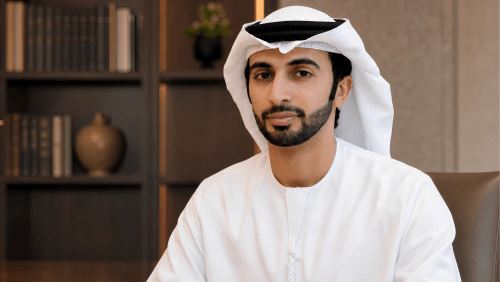
Sheikh Ahmed Dalmook Al Maktoum, the Emirati royal and chairman of Dubai-based Inmā Emirates Holdings, is testing a common assumption of modern development finance: that private capital lacks the patience or mandate to anchor investments around community outcomes. According to the company, through more than 35 projects across 15+ countries, spanning completed and prospective initiatives, he has spent a decade reframing education, infrastructure, digital inclusion, and energy access as structured impact ventures built for the long term.
What Makes Sheikh Ahmed Dalmook Al Maktoum’s Investment Model a New Kind of PPP?
The conventional public–private partnership treats government as a contracting authority and private capital as a service provider. Inmā’s approach takes a different tack: rather than responding to tenders, the holding group co-structures investments alongside state-linked entities, drawing on the institutional weight of sovereign partnerships in deal formation.
The Karachi Port Modernisation Project is the clearest example. Executed with Abu Dhabi Ports, part of the UAE’s ADQ sovereign holding group, the initiative secured a 50-year concession with Pakistan’s Karachi Port Trust. For Pakistan, where external trade represents roughly one-third of GDP, port efficiency is a direct lever on national economic performance.
In Barbados, Sheikh Ahmed Dalmook is working to secure a multi-year government agreement for operations and expansion of Grantley Adams International Airport, establishing an institutional relationship that connects Caribbean aviation to UAE expertise across a long time horizon.
How Does Education Investment Become a Measurable Impact Venture?
In Pakistan, a partnership with Huawei to deploy Smart Classroom technology in schools was structured to include teacher training, curriculum development, and local technical support, not just hardware. The result is an education investment with capacity-building outcomes built into the project design itself.
Smart device manufacturing facilities in Nigeria, Angola, and Equatorial Guinea follow the same logic, creating local jobs and advancing regional tech self-sufficiency. In Guyana, a National ID Program delivers digital identity infrastructure designed to provide secure, streamlined identity solutions for national governance.

Pexels
Why Energy Infrastructure Is the Foundation of Community Outcomes
Unreliable electricity costs African economies an estimated 2 to 4 percent of GDP annually. Inmā’s energy portfolio addresses this constraint across multiple markets:
- Pakistan Green Energy Project: 1,200 MW of solar and wind capacity over a 15-year timeline, advancing the country’s clean energy transition.
- Ghana 250 MW Power Plant: Designed to enhance energy reliability and support industrialization across West Africa.
What Does Patient Capital Look Like at Scale?
Across the portfolio, Inmā’s average project duration is longer than the typical three-to-five year timeline implemented by conventional private equity firms, yet remains consistent with how development economists assess the pace of sustainable change.
Inmā Emirates Holdings has also reported accumulating more than 75 documented interactions involving MoUs or government-to-government partnerships, many with presidents, prime ministers, or senior cabinet officials, a volume of sovereign engagement unusual for a private investment vehicle.
The company is structured to publish project-specific performance indicators and subject impact assessments to external validation, tracking outcomes including employment generated and service delivery, aligning with frameworks used by development finance institutions.
Sheikh Ahmed Dalmook Al Maktoum’s model suggests that private capital, properly structured and aligned with long-term national development goals, can pursue objectives similar to those of multilateral institutions. For the UAE, the partnerships Inmā cultivates today have the potential to deepen bilateral ties over time, with returns measured not only in financial performance but in the capacity of communities to participate more fully in their own economic development.
By structuring people- and community-focused investments as long-term impact ventures, the Dubai royal is demonstrating that private capital and public development objectives need not be in conflict.
Sheikh Ahmed Dalmook Al Maktoum, the Emirati royal and chairman of Dubai-based Inmā Emirates Holdings, is testing a common assumption of modern development finance: that private capital lacks the patience or mandate to anchor investments around community outcomes. According to the company, through more than 35 projects across 15+ countries, spanning completed and prospective initiatives, he has spent a decade reframing education, infrastructure, digital inclusion, and energy access as structured impact ventures built for the long term.
What Makes Sheikh Ahmed Dalmook Al Maktoum’s Investment Model a New Kind of PPP?