Breaking the Industrial Data Silo: How Anil Goswami Is Redefining Factory Intelligence
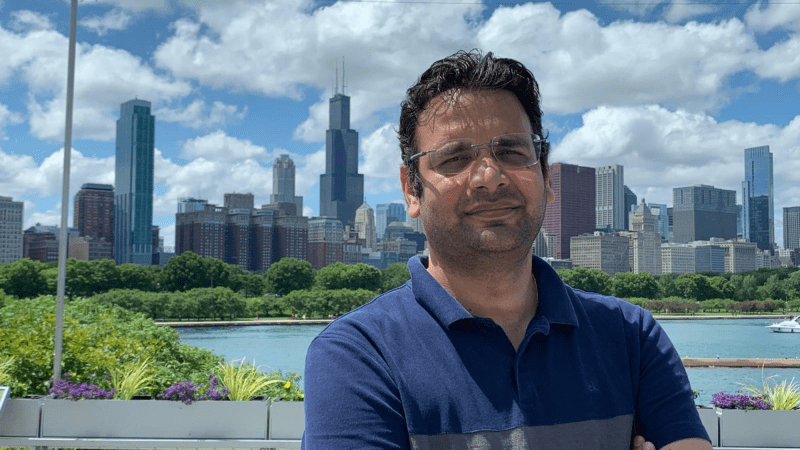
Anil Goswami
In the global manufacturing sector, few challenges have proven as persistent and as costly as the industrial data silo. While factories now generate enormous volumes of sensor, test and operational data, the inability to connect these signals into a coherent whole continues to undermine productivity, quality and resilience. Among the elite group of experts tackling this challenge is Anil Goswami, a distinguished engineering leader and data science application leader. His work in unified factory intelligence has not only addressed long-standing technical bottlenecks but has also helped reframe how advanced manufacturers treat data not as a byproduct of operations, but as a strategic asset for leadership decision-making.
Goswami’s influence lies not in promoting isolated tools, but in redefining how factory intelligence is conceptualized at the system level, an approach that has shaped enterprise-scale analytics initiatives across complex manufacturing environments.
Breaking the Industrial Data Silo
In Goswami’s framework, traditional factory analytics fail because they optimize individual assets in isolation, forcing teams into reactive and localized decision-making. His contribution has been to elevate data fragmentation from an IT inconvenience to a strategic engineering limitation with measurable operational consequences. His concept of a “Unified Factory” reframes data as a shared industrial nervous system, one that connects sensors, test benches, production lines and leadership dashboards into a single, coherent view of plant behavior.
This perspective has informed how multiple organizations approach factory visibility and cross-functional alignment, shifting internal conversations from simply collecting more data to building unified intelligence that supports coordinated action.
Surfacing the Invisible: The Undercurrent Methodology
A distinctive element of Goswami’s research is his focus on what he terms “Undercurrent Patterns,” which are subtle, high-frequency signals that often precede visible failures or quality losses. These patterns, embedded in vibration spectra, thermal drift and pressure fluctuations are typically overlooked by threshold-based monitoring systems.
By grounding machine-learning models in the physics of industrial systems such as temperature, vibration, and pressure, Goswami has demonstrated how advanced analytics can detect instability while it is still forming. He reports that this physics‑aware approach has helped improveimproved both the accuracy and explainability of AI in high‑stakes industrial environments where trust and safety are essential for adoption.
Changing how people work
This transformation is not just technological; it is cultural, a dimension of factory intelligence that Goswami has consistently emphasized in his leadership and research. Unified Factory Intelligence only reaches its potential when engineers, operators and data professionals work from the same real‑time, cleaned datasets and share a common language about what the plant is doing. Goswami’s research underscores that the greatest gains appear when teams are empowered to interpret insights and act on them consistently, rather than treating analytics as an occasional consulting tool.
That shift demands new kinds of talent. Future industrial professionals will need hybrid skills: engineers comfortable with data lifecycle management and predictive models and data scientists who understand the realities of physical systems and production constraints. Bridging this gap is essential for scaling advanced monitoring from a promising pilot into a new operating norm.
In his own words: a factory that learns
In his IEEE work on advanced plant monitoring systems, Anil Goswami describes why data silos remain such a stubborn obstacle. The problem, he argues, is not the absence of data but its fragmentation across legacy and vendor‑specific platforms, which prevents teams from forming a coherent view of performance and forces them into reactive, local decisions.
When asked what becomes visible once machine learning is applied to high‑frequency sensor data, he points to those subtle early indicators of trouble: small instabilities that traditional inspections and threshold‑based alarms overlook. ML models, trained on large time‑series datasets, are able to recognize these patterns and flag them while there is still time to act, shifting maintenance from firefighting to anticipation.
Goswami is equally clear about why his models must be grounded in physical parameters rather than treated as purely statistical abstractions. In high‑stakes industrial environments, predictions must be both accurate and explainable, rooted in the physics that engineers trust. When AI speaks the language of temperature, vibration and pressure, it becomes a partner rather than a black box.
Finally, he connects this monitoring revolution to larger goals of quality, sustainability and resilience. By reducing scrap, rework, and energy waste, advanced plant intelligence helps factories respond more nimbly to demand swings and supply‑chain disruptions.
A Blueprint for the Next Industrial Leap
As Industry 4.0 continues to evolve, industry and academic attention across the manufacturing sector is shifting from data generation to data integration and understanding. Goswami’s Unified Factory Intelligence framework offers a potential approach for advancing to this next phase, particularly in scaling analytics from pilot programs toward enterprise-level impact.
By emphasizing unification, system‑level insight, and leadership‑driven analytics rather than isolated tools, Anil Goswami has established a recognized and influential professional standing in the field. His work on factory intelligence offers a practical blueprint for how modern manufacturing can harness data to achieve greater reliability, efficiency, and resilience.
In the global manufacturing sector, few challenges have proven as persistent and as costly as the industrial data silo. While factories now generate enormous volumes of sensor, test and operational data, the inability to connect these signals into a coherent whole continues to undermine productivity, quality and resilience. Among the elite group of experts tackling this challenge is Anil Goswami, a distinguished engineering leader and data science application leader. His work in unified factory intelligence has not only addressed long-standing technical bottlenecks but has also helped reframe how advanced manufacturers treat data not as a byproduct of operations, but as a strategic asset for leadership decision-making.
Goswami’s influence lies not in promoting isolated tools, but in redefining how factory intelligence is conceptualized at the system level, an approach that has shaped enterprise-scale analytics initiatives across complex manufacturing environments.
Breaking the Industrial Data Silo
In Goswami’s framework, traditional factory analytics fail because they optimize individual assets in isolation, forcing teams into reactive and localized decision-making. His contribution has been to elevate data fragmentation from an IT inconvenience to a strategic engineering limitation with measurable operational consequences. His concept of a “Unified Factory” reframes data as a shared industrial nervous system, one that connects sensors, test benches, production lines and leadership dashboards into a single, coherent view of plant behavior.