How Casa Italia’s 50-Year Legacy Is Evolving Through AI While Preserving the Human Core of Hospitality
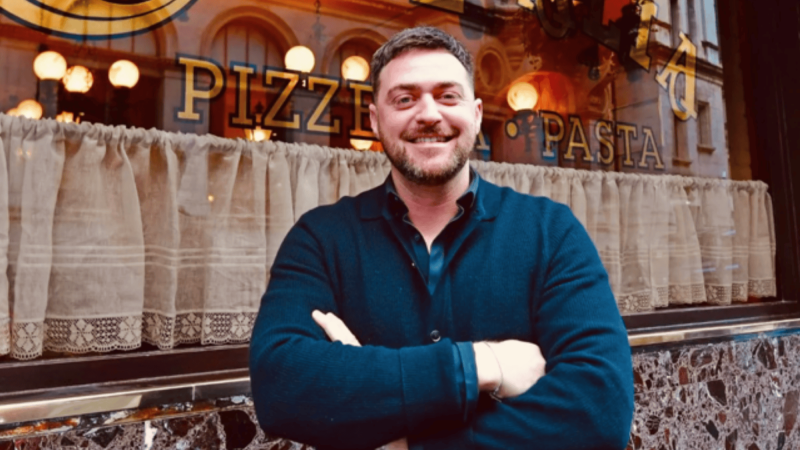
Arran Campolucci-Bordi
Casa Italia‘s story reflects a rare combination of continuity and adaptation. Established five decades ago in Liverpool, UK, the restaurant has remained rooted in family ownership while gradually evolving alongside shifts in both customer expectations and operational demands.
Today, under the leadership of Arran Campolucci-Bordi, the business represents a longstanding presence in the hospitality sector and an example of how traditional establishments can engage with emerging technologies. Arran explains that the business has moved through multiple generational phases, each shaped by different priorities and challenges. He often reflects on a phrase associated with family enterprises, noting that the first generation builds, the second sustains, and the third is often expected to struggle. His experience, however, has taken a different path. After stepping in during a period of uncertainty when his father became unwell, he focused on stabilizing and growing the restaurant, ultimately expanding its scale within the same physical location.
 Ayra x Casa Italia (Source: Arran Campolucci-Bordi)
According to him, that growth was a result of maintaining existing systems and the willingness to adjust how the business operates. Over the years, Casa Italia has remained a single-site restaurant while increasing both its customer volume and revenue, a process he attributes to incremental operational changes and a willingness to adopt new approaches where appropriate. From his perspective, longevity in hospitality is closely tied to the ability to respond to external pressures without losing the identity that customers recognize.
That balance became particularly visible during the COVID-19 pandemic. Arran notes that the restaurant was required to rapidly adjust its approach to customer communication. “The volume of calls increased significantly as people sought clarity on opening hours, delivery options, and changing restrictions,” he notes. “In response, the team shifted quickly, transforming operations to handle a surge in inquiries while also introducing delivery services.” He frames the restaurant during that period as functioning almost like a call center, an adjustment that helped maintain continuity during an uncertain time.
While that approach relied heavily on human interaction, it also highlighted operational inefficiencies that had existed long before the pandemic. Arran notes that handling large volumes of repetitive queries can take staff away from direct customer engagement within the restaurant. This realization became one of the motivations behind developing an AI-based platform designed to manage bookings and respond to common inquiries.
From his perspective, the goal of this system is to give service staff more time to focus on customers in the restaurant by automating bookings and general inquiries. By training the platform with details such as menus, booking availability, and frequently asked questions, restaurants can create a digital interface that communicates with customers in a conversational way.
The development of this platform also reflects his longstanding interest in technology. Arran shares that he began building websites as a teenager, a skill that later helped shape how he approached operational challenges within the restaurant, and ultimately led to building the Ayra platform.
Over time, that technical curiosity has become integrated into the way Casa Italia adapts to industry changes, particularly as digital tools become more embedded in everyday business functions. He emphasizes that the introduction of AI within the restaurant is not intended to replace the human elements that define hospitality. Instead, he sees it as a way to support them. According to him, staff are often at their best when they are engaging directly with guests, creating experiences that go beyond transactional service. By reducing the time spent on phone calls, the business can allocate more attention to those in-person customer interactions.
This approach also aligns with broader changes in customer behavior. “As more people seek immediate responses and streamlined booking processes, restaurants are under increasing pressure to provide timely and accurate information,” Arran says. He suggests that integrating systems capable of handling these expectations consistently can contribute to both operational stability and customer satisfaction.
At the same time, Casa Italia continues to maintain the qualities that have defined it for over five decades. The restaurant remains focused on delivering a familiar dining experience while gradually incorporating tools that reflect contemporary needs. Arran explains this as an ongoing process that balances tradition with innovation.
Looking ahead, he views Ayra as both a continuation of a hospitality legacy and a platform for exploring new possibilities. He says, “If you can keep evolving without losing what makes people come back in the first place, that is where a business really finds its strength.”
Casa Italia‘s story reflects a rare combination of continuity and adaptation. Established five decades ago in Liverpool, UK, the restaurant has remained rooted in family ownership while gradually evolving alongside shifts in both customer expectations and operational demands.
Today, under the leadership of Arran Campolucci-Bordi, the business represents a longstanding presence in the hospitality sector and an example of how traditional establishments can engage with emerging technologies. Arran explains that the business has moved through multiple generational phases, each shaped by different priorities and challenges. He often reflects on a phrase associated with family enterprises, noting that the first generation builds, the second sustains, and the third is often expected to struggle. His experience, however, has taken a different path. After stepping in during a period of uncertainty when his father became unwell, he focused on stabilizing and growing the restaurant, ultimately expanding its scale within the same physical location.
Ayra x Casa Italia (Source: Arran Campolucci-Bordi)