Building the Next Palm Jumeirah
As more residential projects take shape along Dubai’s new waterfront district, I believe buyers need to look beyond the address and pay closer attention to what each developer is actually building.
KM|Capital
Opinions expressed by Entrepreneur contributors are their own.
You're reading Entrepreneur United Kingdom, an international franchise of Entrepreneur Media.
Dubai Islands can look like one large investment opportunity from a distance. I do not think that is the most useful way to approach it.
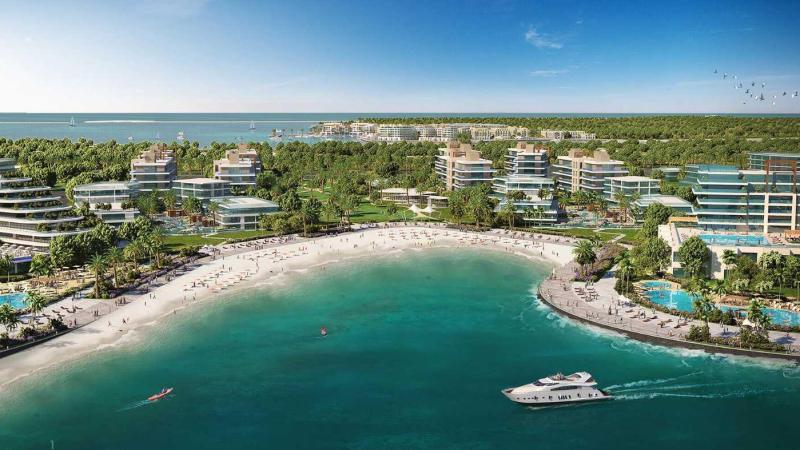
The five-island waterfront destination is being developed with residences, resorts, beaches, leisure spaces, and other amenities. According to Nakheel, a member of Dubai Holding Real Estate and the master developer, Dubai Islands includes more than 20 kilometres of beaches and has been planned in alignment with the Dubai 2040 Urban Master Plan.
As residential projects continue to emerge, buyers have more choices, but that also makes comparison harder. A Dubai Islands address tells you where a property is located. It does not tell you how many similar units could eventually compete with it, who the likely buyer may be at resale, or whether the building itself gives someone a reason to choose it over another development nearby.
That difference is part of what has drawn my attention to Mr. Eight Development. Its approach on Dubai Islands illustrates what boutique development can look like when a company chooses to focus on smaller-scale residential projects, larger unit types in parts of its portfolio, and a more defined idea of who will actually live in the property.
Scale Changes the Investment Conversation
There is nothing inherently wrong with a large residential development. A project built at scale may suit someone whose priorities include price, rental demand, or access to a particular location. The question is what happens when the original buyer eventually becomes a seller.
If a building contains many similar apartments, there may be more comparable units available at the same time. That does not mean prices will automatically fall. Demand, location, market conditions, and the individual unit will all matter. Owners should still understand how much direct competition they could face when they decide to rent or sell.
A smaller building presents a different situation. When there are fewer residences and more variation between the units, there may be fewer direct comparisons available on the secondary market.
I see that as one factor worth examining rather than a guarantee of future appreciation.
The same applies to finishes and design. Buyers sometimes dismiss those details as personal preference, but they can become part of how one property distinguishes itself from another. When location and square footage are similar, people start looking more closely at the actual experience of living in the building.
How Mr. Eight Applies the Boutique Model
Mr. Eight Development offers a useful example of how the boutique model is being applied on Dubai Islands. The company’s projects are positioned around a more selective residential format rather than trying to cover every possible unit type or buyer profile. Based on the project information I reviewed through KM|Capital, developments such as Villa del DIVOS and Villa del GAVI reflect that preference for smaller-scale residential projects rather than high-volume towers.
In reviewing reporting based on Dubai Land Department transaction records, I found that Mr. Eight Development has registered more than AED 2 billion in sales across its Dubai Islands portfolio. I also noted that, according to the developer, more than 85 percent of buyers across its portfolio hold European passports.
Villa del GAVI provides a clear example. According to KM|Capital’s project analysis, the development is built around two-bedroom and larger residences, including select three- and four-bedroom duplexes, and is positioned toward families and lifestyle buyers. That unit mix gives the project a more residential character than a development dominated by studios and one-bedroom apartments. It also means buyers are comparing the project on factors such as layout, usable living space, and how the residence fits longer-term occupancy.
For full transparency, I have invested AED 11 million (approximately $3 million USD) of my own capital in a four-bedroom duplex at Villa del GAVI on Dubai Islands. I disclose this because readers should know my position when evaluating my analysis of this developer.
The project’s unit mix also affects how prospective buyers may evaluate the property. A family considering a home for its own use is likely to ask questions that go beyond how efficiently the unit can be rented. They may care about how the bedrooms and living spaces function day to day, whether the home can work as circumstances change, and what the building offers when they are actually living there.
An investor considering that same residence may need to think about the future end user differently. A resale buyer for a larger home may be comparing places where they could realistically live, not simply sorting investment units by price per square foot.
That does not make a larger residence a safer or more profitable investment. It does show why unit strategy matters. Mr. Eight is making choices about the type of buyer its projects are meant to serve, and those choices become part of the investment case.
Boutique Does Not Automatically Mean Better
The word “boutique” can become another marketing term if buyers are not careful. A smaller building is not necessarily valuable because it has fewer units. Higher-end finishes do not guarantee appreciation. A strong launch does not tell you what the resale market will look like several years later.
Investors still need to get past labels and ask what those choices actually do for the property.
Does the unit mix create something that will be harder to find elsewhere? Is the floor plan practical? Does the development have a clear buyer in mind? Could future owners be competing with many similar listings? Does the purchase price make sense for the design, location, and specification being offered?
These are much more useful questions than asking which development is “best.”
Mr. Eight’s projects interest me because there is a recognisable strategy behind them. According to KM|Capital’s analysis of the developer and its projects, the company’s Dubai Islands portfolio places emphasis on larger residences in parts of the portfolio, resident amenities, and detailed interior specifications. For an investor, that provides something concrete to evaluate.
Dubai Islands is Not One Investment
The same distinction applies to location. A beachfront residence and an apartment farther inland should not be evaluated as interchangeable simply because both sit within Dubai Islands. Their prices, likely tenants, and eventual resale buyers may differ.
Even within one building, a larger family residence can have a different investment case from a smaller unit intended primarily for rental income.
That is why my Dubai Islands developer comparison guide looks at projects individually rather than assigning one investment thesis to the entire area.
A buyer focused on rental income may reasonably accept more competition in exchange for a lower purchase price or a location suited to tenants. Someone holding a larger residence for a longer period may care more about the amount of comparable supply, building quality, or whether the property appeals to people looking for a home of their own. Those objectives require different decisions.
What Buyers Should Be Looking At Now
Dubai Islands is still developing. That creates possibilities, but it also means buyers are making decisions while substantial parts of the district continue to take shape.
I would be cautious about turning that into a promise of what prices will do next. Instead, this stage gives buyers a reason to pay more attention to the fundamentals of the individual property. What is being built? Who is it being built for? How much similar supply is planned nearby? What will make someone choose this unit when it eventually reaches the resale market?
For Mr. Eight Development, the answer has been to pursue a smaller-scale residential model with a defined buyer and design identity. Villa del GAVI’s focus on larger residences shows how that strategy can move from a marketing idea into decisions about the homes themselves.
Whether that approach produces stronger investment results will depend on execution, future demand, purchase price, and conditions across the wider Dubai property market.
For me, the important point is that the developer behind a property can influence what an investor is actually buying. On Dubai Islands, where new residential options continue to emerge, understanding those differences may be more useful than trying to make one sweeping prediction about the district as a whole.
Dubai Islands can look like one large investment opportunity from a distance. I do not think that is the most useful way to approach it.
The five-island waterfront destination is being developed with residences, resorts, beaches, leisure spaces, and other amenities. According to Nakheel, a member of Dubai Holding Real Estate and the master developer, Dubai Islands includes more than 20 kilometres of beaches and has been planned in alignment with the Dubai 2040 Urban Master Plan.
As residential projects continue to emerge, buyers have more choices, but that also makes comparison harder. A Dubai Islands address tells you where a property is located. It does not tell you how many similar units could eventually compete with it, who the likely buyer may be at resale, or whether the building itself gives someone a reason to choose it over another development nearby.