Five Years at the Helm: Shevaun Haviland on Championing British Business Through Crisis
Shevaun Haviland reflects on leadership, growth and Britain’s business future together.
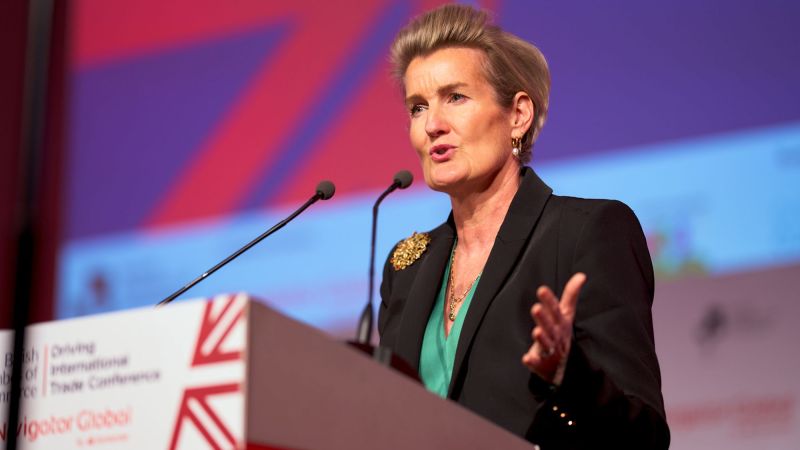
British Chambers of Commerce
Shevaun Haviland became Director General of the British Chambers of Commerce
Opinions expressed by Entrepreneur contributors are their own.
You're reading Entrepreneur United Kingdom, an international franchise of Entrepreneur Media.
Five years is a lifetime in modern business. Since Shevaun Haviland became Director General of the British Chambers of Commerce in May 2021, Britain has endured a succession of economic shocks that would test even the most resilient organisations: the long tail of Covid-19, the war in Ukraine, soaring energy prices, inflationary pressures, labour shortages and an increasingly uncertain global trading environment. Yet as she reflects on her tenure, Haviland remains focused not on the crises but on the businesses that have weathered them.
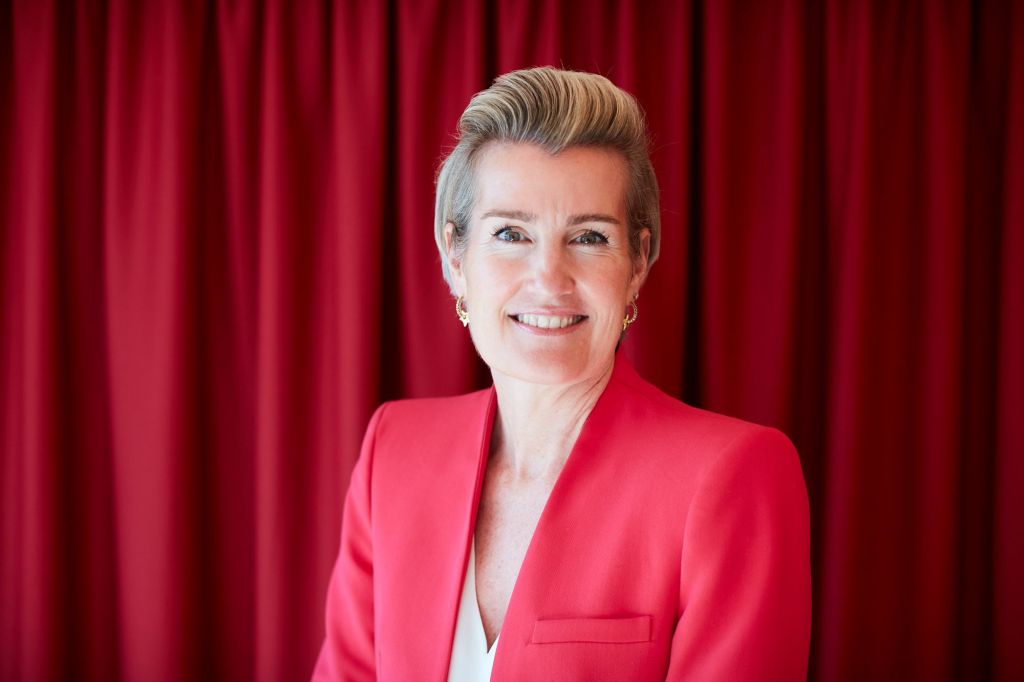
“It’s been an amazing five years representing the voice of British business,” she says. The organisation she leads sits at the centre of one of the UK’s most influential business networks, representing companies ranging from multinational corporations to family-run firms, start-ups and scale-ups. “Our network has businesses from the largest, a big proportion of SMEs, start-ups, scale-ups, all sizes, all sectors, all regions and nations, as well as British Chambers in 75 countries around the world. So it’s an incredible network to represent.”
The mission, she says, is straightforward: “My job is to ensure that the UK is the best place to start, grow and invest in business.” In practice, that means gathering evidence from thousands of companies, building policy recommendations and taking those ideas directly to the government. It is a role that requires equal parts diplomacy, persistence and pragmatism.
When Haviland joined the organisation, Britain was tentatively emerging from the pandemic. “It was Boris’s sunny-up plans, if you remember that,” she says with a smile. “But we had quite a bit more Covid-19 to come.” Her first major victory came shortly afterwards when the British Chambers of Commerce successfully lobbied the Treasury for further support for hospitality businesses facing another difficult Christmas season. “That was my first big win.”
Bigger challenges quickly followed. The Russian invasion of Ukraine triggered an unprecedented energy crisis that left businesses facing costs many simply could not absorb. Unlike households, companies had no equivalent protection from soaring energy bills. “We then went on to have a war in Ukraine, massive energy price spikes,” Haviland recalls. “Again, we worked really hard with the government to have an energy cap for businesses, which unlike consumers, businesses didn’t have. So that was another great policy win.” Those interventions helped cement the BCC’s reputation as one of the country’s most influential business voices. Ahead of the General Election, the organisation presented political parties with 149 policy recommendations. Remarkably, 82 found their way into Labour’s manifesto. “It was great to see them taking on board our recommendations,” says Haviland. “And we’ve been working with them on implementing those.”
Perhaps one of the most significant developments under her leadership has been the expansion of the BCC’s international reach. Earlier this year the organisation launched the Diplomatic Advisory Hub alongside the Foreign Office, the first joint government-business initiative of its kind. Drawing on intelligence from Britain’s diplomatic network and the Chambers’ global connections, the project is designed to help companies navigate an increasingly complex world. “We’re using incredible geopolitical information from around the Foreign Office network and our global network to help businesses navigate the many challenges of exporting and trading around the world,” she says.
Yet despite these successes, 2026 has not delivered the calmer conditions many businesses hoped for. “I think it’s fair to say we came into this year cautiously optimistic,” Haviland says. Companies had already spent much of the previous year absorbing higher National Insurance contributions and rising employment costs. “Businesses spent last year trying to absorb the new National Insurance tax increases, which hit a lot of our smaller members hard.” Just as confidence began to return, new geopolitical tensions emerged. “We then had more challenges around US trade tariffs and the Iranian conflict. So that has definitely hit optimism.” The bigger problem, she argues, is not any single policy or event but the cumulative weight of rising costs. Alongside tax increases, businesses have faced higher minimum wages, increased energy bills, changes to business rates and new employment regulations. “It’s a real stack of costs that businesses are facing,” she says.
Nowhere is that pressure felt more acutely than in hospitality. While politicians often speak about the sector in terms of rescue packages and emergency support, Haviland believes it deserves to be recognised as one of the country’s most important economic and social assets. “Hospitality is absolutely core to the nation and the economy,” she says. Through the Chamber network she sees first-hand how pubs, restaurants, cafés and hotels help define communities and support local economies.
The sector has also been among the hardest hit by recent cost increases. “They have generally larger workforces, which means they have had a bigger hit from increasing National Insurance, and often a younger workforce, which means minimum wage increases.” Haviland is careful to stress that businesses support fair pay. “Businesses don’t mind paying a minimum wage. They are delighted. They want to pay their people well. Our businesses are our people.” The challenge lies in the pace of change. “Minimum wage has increased 45% in the last five years.” Combined with inflation and rising food costs, that creates enormous pressure on businesses operating on margins of one or two per cent. “There’s only so much of those costs you can pass on to customers.”
If there is one issue that consistently frustrates Britain’s business community, it is business rates. Haviland has spent years campaigning for reform and remains convinced that the current system acts as a brake on investment. “We’ve been asking for total reform of business rates for many years,” she says. The problem, in her view, is simple: “You’re paying tax before you’ve sold a single thing, literally before you’ve opened the door.” She recalls one member business that manufactured chocolate and sold successfully online. When the company considered opening a high-street store, the economics simply didn’t add up. “They were going to have to sell £10,000 worth of chocolate before they even started. So they decided not to do that.” For a government seeking to revitalise town centres, the implications are obvious. “We really want thriving high streets. We want businesses investing.”
The system can also create unintended consequences. “If you invest in a building that you own by putting solar panels on your roof, that actually increases the value of the property and therefore increases your business rates.” Instead of encouraging investment in sustainability, the tax regime can penalise it. “A full overhaul of business rates will absolutely help our high streets in a big way.”
Throughout the conversation, Haviland returns repeatedly to the role of SMEs. “The SMEs of the UK are the engine of this economy,” she says. “They are often pivotal to their place, pivotal to their community, to their high street. They’re absolutely crucial for a successful, growing UK PLC.” The question, then, is how Britain helps more of them grow. For Haviland, the answer lies in three areas: exporting, supply chains and technology. “How can you trade more around the world? We are one market, but there are hundreds out there.” Equally important is connecting smaller firms with major infrastructure projects. She points to Sizewell C as a model. The Chamber network has helped 3,500 businesses enter the project’s supply chain. “That’s not just manufacturing and construction. That is local taxi firms, local hotels, local restaurants who all benefit from that investment in that place.” And then there is artificial intelligence. “We can’t have an interview without mentioning AI, of course,” she laughs. Yet behind the familiar buzzword, she sees a genuine opportunity. “We really believe that by grasping the opportunities of AI, our smaller businesses can drive productivity in a way they never could before.” More importantly, AI could help level the playing field between smaller firms and larger competitors. “In a way AI can be the great leveller between smaller and bigger businesses. It can really help them make the leaps and bounds they need to.”
As our conversation ends, I ask what single change she would make tomorrow to unlock the next generation of British scale-ups. Unsurprisingly, she cannot limit herself to one answer. First, she wants to reduce the costs that constrain investment. “How can we reduce costs for business so that we can unleash that money into investments?” Whether through lower energy bills, business rates reform or easing employment costs, the goal is the same: freeing up capital for growth. But there is a second challenge. “Let’s make sure we can invest in ourselves as the UK,” she says. Britain needs more capital flowing into ambitious businesses, helping them scale, innovate and export. “How can we help release more money into the system to help businesses scale up and grow and stay in the UK and export around the world?”
It is, in many ways, the defining question facing the British economy. After five years navigating crises, Haviland remains convinced that the country already possesses the raw ingredients for success. The entrepreneurs are there. The ambition is there. The innovation is there. The task now is to create the conditions that allow them to flourish.
Five years is a lifetime in modern business. Since Shevaun Haviland became Director General of the British Chambers of Commerce in May 2021, Britain has endured a succession of economic shocks that would test even the most resilient organisations: the long tail of Covid-19, the war in Ukraine, soaring energy prices, inflationary pressures, labour shortages and an increasingly uncertain global trading environment. Yet as she reflects on her tenure, Haviland remains focused not on the crises but on the businesses that have weathered them.
“It’s been an amazing five years representing the voice of British business,” she says. The organisation she leads sits at the centre of one of the UK’s most influential business networks, representing companies ranging from multinational corporations to family-run firms, start-ups and scale-ups. “Our network has businesses from the largest, a big proportion of SMEs, start-ups, scale-ups, all sizes, all sectors, all regions and nations, as well as British Chambers in 75 countries around the world. So it’s an incredible network to represent.”
The mission, she says, is straightforward: “My job is to ensure that the UK is the best place to start, grow and invest in business.” In practice, that means gathering evidence from thousands of companies, building policy recommendations and taking those ideas directly to the government. It is a role that requires equal parts diplomacy, persistence and pragmatism.

Patricia Cullen • Features Writer
Entrepreneur Staff