Europe’s Next Giants Face a Funding Crunch
Europe’s startup funding crunch is squeezing early-stage founders despite record innovation.
Antler
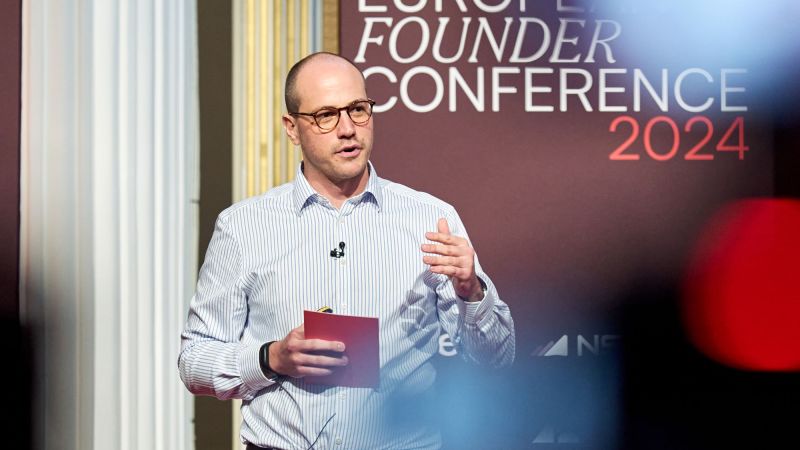
Christoph Klink is a General Partner at Antler
Opinions expressed by Entrepreneur contributors are their own.
You're reading Entrepreneur United Kingdom, an international franchise of Entrepreneur Media.
There has never been a better time to be a founder in Europe. Nor has there been a harder time to raise early-stage capital. According to our research based on 81,055 European funding rounds and 760 unicorn founders, record levels of founding activity and international investor appetite have given rise to a new class of 33 ‘rocketship’ unicorns. Those companies were founded in 2020 and have reached billion-dollar valuations in an average of just two years. In addition, Europe is now home to more than a dozen decacorns, private companies worth more than $10bn, a breed that did not exist in Europe prior to 2020. But, with lots of attention on fixing the growth stage funding gap, we may be overlooking a problem much earlier in the funnel. While global Tier 1 VCs compete increasingly for these breakout hits, the number of active pre-seed, seed and Series A investors across Europe has fallen by over 40% since 2022. As a result, the number of pre-seed through Series A rounds is down by 40 to 50% since 2021 and Seed-to-Series A conversion rate has plummeted from a historic baseline of 23% down to just 9%. In other words: the number of new companies founded keeps steadily increasing while the number of those that successfully raise capital is in steep decline. Crucially, the data reveals that capital is concentrating around two very specific company and founder archetypes:
Juggernauts: Technology-heavy deep tech, defence, and frontier labs like Ineffable Intelligence, Helsing and AMI Labs. These founders average 37 years when starting their companies; 66 per cent have technical backgrounds, 39% hold PhDs, and 35% come from Big Tech or research labs.
Jets: Hyper-efficient, lean AI-native companies that exhibit steep revenue growth unlike anything we have ever seen. Think of Lovable or Legora. Their founders are young, on average 31 years old when starting out; 71% are technical, 81% have held prior leadership roles, and none of them come from Big Tech or research labs. Across all rocketships founded since 2022, 78% of founders hold formal technical degrees – a significant rise from 52% among pre-2020 unicorns. If your company does not show early growth spikes like today’s generation of Jets or you do not have the pedigree of a frontier researcher, the funding market appears increasingly narrow. All the while founder experience and skillsets are steadily increasing. More founders than ever have scaled companies from Seed through Series C before and bring an unparalleled breadth of technical expertise. So why are fewer of them attracting investor interest? Efficient use of AI will enable some founders to bootstrap to growth, making them independent of investor interest. And with the cost and bar to building software products dropping, it is also likely that a higher share of companies is started without strong market validation. Yet, I firmly believe that a fair number of companies meet all conditions of a strong investment prospect – they just cannot stand out in today’s environment. The early-stage cliff is driven by a drop in active investors, not a drop in founder quality. To navigate a market where fewer investors are making fewer deals, founders must adjust their fundraising playbooks. This is what our data and experience suggests.
Level up technical differentiation
With 80% technical founder share on rocketship cap tables today, VCs are prioritising more technologically differentiated deeper tech deals, therefore often ignoring generalist founding teams. Distribution is still the make or break for early stage companies, but today’s outliers are more technically differentiated than the previous decade’s unicorns. Therefore, generalist founders need to complement their skills with technical co-founders more than ever.
Build capital-efficiently
Juggernauts account for $22.6bn across 60 rounds because their underlying infrastructure demands immense capital. If you are not building frontier compute or energy hardware, do not try to emulate Juggernaut fundraising strategies. Follow the “Jet” blueprint instead: build AI-first to run lean, unlock early ARR growth, and prove cash-flow efficiency so that you can raise, but do not have to. Your fundraising success will largely depend on commercial momentum. Raise when your numbers are strong, until then prioritise cash efficiency.
Build relationships early
Post-2020 rocketships have almost twice as many investors on their cap tables at Seed and Series A compared to their pre-2020 unicorn peers. Capital is concentrating in a much stronger way. At the same time, a lot more founders are trying to get in front of fewer and fewer active investors. Building trusted relationships with as many of the right investors early, before you raise capital, helps to get the visibility you need once you need it. Repairing this early-stage funnel across Europe with the potential of adding an additional 10 European unicorns every year requires an estimated $8bn in capital – just 10% of what European tech start-ups raise every year. Until investor participation recovers, founders who understand these structural shifts can position themselves to survive the crunch and secure the right to scale.
There has never been a better time to be a founder in Europe. Nor has there been a harder time to raise early-stage capital. According to our research based on 81,055 European funding rounds and 760 unicorn founders, record levels of founding activity and international investor appetite have given rise to a new class of 33 ‘rocketship’ unicorns. Those companies were founded in 2020 and have reached billion-dollar valuations in an average of just two years. In addition, Europe is now home to more than a dozen decacorns, private companies worth more than $10bn, a breed that did not exist in Europe prior to 2020. But, with lots of attention on fixing the growth stage funding gap, we may be overlooking a problem much earlier in the funnel. While global Tier 1 VCs compete increasingly for these breakout hits, the number of active pre-seed, seed and Series A investors across Europe has fallen by over 40% since 2022. As a result, the number of pre-seed through Series A rounds is down by 40 to 50% since 2021 and Seed-to-Series A conversion rate has plummeted from a historic baseline of 23% down to just 9%. In other words: the number of new companies founded keeps steadily increasing while the number of those that successfully raise capital is in steep decline. Crucially, the data reveals that capital is concentrating around two very specific company and founder archetypes:
Juggernauts: Technology-heavy deep tech, defence, and frontier labs like Ineffable Intelligence, Helsing and AMI Labs. These founders average 37 years when starting their companies; 66 per cent have technical backgrounds, 39% hold PhDs, and 35% come from Big Tech or research labs.
Jets: Hyper-efficient, lean AI-native companies that exhibit steep revenue growth unlike anything we have ever seen. Think of Lovable or Legora. Their founders are young, on average 31 years old when starting out; 71% are technical, 81% have held prior leadership roles, and none of them come from Big Tech or research labs. Across all rocketships founded since 2022, 78% of founders hold formal technical degrees – a significant rise from 52% among pre-2020 unicorns. If your company does not show early growth spikes like today’s generation of Jets or you do not have the pedigree of a frontier researcher, the funding market appears increasingly narrow. All the while founder experience and skillsets are steadily increasing. More founders than ever have scaled companies from Seed through Series C before and bring an unparalleled breadth of technical expertise. So why are fewer of them attracting investor interest? Efficient use of AI will enable some founders to bootstrap to growth, making them independent of investor interest. And with the cost and bar to building software products dropping, it is also likely that a higher share of companies is started without strong market validation. Yet, I firmly believe that a fair number of companies meet all conditions of a strong investment prospect – they just cannot stand out in today’s environment. The early-stage cliff is driven by a drop in active investors, not a drop in founder quality. To navigate a market where fewer investors are making fewer deals, founders must adjust their fundraising playbooks. This is what our data and experience suggests.

Christoph Klink • General Partner at Antler
Christoph Klink is a General Partner at Antler based in Germany. He is responsible for... Read more