The Barriers No One Talks About: Women Leading in Tech
Women founders navigate bias, funding gaps, and leadership expectations daily.
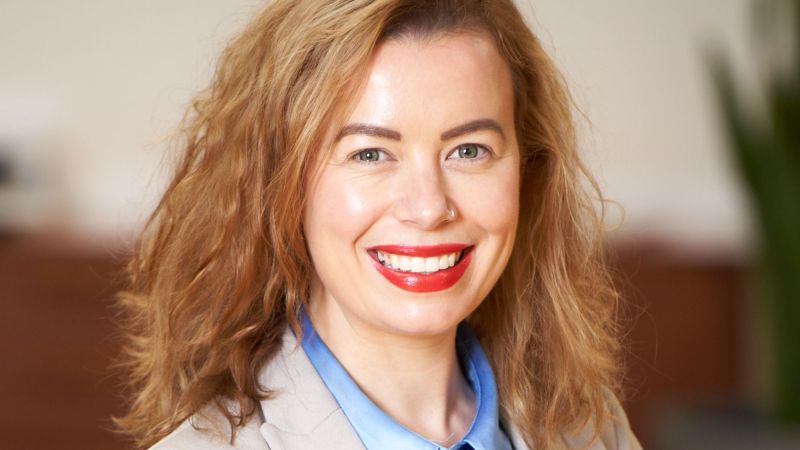
HACE
Eleanor Harry, founder of HACE
Opinions expressed by Entrepreneur contributors are their own.
You're reading Entrepreneur United Kingdom, an international franchise of Entrepreneur Media.
Eleanor Harry is building more than a company – she’s challenging the systems around it. As founder of HACE and a founder-in-residence in Manchester’s growing tech ecosystem, she’s navigating bias, funding barriers and leadership expectations head-on. In this interview, she shares what it really takes to grow a business as a woman in tech – and why the next generation deserves a more level playing field. Entrepreneur UK finds out more…
What’s the biggest barrier you’ve faced as a woman in business, and how did you navigate it?
One of the biggest barriers in the early stages was learning how to build a company, not solely a product. What helped was being around other founders and mentors at Department who had already been through those stages, because you can learn very quickly from other people’s mistakes rather than making all of them yourself. More broadly, one of the biggest challenges has been the lack of visible female role models, particularly in the technology sector. So many CEOs are still men, and many teams remain male-dominated, which can make it harder to picture yourself in those leadership positions when you’re starting out. I’ve had to navigate that by pushing through those barriers and being very clear that being a woman leading a technology business is a strength. I hope that by doing that, I can show other women coming through the ecosystem that you can be a female CEO in tech and be hugely successful.
Have you ever felt pressure to lead differently because of your gender? In what ways?
Yes, absolutely. I’ve had men refuse to listen to me because I’m both a non-technical founder and a woman, and I’ve had junior developers question my ability to understand technical problems in a way they simply wouldn’t with a male founder. That bias can be subtle or overt, but it’s there. I’ve also found that behaviours are judged differently. I’ve been described as harsh for being direct, when the same approach in a man would probably be seen as decisive. I’ve also been criticised for being too black and white, when women are often expected to be softer or more accommodating in how we communicate. For me, one of the biggest pressures has been recognising that, as a female founder, you are often navigating other people’s assumptions as much as you are navigating the business itself. At the same time, once you start hiring people and the company begins to grow, your focus shifts very quickly to responsibility: building something stable, making good decisions and creating an environment where people feel part of something that is growing.
How do you balance business growth with expectations around caregiving or family life?
What I’ve learned is that you have to be realistic and build a strong team and a robust company structure, so everything doesn’t rely on one person. Over time, the aim is to build a business that can grow without the founder having to be involved in every single decision. But this is also one of the reasons it can be especially challenging for women to run businesses. Domestic and caregiving responsibilities still fall disproportionately on women, and that creates an added barrier to entry that many men are less likely to face to the same extent. That affects not just time, but headspace, flexibility and the level of risk you are realistically able to take. For me, balancing growth has meant building a company that is resilient and well-structured, while also being honest about the wider pressures many women are carrying alongside the business.
Do you think funding and investment opportunities are truly equal for women in the UK today? Why or why not?
No, I don’t think they are equal at all. Access to funding at an early stage is still heavily influenced by networks and introductions, and that can be especially difficult if you don’t already know investors or people in that world. When we were raising our pre-seed round, many of our introductions came through the network we built on the Exchangeprogramme at Department at Campfield, and those relationships were really important in getting in front of investors in the first place. But the issue runs deeper than founder networks alone. One of the biggest structural barriers is that there are still far too few women investors, which means most investment capital is still controlled by men. As a result, the networks that matter most in fundraising are often less accessible to women founders. On top of that, because of the gender pay gap and wider wealth inequalities, some founders begin that journey with a much stronger financial starting point than their female counterparts. The fundraising process itself can also be incredibly challenging for women, because bias can show up throughout it – in the questions you’re asked, in assumptions about risk, competence or ambition, and in how confidently you’re expected to present yourself without being judged negatively for it.
What change would make the most immediate difference for the next generation of female entrepreneurs?
I’ve had a great experience with early support and mentorship, so I truly believe that better access to founder networks, advice and practical support would make a huge difference. Starting a business can be isolating, and there’s a huge amount to learn very quickly. Being able to speak to people who have already built companies, hired teams and raised funding can save founders a lot of time and help them grow faster. But if we’re talking about the most immediate changes, we need more women investors, more meaningful funding for women-founded start-ups, and a much more honest conversation about bias across the investment ecosystem. It’s not enough to offer a handful of small grants and say the problem is solved. We need real capital going into women-led businesses at every stage of growth. We also need investors and founders to better understand what bias looks like in practice, and what it feels like to navigate that as a woman in business. Until that happens, it will be very difficult to create a genuinely level playing field for the next generation of female entrepreneurs.
Eleanor Harry is building more than a company – she’s challenging the systems around it. As founder of HACE and a founder-in-residence in Manchester’s growing tech ecosystem, she’s navigating bias, funding barriers and leadership expectations head-on. In this interview, she shares what it really takes to grow a business as a woman in tech – and why the next generation deserves a more level playing field. Entrepreneur UK finds out more…
What’s the biggest barrier you’ve faced as a woman in business, and how did you navigate it?
One of the biggest barriers in the early stages was learning how to build a company, not solely a product. What helped was being around other founders and mentors at Department who had already been through those stages, because you can learn very quickly from other people’s mistakes rather than making all of them yourself. More broadly, one of the biggest challenges has been the lack of visible female role models, particularly in the technology sector. So many CEOs are still men, and many teams remain male-dominated, which can make it harder to picture yourself in those leadership positions when you’re starting out. I’ve had to navigate that by pushing through those barriers and being very clear that being a woman leading a technology business is a strength. I hope that by doing that, I can show other women coming through the ecosystem that you can be a female CEO in tech and be hugely successful.
Have you ever felt pressure to lead differently because of your gender? In what ways?
Yes, absolutely. I’ve had men refuse to listen to me because I’m both a non-technical founder and a woman, and I’ve had junior developers question my ability to understand technical problems in a way they simply wouldn’t with a male founder. That bias can be subtle or overt, but it’s there. I’ve also found that behaviours are judged differently. I’ve been described as harsh for being direct, when the same approach in a man would probably be seen as decisive. I’ve also been criticised for being too black and white, when women are often expected to be softer or more accommodating in how we communicate. For me, one of the biggest pressures has been recognising that, as a female founder, you are often navigating other people’s assumptions as much as you are navigating the business itself. At the same time, once you start hiring people and the company begins to grow, your focus shifts very quickly to responsibility: building something stable, making good decisions and creating an environment where people feel part of something that is growing.

Patricia Cullen • Features Writer
Entrepreneur Staff