Can the UK Lead the Global Wellness Revolution?
Inside the rise of the UK wellness revolution
Fittest
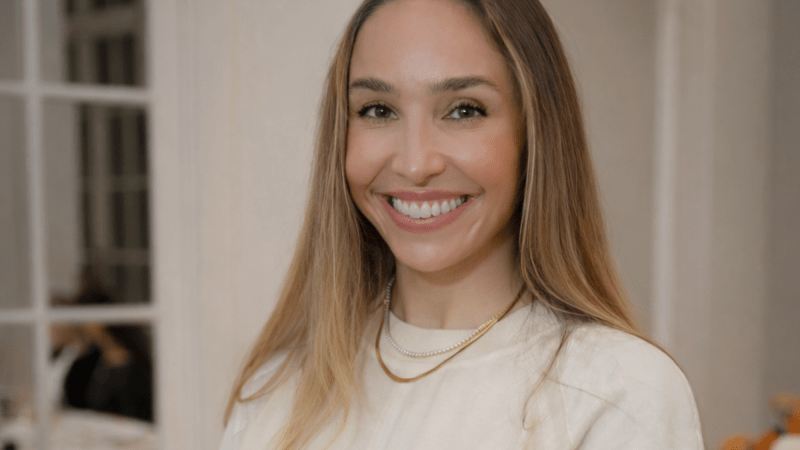
Kate Barlow Founder of Fittest
Opinions expressed by Entrepreneur contributors are their own.
You're reading Entrepreneur United Kingdom, an international franchise of Entrepreneur Media.
When Kate Barlow founded Fittest five years ago, the UK’s wellness and longevity scene was booming – but its stories weren’t. Functional fitness, recovery tech, and performance wearables were emerging, yet brands lacked a voice. Drawing on her own immersion in the culture, she built Fittest to bridge that gap, shaping narratives, elevating founders, and positioning UK brands at the forefront of a global movement. Entrepreneur UK finds out more…
Fittest was launched five years ago – what gap did you see in UK health and longevity communication at the time, and how did you set out to fill it?
Fittest was born long before longevity, biohacking and performance health became mainstream headlines. Five years ago, there was no dedicated communications agency specialising in performance-led brands. Functional fitness, wellness and recovery technology, wearable data and serious training culture were still treated as niche. Investment was beginning to pour into these sectors, wellness becoming an asset class in its own right, but the storytelling hadn’t caught up, and brands didn’t have anyone to act as a true partner for them to bring to life strategic communications strategies and position them properly. This was the gap I set out to solve. Through my own deep involvement in training and performance culture, specifically CrossFit and functional fitness, I was already immersed in their world. I understood the nuance and credibility markers as I am the target consumer and I live and breathe the culture. I could see that these brands weren’t being serviced, and this is why I built a specialist agency focused solely on the intersection of health, fitness, wellness and technology, positioning these brands as cultural forces. This means shaping category language, educating media, building founder profiles and creating credibility. There is no one out there doing what we do, or I believe capable of doing what we do, because there is no one as connected and deeply entrenched within this world than us.
What’s been the most surprising insight you’ve learned working with brands in the UK tech and wellness space?
Given the doom and gloom around the UK, my answer might be a bit contrarian. I’m constantly surprised at just how good we are in the UK in this space. We are an absolute powerhouse when it comes to wellness and tech. One of our early clients Runna, were acquired last year by Strava, a great example of a tech business right at the cutting edge of the industry, which took a relatively simple founding insight and scaled rapidly into a global business. We are a great place for innovation and have all the fundamentals to build out great global brands, but often we do see concepts scale here and the focus on US expansion given the size of that market. We also create great IP and founder-led businesses fuelled by great technology, whether that’s a monster apparel brand like Represent (George and Michael Heaton) and their 247 apparel line, which is really at the cutting edge of blending fashion and performance with the sort of technical fabric development reserved for established global players. Or footwear specialists like R.A.D (Ben Massey), who are ripping up the playbook for established performance footwear in training and recently running with a really innovative new super shoe the U.F.O. that has gone counter to the established materials science playbook in that space. We’ve also definitely developed a really progressive culture when it comes to tech and it’s context to wellness and longevity, London matches New York when it comes to innovative concepts like the recently opened Unbound clinic in Shoreditch, and we’ve got founders like Andy and Katie Mant at Bon Charge who have led the charge in the wellness tech space developing some of the first truly global products in Red Light, EMF, PEMF and Blue Light blocking technology which is now starting to really creep into the mainstream.
HYROX is one of your established clients. How do you help UK performance-focused brands translate complex science or innovation into messages that engage audiences?
At its core, we believe in one thing: the audience of people who are actively engaged in the culture of wellness across both physical and mental health are some of the best consumers in the world and we help brands connect with those people. Ultimately, they are all looking to really understand how a product or a piece of technology is going to meaningfully improve their quality of life and longevity. This often means we are boiling down complex technical insights into actionable pieces for their audience, acting as the bridge that connects. Interestingly, the audience we would consider a ‘wellness’ audience has grown hugely over the past 5 years. I think the Venn diagram of technology, fashion, fitness and wellness intersects in a much broader way than we ever thought they would. Certainly when we were first explaining HYROX to people the lofty goals of seeing it featured in places like Vogue were miles away but over time have become commonplace. The pursuit of these subjects is no longer the nice realm of a dedicated few; it’s an all-encompassing pursuit for everyone, from the ultramathoner, to the wellness anarchist enjoying a glass of wine after a HYROX, to the mum who wants to give her kids the best start in life (very often they are the same person)
Digital tools, data, and media are constantly evolving. How are you using them to tell brand stories today, and how do you see these trends shaping the future of UK wellness, longevity, and tech-driven communication?
It is constantly evolving, and you constantly have to adapt. We’re living through the most data-rich moment the world has ever seen, data really is everywhere and everyone is tracking it in whatever way they can – personally and professionally. Within our sectors, you have wearables tracking HRV, sleep and recovery, diagnostic platforms that analyse blood, hormones and metabolic markers. AI-driven training apps and even class concepts like One City launching in Battersea Power Station in May this year, are offering personalised programmes in real time. However, when it comes to how we use this data in the context of strategic storytelling and brand reputation building, there are a multitude of ways we apply industry insights and data. One is insight-led positioning by analysing cultural signals, such as search behaviour, community conversations and performance metrics to understand what people are genuinely prioritising, interested in – what’s trending and what’s popular. This allows us to build narratives, not just parrot product features.
Consumers are smart. They’re more inquisitive than ever, thanks to having data at their fingertips. But what this also means is they’re far more sceptical alongside being more informed. Vague claims don’t cut through anymore, so we really look at building credibility for these brands through proof. For example, last year we created and launched HYROX’s Scientific Advisory Council and unveiled the inaugural HYROX Sports Science Report 2025. This wasn’t just a PR announcement but a strategic credibility play that formalised scientific research within the sport to position HYROX as a legitimate, research-backed sporting discipline. Finally, integration across platforms is essential. Media is no longer siloed; it is 360. For example, a brand story today might begin with a founder interview in business press, then evolve into a LinkedIn thought leadership piece, then into short form educational video content across social media, further amplified through creator partnerships or affiliate ecosystems. It’s essential to now build a strategy to move fluidly across channels. Digital tools and the evolving media landscape are accelerating change, but the core principle remains that people don’t buy metrics, they buy meaning, so our job is to position brands not just within trends but at the forefront of cultural shifts.
Being a mother of twins in a male-dominated, performance-heavy industry is rare. How has that shaped the way you lead your team and approach creative problem-solving in this tech‑enabled sector?
When I launched Fittest, I didn’t think about whether I was a woman entering a male-dominated space, it honestly didn’t occur to me at the time. I was purely driven by instinct and passion as I saw an opportunity to do something great and that I also loved, and what could be better than that.This is not to say I haven’t experienced the occasional misogyny or underestimation; this absolutely does exist. But I have never allowed it to become something of an obstacle. I’m naturally very competitive so if someone doubts me, or I experience negativity, this simply fuels me to prove them wrong, and our reputation has been built on this mindset. Becoming a mother to twins however fundamentally changed me and the knock on effect of this on my leadership and capacity to oversee the team. Nothing prepares you for this overwhelming shift of responsibility and logistical complexity. We don’t have family nearby and for a long time we didn’t have full time childcare and the juggle was crippling. It forces you to become ruthlessly efficient and you have to stop romanticising the notion of being productive and just crack on with it whenever possible. This has really shaped how I run the agency and I am particularly outcome driven rather than time driven. I care a lot about impact and standards and the ever evolving technological landscape has really helped to enable this, as it’s allowed us to establish high performance, and honestly without it enabling flexibility to work anywhere and everywhere, I wouldn’t be here. I hear about the backlash against the 5 AM club and hustle culture, with calls to “slow down” and embrace the 8 AM club instead. For me, that’s not realistic – and I’m sure millions of other entrepreneurial mothers feel the same. At it’s core, it really is about just getting sh*t done. I often have to wake up at 5AM just to be able to have time to read my emails. This works for me, and I love it because I love what I do. George Heaton, the co-founder of Represent, talks a lot about balancing work-life and navigating multiple time zones while his team is in the UK and he lives in LA, and the reality really is that you have to dedicate time and be passionate about what you do.
Launching well.being was a big step. How do you see this tech-enabled editorial platform shaping the future of UK health, longevity, and digital innovation?
We’re operating in a world where earned media no longer lives in a silo, where a single story can show up across owned channels, social platforms, newsletters, community led spaces and so on. For brands, regardless of sector, world building has become essential in order to stay relevant and front and centre of consumers minds. Well.being allows us to participate in culture not just advise on it. At its core, it is an editorial platform exploring the intersection of human optimisation, technology, performance and modern life. It combines long form, short form, video, social media, and soon podcast formats, to reflect how media is actually consumed today. However, from a business perspective, it reflects where communication is heading and owning and operating such media infrastructure and understanding how to build and distribute it is a competitive advantage. Well.being is a live demonstration of that capability.
When Kate Barlow founded Fittest five years ago, the UK’s wellness and longevity scene was booming – but its stories weren’t. Functional fitness, recovery tech, and performance wearables were emerging, yet brands lacked a voice. Drawing on her own immersion in the culture, she built Fittest to bridge that gap, shaping narratives, elevating founders, and positioning UK brands at the forefront of a global movement. Entrepreneur UK finds out more…
Fittest was launched five years ago – what gap did you see in UK health and longevity communication at the time, and how did you set out to fill it?
Fittest was born long before longevity, biohacking and performance health became mainstream headlines. Five years ago, there was no dedicated communications agency specialising in performance-led brands. Functional fitness, wellness and recovery technology, wearable data and serious training culture were still treated as niche. Investment was beginning to pour into these sectors, wellness becoming an asset class in its own right, but the storytelling hadn’t caught up, and brands didn’t have anyone to act as a true partner for them to bring to life strategic communications strategies and position them properly. This was the gap I set out to solve. Through my own deep involvement in training and performance culture, specifically CrossFit and functional fitness, I was already immersed in their world. I understood the nuance and credibility markers as I am the target consumer and I live and breathe the culture. I could see that these brands weren’t being serviced, and this is why I built a specialist agency focused solely on the intersection of health, fitness, wellness and technology, positioning these brands as cultural forces. This means shaping category language, educating media, building founder profiles and creating credibility. There is no one out there doing what we do, or I believe capable of doing what we do, because there is no one as connected and deeply entrenched within this world than us.

Patricia Cullen • Features Writer
Entrepreneur Staff