Cornelius Schmahl: Every Unicorn Runs the Same Framework. Why OKRs Are the One Thing Founders Cannot Skip
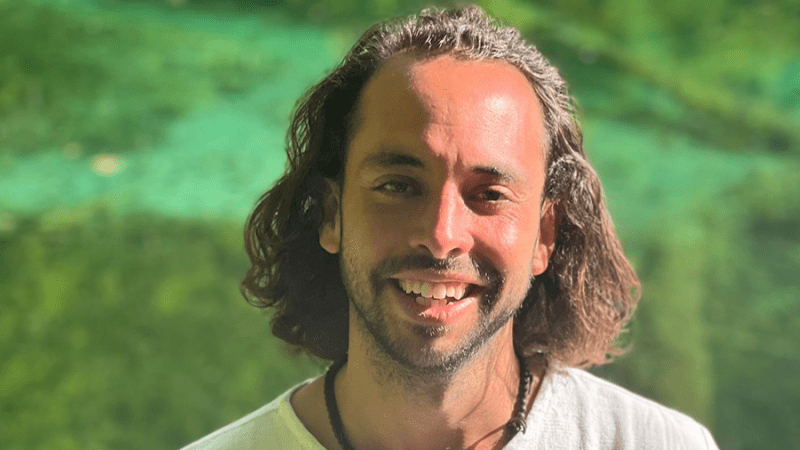
Cornelius Schmahl
Cornelius Schmahl says that every company he has invested in or worked with has run well at first without any system. Purely on the personal willpower of the founder holding everything together. That works for the first five employees. For the first ten. Depending on the team, sometimes even for the first twenty or thirty.
And then it often stops working, according to Schmahl.
People Are Vectors
Cornelius Schmahl joined Uber early in Munich, held commercial operations roles across multiple regions including Germany and Russia, and later worked in senior operational roles tied to Uber’s Russia business. According to Schmahl, he has since made more than 100 angel investments across six continents. He runs Unicorn Coach and UnicornHabit from Khao Yai, Thailand.
Schmahl returns often to a framing associated with Elon Musk. “People are like vectors of energy,” he says. “They have a direction and a strength. Some people have a strong vector, some smaller. The problem is that with twenty people you have twenty people pulling in somewhat different directions. You’re losing a crazy amount of efficiency and energy by not being super focused. At some point you need a system.”
Schmahl has heard the counter-argument plenty of times, usually from a founder who has just read a Jensen Huang interview. Huang is often described as running with an unusually direct, high-trust management style. So why, the founder asks, can’t they do the same? Schmahl’s answer: Huang is an outlier. He’s spent decades refining his judgement and building a team that can handle that kind of load. The reason a founder should not model themselves on Jensen Huang is the same reason they should not model their basketball game on Michael Jordan. They are not him. They will not become him. Building an operating system around the assumption that they will is how startups can die.
Schmahl says he has watched this play out a dozen times in his angel investments. A founder who is operationally brilliant in their first year reads a profile of a great manager, decides they are going to run their company the same way, and stops installing the boring systems that were keeping the company on the rails. Six months later they cannot remember which of their fifteen reports is supposed to be working on what, and the leadership team is making decisions in their heads that should be on a shared document. The company does not collapse all at once. It just slows down by a few percent every quarter until something snaps.
“We are normal people,” Schmahl says. “We need a simplified system that keeps things under control.”
Goal Plus Habit. That Is the Whole Thing
Schmahl learned the OKR framework at Uber. He watched it work. He tried to install it with his own clients after leaving and watched it fail. The framework as written is built for hypergrowth companies full of people who self-selected into seventy-hour weeks. Most companies are not that. So Schmahl looked at OKRs, stripped out everything that did not survive contact with normal teams, and arrived at one fundamental: a goal and a daily habit. Two things.
At Uber, the goal was more cars. Two words. “It took many years of confusion before people finally understood that,” Schmahl says. “But once they did, everyone could align to it. HR, finance, marketing, operations. Someone in finance asks: how does what I’m doing today help us get more cars? You always have a north star. And when there’s a disagreement, you point to it.”
That is the goal part. The harder part is the habit. The goal is a sentence. The habit is what you do on Tuesday morning at nine.
The Grunt Work Is the Work
Here is the part founders do not want to hear. Schmahl tells it through his own first job. “At Uber, the people there loved grunt work. When I joined, my job as operations manager sounded cool. In reality they handed me a phone and told me to call a hundred taxi drivers a day. Not a week. A day. All day. Getting drivers to sign up. That is grunt work. Not fun. Not what you join a unicorn for. But it’s the work that actually moves the needle.”
He extends the point with a comparison. “My colleagues who didn’t last were off doing fun creative partnerships and crazy initiatives. I was on the phone all day getting drivers. That’s the only thing that moved the needle.”
Schmahl thinks about that office a lot when he is working with founders now. They want to do the fun creative things. The brand campaign. The conference talk. The partnership with the better-known company. They do not want to be on the phone for eight hours doing the boring thing that the business actually needs.
The OKR framework, done properly, makes the boring thing visible. It says: this is the goal. This is the key result. This is the daily habit that produces the key result. Now go and do the daily habit. The framework is uncomfortable because it forces the founder to admit, in writing, what the real work is. Many founders are running from that admission.
If a founder skips the system, the willpower often goes first. They wake up one Tuesday and find they cannot bring themselves to call the hundredth driver. The team can sense it. The energy starts to bleed out. By Friday the company is a little slower than it was on Monday, and by the end of the quarter it is somewhere it shouldn’t be. This is how companies can die in slow motion. Not from a bad idea. From the quiet erosion of doing the unglamorous thing every day.
The reason every unicorn Schmahl has worked inside ran the same framework is not because OKRs are magic. It is because at some scale, willpower stops working and the system has to take over. A founder can rebuild the system. They can rename it. They can simplify it down to a goal and a habit, which is what Schmahl does now. But they cannot skip it. The founders who try are the ones still on the phone at nine in the evening, still doing the work their company should have systems for, still wondering why the company keeps stalling at the same size.
“Call the hundredth driver,” Schmahl says. “Then build the system that does the calling for you.”
Cornelius Schmahl says that every company he has invested in or worked with has run well at first without any system. Purely on the personal willpower of the founder holding everything together. That works for the first five employees. For the first ten. Depending on the team, sometimes even for the first twenty or thirty.
And then it often stops working, according to Schmahl.
People Are Vectors