Beyond Burnout
Ambitious women chase soft life while battling systemic burnout daily.
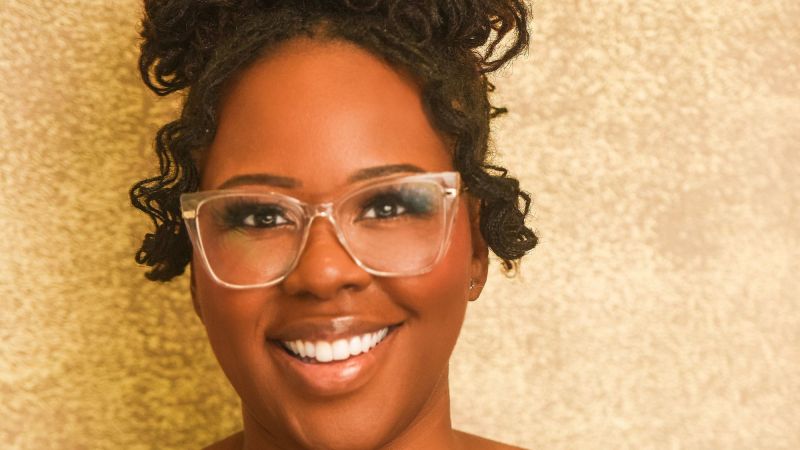
Amanda Spann
Opinions expressed by Entrepreneur contributors are their own.
You're reading Entrepreneur United Kingdom, an international franchise of Entrepreneur Media.
Silk robes. Cream-colored couches. Instagrammable meals with a view. Easy Sundays. A life romanticised. These are the makings of the “soft life.”The lifestyle aesthetic trending everywhere right now. But as I write this curled beneath my own fuzzy blanket just days after a major professional milestone, the launch of a book I spent years working toward, I’m exhausted. Not because the launch itself broke me, but because I arrived at the finish line already depleted. Burned out before the celebration even began.
And its forced a realization I suspect many ambitious women are quietly having these days. In the midst of these soft moments, we’re recognizing that a soft life may be harder to achieve for ambitious women, if it’s possible at all. Because if we’re being honest, life feels heavy right now. The global economy feels uncertain. Catastrophic events play out in real time on our phones. Work keeps moving faster while our attention is stretched. Women are still earning less on average, even as many of us carry the invisible labor of families, communities, and workplaces on top of our careers.
While the aesthetic of ease lingers, the demands on our time, focus, and emotional bandwidth have never been greater. Somewhere between the manis, pedis, pillows, and throws, many women are striving for soft while carrying lives that leave little room for gentleness Soft life. Strict program… Still tired. We hashtag it, mention it to our girlfriends, and drop it into the group chat like a mantra. But beneath the banter, it’s really a confession. Many women are chasing softness while still operating inside the same systems that exhausted them in the first place.
And that’s where the disconnect lives. Because soft life without structural change is just a performative pause. We light the candles. book the spa day. schedule the vacation. But Monday still arrives with the same overloaded calendar, the same mental load, and the same impossible expectations. Female founders, after often, in many ways, chasing the aesthetic of rest without addressing the architecture of exhaustion. When something breaks in a business, we female founder, examine the data. We look for bottlenecks, inefficiencies, and structural flaws.
So what if we examined burnout through the same lens? What if burnout is simply a sign of design misalignment? Many of us internalise burnout as a personal failure or a byproduct of our circumstances, when in reality it is a signal. A sign that the architecture of our work and our needs as humans have fallen out of balance. In that equation, capacity is the real currency. A full life requires the capacity to show up mentally, emotionally, and creatively. And without it, ambition becomes a slow leak rather than a source of energy and fulfillment. You have to make space for your joy.
Understand that burnout isn’t just the result of doing too much. Often it is the result of living inside systems, habits, and expectations that were never designed to support our sense of being. The answer isn’t just to rest harder or romanticize recovery. The real work is stepping back and looking at your life as a framework, asking what, exactly, needs to be redesigned. If these ideas hit a nerve, good. The only way to relieve that discomfort is to face what’s faulty.
The first step is naming the issue. If you cannot name it, you cannot change it. For some women, it is overcommitment. For others, its caregiving, lack of boundaries, or even the emotional tax of always needing to be exceptional just to feel secure. You cannot design a softer life around a vague sense of exhaustion. You have to tell the truth about what is making your life hard. Second, start to reorient your systems around what you actually need, not around performance, or the fantasy of becoming someone who never gets tired. Rest and restoration are essential. Treat them as both a requirement not a reward. Ask yourself what needs to shift in your calendar, commitments, standards, support systems, relationships, or routines to give your life breathing room?
What would it look like to optimize for steadiness instead of constant strain? To design for resilience and proficiency rather than perfection? And finally, identify the tools, technology, and systems that can better support the life you want to live. We are living in the most powerful automation era in history. AI, automation, asynchronous workflows, delivery services, financial tools, and digital platforms can reduce friction, streamline work, and lighten mental load.
The old model of ambition often asked entrepreneurs to sacrifice their lives for their work. And yet the soft life has presented founders with the opportunity to design companies differently. Workflows matter, but lifeflow matters just as much. The same tools that are transforming how we build products and businesses can also help us reclaim time, clarity, and autonomy in our lives.
But that only happens when we stop treating exhaustion as proof of commitment and start letting systems carry some of the weight. Maybe that is the harder invitation underneath all of this. Not just to ask how to rest, but to ask who you are beyond your usefulness. Beyond your output. Beyond the work you do and the expectations you carry for everyone else. Who are you beyond your work? What would it look like to prioritise yourself simply because you exist, not just when everything else is done or when exhaustion forces you to stop?
As the novelist Toni Morrison once wrote, you are your best thing. Create space to be you, for you. Restoration will be different for everyone. For some it is silence. For others movement, creativity, community, or solitude. Lead into your soft with your senses. What does restoration feel like? Taste like? Smell like? When you begin to recognize those signals, protect them. Reject the patterns and environments that consistently pull you away from them. Entrepreneurs design systems for everything. Products. Companies. Operations. Revenue streams. Yet here we are, leaving the architecture of our lives to chance. Meaningful lives rarely happen accidentally. They’re often engineered.
Silk robes. Cream-colored couches. Instagrammable meals with a view. Easy Sundays. A life romanticised. These are the makings of the “soft life.”The lifestyle aesthetic trending everywhere right now. But as I write this curled beneath my own fuzzy blanket just days after a major professional milestone, the launch of a book I spent years working toward, I’m exhausted. Not because the launch itself broke me, but because I arrived at the finish line already depleted. Burned out before the celebration even began.
And its forced a realization I suspect many ambitious women are quietly having these days. In the midst of these soft moments, we’re recognizing that a soft life may be harder to achieve for ambitious women, if it’s possible at all. Because if we’re being honest, life feels heavy right now. The global economy feels uncertain. Catastrophic events play out in real time on our phones. Work keeps moving faster while our attention is stretched. Women are still earning less on average, even as many of us carry the invisible labor of families, communities, and workplaces on top of our careers.
While the aesthetic of ease lingers, the demands on our time, focus, and emotional bandwidth have never been greater. Somewhere between the manis, pedis, pillows, and throws, many women are striving for soft while carrying lives that leave little room for gentleness Soft life. Strict program… Still tired. We hashtag it, mention it to our girlfriends, and drop it into the group chat like a mantra. But beneath the banter, it’s really a confession. Many women are chasing softness while still operating inside the same systems that exhausted them in the first place.