Early Rounds
Founders gather early, refining trust, pitch and credibility over coffee
charlieburgio.com
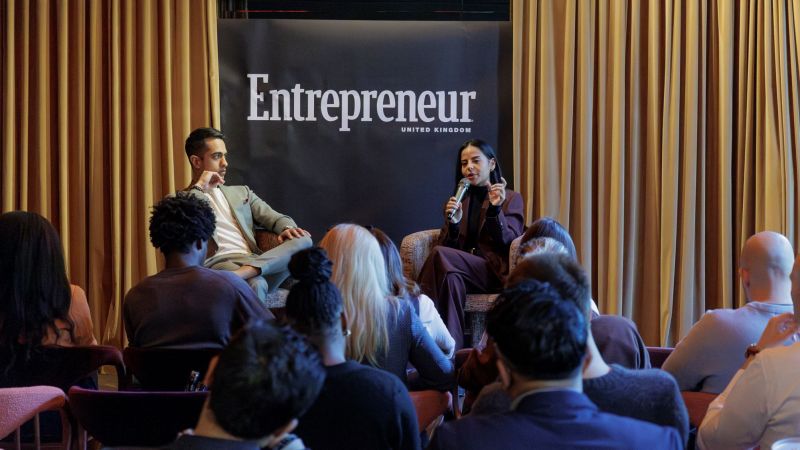
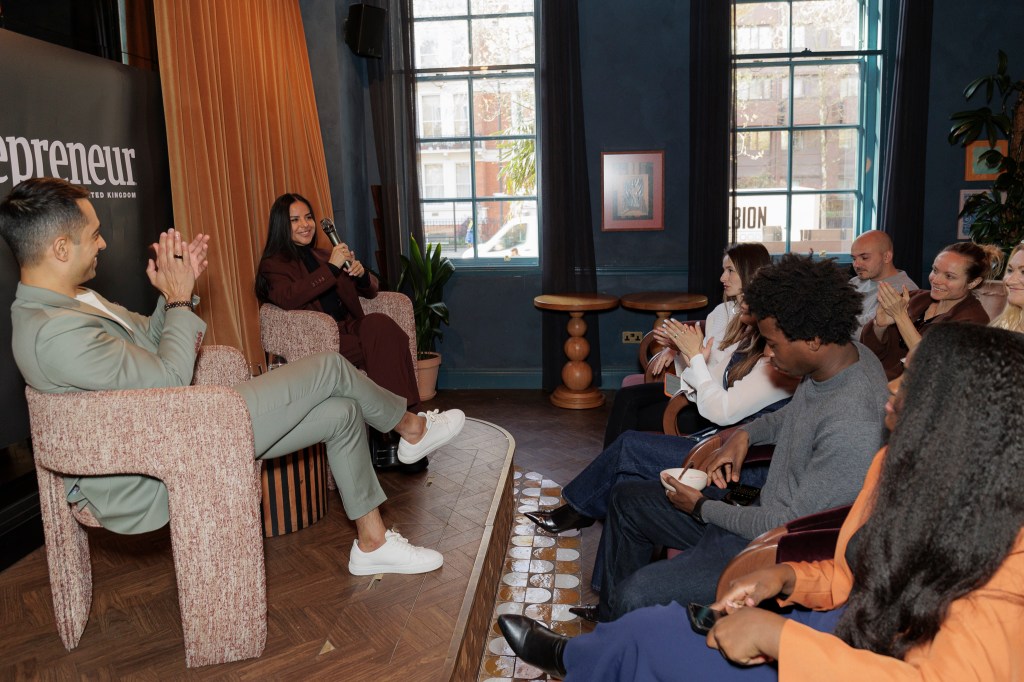
Entreprneur UKs Business Breakfast speakers Ravi Rajani and Lara Acosta
Opinions expressed by Entrepreneur contributors are their own.
You're reading Entrepreneur United Kingdom, an international franchise of Entrepreneur Media.
London’s entrepreneurial ecosystem increasingly gathers at breakfast. In compact, early-morning sessions, founders discuss strategy, exchange insights and assess emerging challenges before the day’s obligations take over. The Entrepreneur UK Business Breakfast at EVE Kensington yesterday was one such forum – compact, early and efficient.
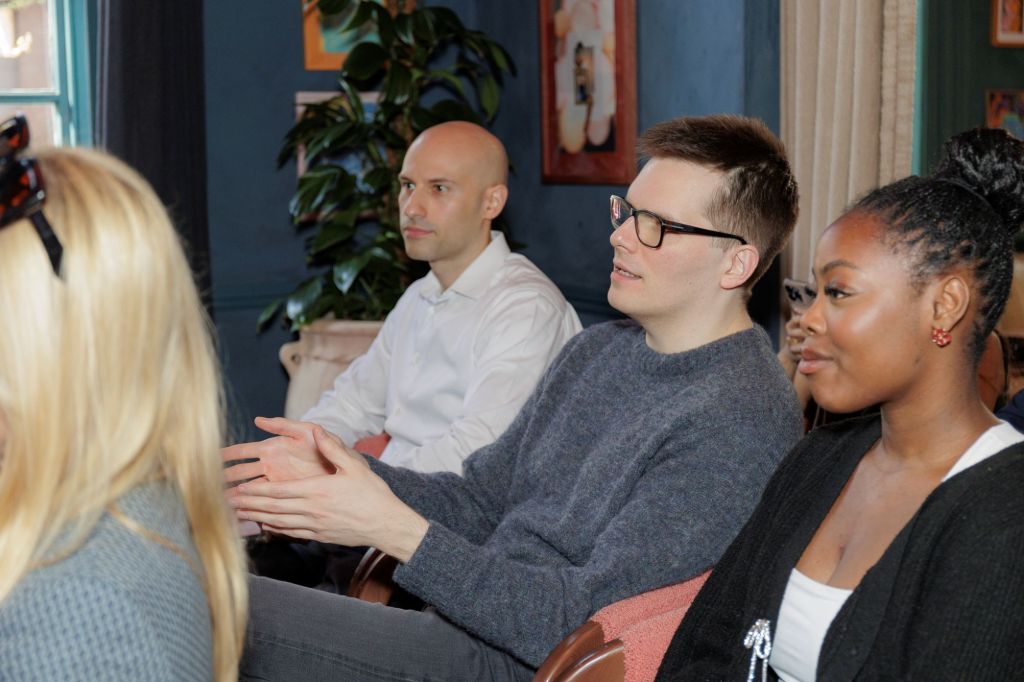
By the start of the session, the room had settled into a steady rhythm. Coffee in hand, attendees circulated between discussions on hiring, funding and go-to-market strategy. The setting was unadorned. The early hour focused attention: distractions were minimal, exchanges candid, questions pointed. These breakfasts are increasingly established fixtures in the business landscape. Unlike larger conferences, they concentrate interaction into a format that encourages engagement, allowing founders to speak directly with both peers and speakers without the diffusion that often accompanies scale.
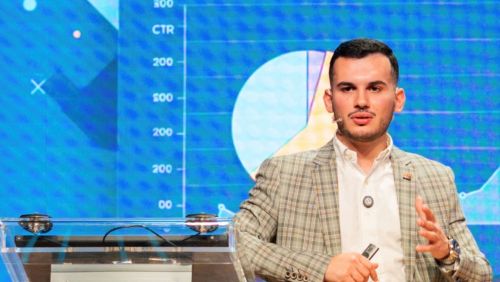
The speakers at the Business Breakfast were Ravi Rajani, author of Relationship Currency and international keynote speaker, and Lara Acosta, entrepreneur and LinkedIn expert, has more than 322,000 followers, making her one of the platform’s most prominent personal branding creators. Rajani addressed a persistent challenge for early-stage founders: recognising unseen gaps. “All the entrepreneurs in the room right now have a blind spot. Should we uncover it?” His point was operational rather than rhetorical. Founders, he argued, often misjudge how they are perceived. Titles, ambition statements and identity claims – common shorthand in start-up culture – can create the illusion of clarity while masking imprecision. Saying “I am…” may establish position, but it does not necessarily establish credibility. Rajani urged a shift from declaration to demonstration. Every interaction – with a client, investor or partner – functions as evidence. Over time, these moments accumulate into a judgment about reliability. “These events offer a stage,” he noted. “Every day when you pitch and present, do you speak something that builds or breaks trust?”
The framing reflects a broader trend. Trust, once assumed as a by-product of competence, now requires deliberate cultivation. Citing 2024 research, Rajani noted that 61% of respondents believe business leaders are miscommunicating. Overstatement, ambiguity and inconsistency all contribute. For founders, this alters the terms of engagement: a pitch is not merely an explanation of a product; it is a test of precision. Claims must be proportionate, language controlled, and delivery consistent. Where these elements align, credibility is established quickly; where they do not, it erodes just as fast.
Lara Acosta, LinkedIn expert, entrepreneur and investor, spoke on visibility and personal branding, introducing her SMPV framework. “The first thing you need to understand is your SKILL. ‘It’s not about being the loudest, it’s about being the most useful at all times,’” she said. The M stands for MARKET: “Your insights, experience, industry understanding and lessons learned over time. If you go too broad, you get diluted; if you go too niche, no one is seeing us. We need to stay in the middle,” she advised. P represents PROBLEM: “What do people want? They want more status, fame, freedom.” She urged founders to align this with their skill. Finally, VALUE: “You stand out by lived experience,” she added.
Acosta emphasised the practical impact of the framework. It is not an abstract exercise, but a tool for everyday interactions – pitches, investor meetings, and client conversations. Applied consistently, SMPV can clarify positioning and help founders communicate more deliberately. Her advice echoed RaJani’s theme: credibility is built through action and articulation, not self-declaration.
Across the room, founders exchanged approaches to pitching, investor discussions and client messaging, with a focus on practical outcomes: what succeeds, what fails, and how to distinguish between the two. The breakfast setting fosters disciplined informality, allowing insight to circulate efficiently. The series also reflects a maturing entrepreneurial ecosystem, where knowledge travels not only through formal channels but through peer interaction. For newer founders, it provides access; for more experienced participants, an opportunity to test and refine thinking in a different register.
As the session closed, the conclusions were largely practical. Conditions for founders are tightening: capital is more selective, attention more limited, and tolerance for imprecision lower. In that context, credibility depends less on ambition than on consistency. Claims must be specific, repeatable and borne out in delivery. Both speakers pointed to the same shift. Overstatement, once tolerated, is now a liability. The market is quicker to spot gaps between what is said and what is done, and less inclined to overlook them. Communication, therefore, is not peripheral; it is structural. The format of the breakfast reinforces this. Its small scale compresses interaction and shortens the distance between idea and scrutiny. Weak arguments are exposed quickly; stronger ones hold. For founders, the implication is straightforward. Progress depends not on saying more, but on saying less – and meaning it.
Entrepreneur UK intends to continue the series; further dates will follow. As conditions tighten and expectations rise, founders increasingly value forums that combine exposure with practical insight. The breakfasts are modest in format but purposeful. They provide a space for founders to hear from experienced speakers, engage with peers, and address the challenges facing early-stage businesses. Their simplicity is a key part of their appeal. Make sure you have a seat at the next one.

London’s entrepreneurial ecosystem increasingly gathers at breakfast. In compact, early-morning sessions, founders discuss strategy, exchange insights and assess emerging challenges before the day’s obligations take over. The Entrepreneur UK Business Breakfast at EVE Kensington yesterday was one such forum – compact, early and efficient.
By the start of the session, the room had settled into a steady rhythm. Coffee in hand, attendees circulated between discussions on hiring, funding and go-to-market strategy. The setting was unadorned. The early hour focused attention: distractions were minimal, exchanges candid, questions pointed. These breakfasts are increasingly established fixtures in the business landscape. Unlike larger conferences, they concentrate interaction into a format that encourages engagement, allowing founders to speak directly with both peers and speakers without the diffusion that often accompanies scale.
The speakers at the Business Breakfast were Ravi Rajani, author of Relationship Currency and international keynote speaker, and Lara Acosta, entrepreneur and LinkedIn expert, has more than 322,000 followers, making her one of the platform’s most prominent personal branding creators. Rajani addressed a persistent challenge for early-stage founders: recognising unseen gaps. “All the entrepreneurs in the room right now have a blind spot. Should we uncover it?” His point was operational rather than rhetorical. Founders, he argued, often misjudge how they are perceived. Titles, ambition statements and identity claims – common shorthand in start-up culture – can create the illusion of clarity while masking imprecision. Saying “I am…” may establish position, but it does not necessarily establish credibility. Rajani urged a shift from declaration to demonstration. Every interaction – with a client, investor or partner – functions as evidence. Over time, these moments accumulate into a judgment about reliability. “These events offer a stage,” he noted. “Every day when you pitch and present, do you speak something that builds or breaks trust?”

Patricia Cullen • Features Writer
Entrepreneur Staff