Why This Top Lawyer Walked Away to Disrupt Legal Tech
Aavalynx founder Hanna Roos on burnout, broken incentives in law, and building a smarter, more human legal system with AI.
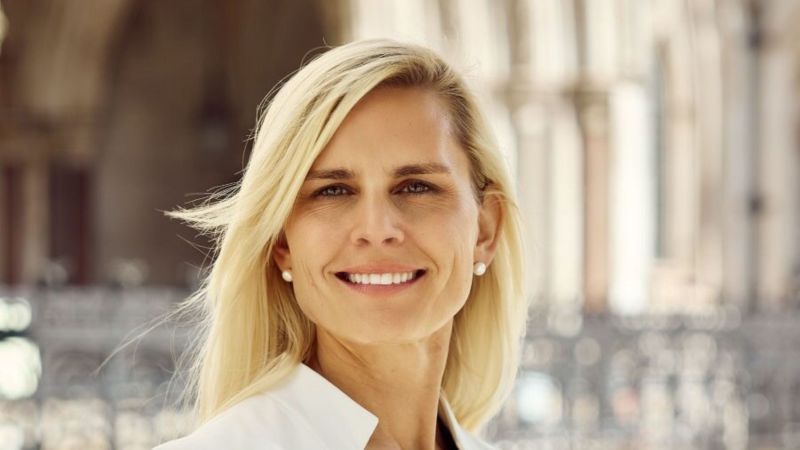
Aavalynx
Hanna Roos, founder and CEO of legal tech start-up Aavalynx
Opinions expressed by Entrepreneur contributors are their own.
You're reading Entrepreneur United Kingdom, an international franchise of Entrepreneur Media.
You built a successful legal career advising countries, companies and ultra-high net worth individuals. What led you to become a tech founder?
The short answer: discovering that our sector was ready for the kind of category disruption that Uber and Airbnb brought about – the kind that fundamentally breaks the conventional way of looking at a problem.
I spent nearly two decades in dispute law working at the highest levels, specialising in fast-moving and high value disputes involving human rights breaches of independence fighters, faulty satellites, super yachts, children’s life-saving treatments, fine art fraud and everything in between. It was intellectually rewarding; many clients and colleagues were exceptional humans.
But it came at a high cost. Law firms classically make money from volume: hours billed to clients. That creates an incentive for disputes to run for years and to cost clients millions. That is misaligned because clients want fast and cost-effective resolutions. Even where law firm prices are capped for clients, individual lawyers’ bonuses are typically hours driven. And lawyers are burnt out 42.5% of the time, according to Bloomberg Law.
You could say that the hours were relentless, and the pressure constant. Both are true. My two sons were still very young. But this is not the young mother’s burn-out story you may be expecting. Yes, I was running a model that left very little room for anything beyond work. I slept under my desk many nights, unable to face the commute home at 4am just to return to the office at 6am. But that would be too simplistic a story: I chose the long hours because I was hungry for the coolest work. I was dubbed Hanna the Hercules because I just kept going. I now question the wisdom of those choices but am grateful for the experience I gained.
The real issue for me became that law firms could not deliver what clients needed. The misalignment of law firm and client interests meant that a fundamental disruption is needed. Something that gives power back to in-house teams and joy back to lawyers. When language models came out, I founded Aavalynx, an award-winning AI platform for dispute resolution. I knew we needed to rethink how high-performance careers can be recalibrated to deliver more value to clients and more joy to lawyers – and their loved ones.
What does your experience say about work culture in the UK and US?
There is still a strong tendency to equate long hours with excellence of output. Being constantly available is often seen as a sign of importance. In parts of the tech world, the ‘996’ model – working from 9am to 9pm, six days a week – has gained notoriety, perhaps even popularity, and this extends beyond tech. The assumption is that more time spent working leads to better outcomes. That volume and quality correlate linearly. This is true up to a point: one of Aavalynx’s values are relentless tenacity. We just don’t give up. But: a focus on pure volume of output misses a very important point. The best output also requires sound judgement and creativity.
Cognitive science shows that if you shift your focus to something else while you are solving a problem, your brain solves it more efficiently in the background. I discovered this empirically by going running when I had a client problem to crack. Half-way through the run, my brain started suggesting much better solutions than it had presented while staring at the screen. I was fascinated by this process and began researching the neural science behind it.
It turns out that the brain is more efficient at solving complex problems when shifting focus because it allows for a transition between two distinct, often antagonistic, neural networks: the Central Executive Network (CEN) for intense focus and the Default Mode Network (DMN) for creative, associative thinking. Those real “Aha!” moments occur when the brain successfully switches between the CEN (to formulate the problem) and the DMN (to connect new ideas). A 2025 review found that individuals with better cognitive flexibility, or the ability to switch between these states, are more successful at finding creative solutions (see also).
Finland has been ranked the happiest country in the world for nine years running. What is it doing differently?
I was born and raised in Finland, as one of twelve siblings, and I’ve tried to remain true to my roots by building the Finnish work culture into Aavalynx, even as we scale across Europe and the US. The Finnish value that’s one of my favourites is humour. Foreign journalists are feverishly traipsing about Finland trying to spot the secret sauce of happiness, but language is the one thing they can’t penetrate. Finns are deeply and dryly funny. Meaning that, crucially, they can juice humour out of life’s imperfections. My theory is that this is a missile shield for mental health.
And of course, humour alone isn’t sufficient. Happiness is classically influenced by many factors, but work-life balance plays a significant role. In Finland, there is a clearer boundary between work and personal life. People take their responsibilities seriously, but there is also an expectation that work should not consume everything else. Trust is central: employees are not measured by how long they sit at their desks, but by what they deliver. We have a value which is to be very hungry for success at Aavalynx, but also take responsibility for one’s rest and recovery instead of thoughtlessly burning out.
In this I’ve borrowed from the thinking of Dr Aki Hintsa, a Finnish trauma surgeon in Ethiopia who became interested in why some long-distance runners emerged as winners. He went on to help optimise the performance of FormulaOne drivers. Optimising their performance is a matter of life and death: a slow reaction time on the track is lethal. Dr Hintsa had a model, the circle of success, which was that optimised performance stemmed from having balanced the core needs, being for example sleep, health, nutrition, tracking one’s values in life and having time with loved ones. How do I implement this across the business?
Well, for instance I prefer to start work before dawn (I got into the habit of getting ahead while by babies were still asleep) but I don’t expect my team to respond immediately. We have team members around Europe, Africa and the Americas. Everyone communicates their working hours so that handovers are clear and seamless, and no-one burns out trying to work every time zone. Finland has of course a strong social infrastructure, including childcare and parental leave – each parent is given 160 days parental leave, and 63 of these can be transferred from one parent to the other. A far cry from maternity leave policies in the UK and certainly the US! All of these factors mean that balancing one’s professional and personal life is far easier in Finland, which goes a long way towards decreasing burnout and increasing job satisfaction. To be honest, we have not trialled the Finnish parental leave in our company but I do say that you don’t have to be in Finland in order to have a fulfilled and balanced maternity leave – we’ve managed to look after an Aavalynxer who had a wonderful pregnancy and recently gave birth to a happy baby, whilst staying super productive and busy as a company. Obviously we don’t get to pick and choose the medical complications that can happen to moms and babies, but we DO choose whether we create a supportive culture for our team members with care responsibilities
What lessons should the UK and US take from Finland?
There are some practical steps that I outline above – like prioritising humour, rest and recovery. But also, leadership matters: when senior figures model clear boundaries, it signals that it is acceptable for others to set their own. I for example communicate to my team my unavailable blocks, and we have a standing policy to encourage everyone to do remote meetings while walking. For laughs, we also have a rule that anyone late to calls needs to do a two-minute plank, and we have a standing competition for the most interesting planking location. At the moment, it’s a tropical beach.
Why is burnout a problem for lawyers specifically?
Burnout is a particularly pronounced issue in law. The profession is built around intensity: tight deadlines, high stakes, and a culture that rewards endurance over efficiency. For many lawyers, especially those working with complex, high-value matters, the expectation is not just to deliver, but to be constantly available. On one occasion in 2023, my husband and I planned a sailing trip across the Atlantic, but I ended up working on a high-profile case throughout the entire trip, even taking phone calls on the deck in rolling six-meter waves to direct the team on the ground to conduct negotiations with an African government wisely. As the lead lawyer, I chose to put myself through this, but nevertheless it was a massively painful experience. Bent over with sea sickness, I did ask myself why I put myself in punishing situations.
The Netflix series Suits gives the impression that dispute lawyers mostly walk around in glamorous outfits and talk. Actually, dispute lawyers mostly research, analyse and draft. Large case files make manual analysis, research, and drafting inefficient, so clients often feel overcharged and under-heard, while lawyers burn out. Law firm profit margins can be as high as 80%, signalling a sector ripe for disruption.
What is encouraging is that we are at a point where this kind of life does not have to be the norm for lawyers. Advances in AI are beginning to meaningfully reduce the administrative and repetitive burden that consumes so much of a lawyer’s time, from document review to case preparation. Used properly, these tools can free up capacity for higher-value thinking and decision-making, while also making workloads more manageable. The opportunity is not to replace lawyers, but to redesign how legal work is done in a way that is far less costly, far more efficient, and gives lawyers their lives back.
But the true disruption here is no longer efficiency of law firms. It’s helping clients achieve faster and more cost-effective resolutions. And in that process, only the most cognitively brilliant and creative lawyers survive.
How are you avoiding burnout as a tech founder?
Going from dispute resolution to founding an AI company, some might think I’ve gone from the frying pan straight into the fire. But I set myself a routine that allows for balance, journaling about prior day’s success at 5am before I begin work, running, doing weight training, walking and taking calls on dog walks where I can. My dog occasionally runs in the opposite direction while I’m deep in conversation, and some kind jogger then spots him and reunites us. I also make time for cuddles and car singalongs with my boys while taking them to hobbies. My team is encouraged to set their own hours, and they can work from anywhere, although we also have some shared workspaces for contact time.
You built a successful legal career advising countries, companies and ultra-high net worth individuals. What led you to become a tech founder?
The short answer: discovering that our sector was ready for the kind of category disruption that Uber and Airbnb brought about – the kind that fundamentally breaks the conventional way of looking at a problem.
I spent nearly two decades in dispute law working at the highest levels, specialising in fast-moving and high value disputes involving human rights breaches of independence fighters, faulty satellites, super yachts, children’s life-saving treatments, fine art fraud and everything in between. It was intellectually rewarding; many clients and colleagues were exceptional humans.
But it came at a high cost. Law firms classically make money from volume: hours billed to clients. That creates an incentive for disputes to run for years and to cost clients millions. That is misaligned because clients want fast and cost-effective resolutions. Even where law firm prices are capped for clients, individual lawyers’ bonuses are typically hours driven. And lawyers are burnt out 42.5% of the time, according to Bloomberg Law.

Patricia Cullen • Features Writer
Entrepreneur Staff