The Art of Value
Marine Tanguy explains why artists are key to modern economies
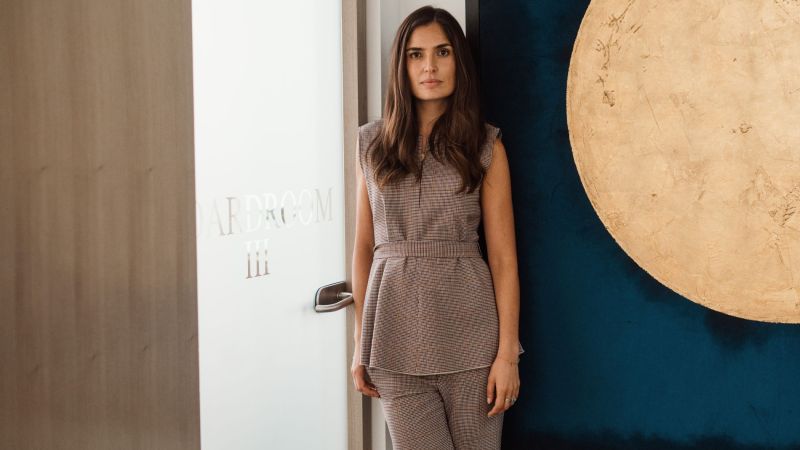
MTArt Agency
Opinions expressed by Entrepreneur contributors are their own.
You're reading Entrepreneur United Kingdom, an international franchise of Entrepreneur Media.
Marine Tanguy talks to Entrepreneur UK about cultural influence, creative economics and why the future of UK growth may be visual.
We consume up to 10,000 images a day. In that saturated landscape, artists are no longer peripheral – they are central to how brands differentiate, how cities build identity, and how nations project soft power. Marine Tanguy saw the shift early. Through MTArt Agency, she built a platform designed to support artists’ independence while proving their commercial worth. At a time when tech platforms wrestle with ethics and AI models test copyright law, she argues that the real power lies in understanding – and investing in – cultural value. Entrepreneur UK finds out more…
You built MTArt Agency to make artists central economic players. What’s the biggest lesson you’ve learned about creating cultural value in the UK?
When we started our company, artists were being paid in ‘exposure value’. ‘How lucky would they be to display their works and being seen’ we would hear often. We wanted to change that. I published my first academic paper with Warwick University (https://www.sciencedirect.com/science/article/abs/pii/S0040162518318249) on measuring the value of the arts and artists in our everyday spaces and we made sure that every single project was paying the artist fairly. By doing so, we showed that artists were not just cultural actors but economical actors too.
Where does cultural power really sit today – with artists, institutions, brands, or tech platforms?
As political parties are being challenged, newspapers and magazines are becoming the new communities where one looks to belong from a value and lifestyle standpoint. Entrepreneurs have become larger cultural voices than their own firms and artists are increasingly central in a visual world where we consume 10,000 images a day. Something that we benefited from at MTArt Agency is the need for brands to differentiate themselves visually and culturally in an age where people are experiencing visual fatigue. We saw a drastic increase in brand partnerships commissioning creatives and artists. Tech platforms are undergoing internal changes from firing large amounts of white collars up to redefining their own ethical policies in the age of AI. It’s a fascinating time to run a company with creativity at its heart.
How is the rise of digital tools changing how artists are represented, commissioned, and monetised?
Pre social media, the only way in which an artist could be noticed was to show in an art gallery. Nowadays, an artist can be anywhere in the world and start reaching out to collectors, partners and art curators. This has diversified the art world and challenged the status quo. As a talent agency, we saw this change coming and made sure to be a platform that supports the artist’ independence, not the other way around. AI is a much larger problem as currently, IPs laws are weak and many of these AI models and generators are training their models on stolen imagery from creatives and artists. That’s the challenge of the century.
You often talk about imagination as the UK’s edge. How does MTArt turn creativity into infrastructure?
London remains one of the top creative cities in the world. When most cities tend to lean in towards a specific sector (Los Angeles for the entertainment industry and San Francisco for the tech sector), London is a melting pot of the top publishers, entertainers, advertisers, art world players etc: a dream set up for the best ideas to emerge from these collaborations. MTArt Agency benefits from this daily.
The UK invests heavily in tech start-ups, but less in cultural IP. What would scaling creative talent like tech founders look like?
The creative sector generates £140 billion every year, the same as the food and beverage industry and yet it is dismissed as a business case. As someone who has raised from the top VCs and angel investors, it is my core mission in life to show that backing culture is a smart investment move and one that benefits our society as a whole.
Your agency applies venture-style thinking to artists. How does that change their career trajectories – and what can tech learn from it?
We diversified their revenue streams, widened their audiences and increased their market price by over 150%. So many of our artists are now recognised globally and again, what a great proof that is in showing that backing the arts and artists is the right thing to do.
Have you seen investment in cultural projects spark local innovation beyond London?
Absolutely – the Middle East has shown a deep understanding of the importance of backing the arts to develop their international positioning, soft power and appeal for people to travel to these places and live and work there. Saudi Arabia is investing heavily, with over $21.6bn in cultural projects as part of its economic transformation. Major focus areas include the $63bn Diriyah development, AlUla’s arts scene, and the Red Sea International Film Festival and Abu Dhabi is investing over AED 30 billion ($8.1 billion+) in culture and creative industries to boost tourism and jobs. We raised funding from one of the top Qatari fund four years ago and have been developing large scale public art projects in the Middle East since 2019.
What skills should the next generation of artists develop to thrive at the intersection of creativity, commerce, and technology?
A legal literacy to navigate their rights, especially their IPs.
Do you think the UK truly understands the economic power of its creative sector – or is there still a perception gap?
It’s poorly understood despite great reports by McKinsey like this one so let’s continue to spread the word : ).
If you could change one thing in UK policy to better support creative talent, what would it be?
Ireland just launched the world’s first scheme to provide basic income for artists, understanding the value that they bring to society. I would like to match this. I also published a book with Penguin on the importance of visual literacy in a time where visual misinformation is everywhere, I would want visual literacy to be a part of our curriculum.
Marine Tanguy talks to Entrepreneur UK about cultural influence, creative economics and why the future of UK growth may be visual.
We consume up to 10,000 images a day. In that saturated landscape, artists are no longer peripheral – they are central to how brands differentiate, how cities build identity, and how nations project soft power. Marine Tanguy saw the shift early. Through MTArt Agency, she built a platform designed to support artists’ independence while proving their commercial worth. At a time when tech platforms wrestle with ethics and AI models test copyright law, she argues that the real power lies in understanding – and investing in – cultural value. Entrepreneur UK finds out more…
You built MTArt Agency to make artists central economic players. What’s the biggest lesson you’ve learned about creating cultural value in the UK?
When we started our company, artists were being paid in ‘exposure value’. ‘How lucky would they be to display their works and being seen’ we would hear often. We wanted to change that. I published my first academic paper with Warwick University (https://www.sciencedirect.com/science/article/abs/pii/S0040162518318249) on measuring the value of the arts and artists in our everyday spaces and we made sure that every single project was paying the artist fairly. By doing so, we showed that artists were not just cultural actors but economical actors too.

Patricia Cullen • Features Writer
Entrepreneur Staff