Beyond the Sidelines
Carolyn Radford challenges bias and leads with confidence in football

Mansfield FC
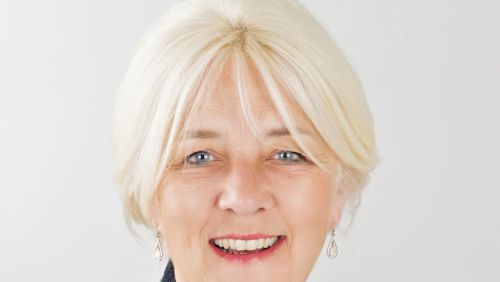
Carolyn Radford, CEO of Mansfield FC
Opinions expressed by Entrepreneur contributors are their own.
You're reading Entrepreneur United Kingdom, an international franchise of Entrepreneur Media.
At Mansfield Town FC, CEO Carolyn Radford holds a role still uncommon for women in English football’s upper ranks. Her route – via insurance and business – illustrates how leadership pathways have broadened, even as expectations around credibility and authority remain uneven. Much of the challenge, she suggests, lies not in access alone but in how women are perceived once in the room. Progress is evident, but incomplete: gains in representation continue to sit alongside more persistent, less visible barriers. Entrepreneur UK spoke to Radford about how those tensions play out in practice.
What’s the biggest barrier you’ve faced as a woman in business, and how did you navigate it?
One of the biggest barriers has been being underestimated, walking into a room and feeling that you have to prove your credibility before you’ve even started speaking. That’s been consistent across different sectors, whether in insurance, football, or business more broadly. I navigated it by focusing on preparation and results. Over time, consistent delivery speaks far louder than perception. I’ve also learned not to shrink myself to make others comfortable, confidence, when backed by substance, changes the dynamic.
Have you ever felt pressure to lead differently because of your gender? In what ways?
Absolutely. There’s often an unspoken expectation that women should lead in a softer or more accommodating way, but also not be ‘too’ assertive. It’s a difficult balance because the same traits are judged differently depending on who is displaying them. I’ve come to realise that authenticity matters more than trying to fit a mould. My leadership style is collaborative but decisive, and I don’t see those qualities as mutually exclusive. In fact, I think that blend is a strength.
How do you balance business growth with expectations around caregiving or family life?
Balance is never perfect, and I don’t think it should be portrayed as such. I have three children, and my family is incredibly important to me, but I also have significant professional responsibilities. For me, it’s about integration rather than strict separation, being present where I am, whether that’s at work or at home. I’m fortunate to have a supportive husband, and we approach things as a team. Flexibility, good organisation, and being comfortable with imperfection all play a part.
Do you think funding and investment opportunities are truly equal for women in the UK today? Why or why not?
No, I don’t think they are equal yet. Progress has certainly been made, but there’s still a noticeable gap in how female-led businesses are funded and perceived. Part of that comes down to representation, who is making the investment decisions and what they’re familiar with. There can also be unconscious bias in how risk is assessed. It’s improving, but there’s more work to do in creating a level playing field.
What change would make the most immediate difference for the next generation of female entrepreneurs?
Greater visibility and access to networks, mentorship, and capital. When women can see others who’ve done it, and have direct access to the same rooms and opportunities, it accelerates everything. I also think normalising different paths to success is important. There isn’t one way to build a business, and there shouldn’t be one ‘ideal’ profile of an entrepreneur. The more we broaden that perception, the more we unlock potential.
At Mansfield Town FC, CEO Carolyn Radford holds a role still uncommon for women in English football’s upper ranks. Her route – via insurance and business – illustrates how leadership pathways have broadened, even as expectations around credibility and authority remain uneven. Much of the challenge, she suggests, lies not in access alone but in how women are perceived once in the room. Progress is evident, but incomplete: gains in representation continue to sit alongside more persistent, less visible barriers. Entrepreneur UK spoke to Radford about how those tensions play out in practice.
What’s the biggest barrier you’ve faced as a woman in business, and how did you navigate it?
One of the biggest barriers has been being underestimated, walking into a room and feeling that you have to prove your credibility before you’ve even started speaking. That’s been consistent across different sectors, whether in insurance, football, or business more broadly. I navigated it by focusing on preparation and results. Over time, consistent delivery speaks far louder than perception. I’ve also learned not to shrink myself to make others comfortable, confidence, when backed by substance, changes the dynamic.
Have you ever felt pressure to lead differently because of your gender? In what ways?
Absolutely. There’s often an unspoken expectation that women should lead in a softer or more accommodating way, but also not be ‘too’ assertive. It’s a difficult balance because the same traits are judged differently depending on who is displaying them. I’ve come to realise that authenticity matters more than trying to fit a mould. My leadership style is collaborative but decisive, and I don’t see those qualities as mutually exclusive. In fact, I think that blend is a strength.

Patricia Cullen • Features Writer
Entrepreneur Staff