It’s time for a second industrial revolution – the key to unlock it is to be build more factories
Factories connecting through technology could spark Britain’s next industrial revolution.
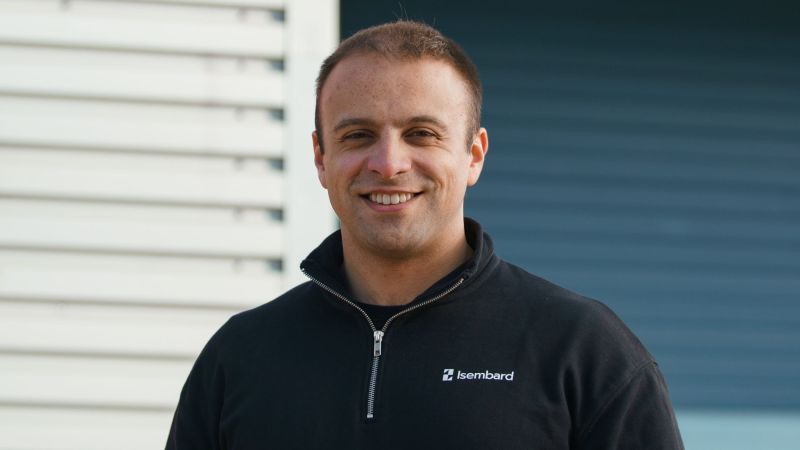
Isembard
Opinions expressed by Entrepreneur contributors are their own.
You're reading Entrepreneur United Kingdom, an international franchise of Entrepreneur Media.
In the early 1870s, the German artist Adolph Menzel painted The Iron Rolling Mill (Modern Cyclopes). It depicts the factory building of the Oberschlesische Königshütte, a rolling mill for railroad tracks. Inside the smoky interior, workers handle white-hot iron into mechanical rollers. Others take a break. Some even wash.
The chaotic scene caused a stir at the time because it gave a rare glimpse into how manual labour and machinery were beginning to revolutionise factory life. Industry was being reshaped in real time.
The world has moved on and hazardous manual labour is no longer accepted as the price of change. But factories remain at the centre of industrial transformation. They still determine how fast a nation can build, innovate and defend itself.
Today, we stand at the dawning of a new age.
Artificial intelligence is encroaching further into our screen based lives each day. Global production faces geopolitical shocks and rising energy prices. Cyber security attacks have the ability to cripple major manufacturers and cause disruption to ripple down their industrial base.
Against this backdrop, the structure of British manufacturing matters more than ever.
If you ask most people about British manufacturing, they will mention Rolls-Royce, BAE or Jaguar Land Rover. They picture photogenic assembly lines and advanced facilities. What most people do not realise is that the parts being assembled on those lines come from tens of thousands of small machine shops across the UK.
These small-scale, hyper-specialised machine shops are the backbone of our industrial base. Many operate in small networks and may be heavily reliant on a single customer. Some have traded for decades with only their geographic neighbours aware of their existence.
The average owner of these enterprises is 64 years old. There are few signs that the next generation is ready to take up the mantle as these operators retire.
At the same time, the barriers to modernisation are significant. Updating computer systems and machinery for forging, casting, injection moulding and CNC machining is expensive. New software, new equipment and new accreditations all require capital and expertise.
The cumulative effect is clear. Many manufacturers face rising costs, limited access to scale and growing operational risk. Some are closing at a time when demand for parts in critical industries such as defence and aerospace is higher than ever.
This is a strategic vulnerability.
The UK has the highest density of manufacturing talent in the world and the second-largest aerospace sector. The capability is here. The skills are here. But the system that connects them is fragmented.
Before founding Isembard, I had several frustrating experiences with contract manufacturers. They were slow to work with and we faced avoidable delays. We would wait months for work that could have been done in days. Capacity constraints, disconnected systems and poor coordination all compounded the problem.
The picture, however, does not need to be bleak. We have found a new way to reshore manufacturing to Great Britain and our allies.
Since 2024, our team at Isembard have been building factories designed to make components for critical industries faster, cheaper and more scalable. Our mission is to forge industrial acceleration across the country and to demonstrate a business model that can be replicated nationally and beyond.
At the heart of this approach is a franchise business model more commonly associated with hospitality, gyms or leisure. We believe it can and should be applied to manufacturing.
We empower existing machine shop owners and aspiring entrepreneurs to build and scale their own enterprise under a unified structure. Franchisees retain the freedom and autonomy to run their own business, while we provide support with software, customers, equipment and accreditations. Operating under a single brand strengthens recognition, helps attract customers and makes it easier to recruit talent.
Technology is the connective tissue. Our in-house MasonOS software automates every aspect of a modern factory, from quoting and inventory to quality control. Crucially, it enables multiple factories to contribute to the same project. Capacity can be scaled across the network at short notice, allowing us to respond quickly to demand without relying on a single site.
This new business model addresses one of the core weaknesses in British manufacturing: fragmentation. Instead of isolated workshops operating independently, you have factories working together on the same stack.
The story of Shaun Rowcliffe illustrates what this looks like in practice.
Shaun spent five years as an apprentice at Babcock, one of the UK’s largest defence companies. He wanted the autonomy of working for himself and the opportunity to build something of his own. Within four months of our first phone call, his Isembard factory near Exeter was up and running.
We supported him in setting up his factory and with the backing of a wider team and shared systems, he was able to take the leap into entrepreneurship with confidence. He is now contributing to critical industries while building a business rooted in the South West – all at the age of 23!
Our wider vision is to replicate Shaun’s story across the country and beyond. We want to show that manufacturing offers a solid, long-term career path and the chance to lead and build teams in communities that have long depended on industrial skill.
This is not only about keeping the UK manufacturing sector alive. It is about enabling it to thrive.
Franchises have too often been associated solely with fast food or gyms. There is no reason the same model cannot underpin factories. What is McDonalds if not a high-throughput manufacturing plant outputting hamburgers of consistent quality! By combining local ownership with national coordination, we can create resilient enterprises that are both agile and scalable.
Our franchisees come from a range of manufacturing and corporate backgrounds. They are not confined to those with decades of prior shop floor experience. What matters most is resilience, a hands-on mindset and the desire to lead a team while contributing to a shared mission.
We support existing machine shops facing barriers to scale and growth. We also work with driven entrepreneurs who want to build something from scratch. In both cases, the goal is the same: to strengthen the domestic supply base and connect capability through shared systems and standards.
Fragmented supply chains are holding back UK productivity and resilience. When national security is in focus and demand from defence and aerospace continues to rise, it is vital to have a domestic manufacturing base that can expand quickly and reliably.
A scalable factory business model offers a way forward. It combines the entrepreneurial energy of local ownership with the coordination and technology of a larger system. It spreads risk, shares capacity and reduces the delays that have long plagued manufacturing.
If the first industrial revolution was defined by steam and mechanisation, and the second by electrification and mass production, the next phase will be defined by connectivity and coordination. It will be shaped not just by new machines, but by how factories work together.
In the 1870s, Menzel captured the intensity and ambition of a new industrial age. His painting documented the moment when machinery and labour combined to reshape society.
Today, we stand on the edge of another transformation. The tools are different. The challenges are more complex. But the opportunity is just as significant.
If we can connect, modernise and scale the factories that already power our critical industries, we can unlock a new industrial revolution built on resilience, speed and shared purpose.
Perhaps one day, there will indeed be a painting of an Isembard factory. Not as a symbol of chaos or hardship, but as a marker of a country that chose to build again.
In the early 1870s, the German artist Adolph Menzel painted The Iron Rolling Mill (Modern Cyclopes). It depicts the factory building of the Oberschlesische Königshütte, a rolling mill for railroad tracks. Inside the smoky interior, workers handle white-hot iron into mechanical rollers. Others take a break. Some even wash.
The chaotic scene caused a stir at the time because it gave a rare glimpse into how manual labour and machinery were beginning to revolutionise factory life. Industry was being reshaped in real time.
The world has moved on and hazardous manual labour is no longer accepted as the price of change. But factories remain at the centre of industrial transformation. They still determine how fast a nation can build, innovate and defend itself.