Alex Blyth’s Journey of Reimagining The Limits of Human Health Spanned By Enhancing Your Immune IQ
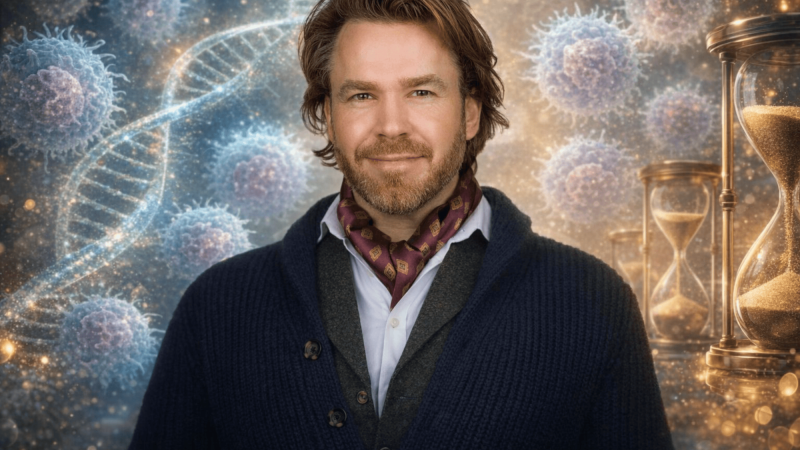
Alex Blythe
Alex Blyth‘s work reflects a longstanding curiosity about how the human body maintains its balance and how that process might be better understood earlier in life. Across his ventures, he has followed a path that brings together biology, technology, and long-term thinking, with a particular interest in strengthening the body’s own systems before illness fully develops.
His professional journey began within the life sciences and healthcare innovation space, where he spent many years working across biotechnology, strategy, and product development. With a background that combines biological sciences and economics, Blyth developed a systems-level perspective on health that considers not only individual mechanisms but how they interact across the body.
Through his work with major healthcare companies and new ventures, Blyth contributed to the development of a range of therapies, gaining insight into the limitations in how modern medicine approaches complex disease. These experiences shaped a broader line of inquiry into people with exceptional immune systems and resilience to age-related diseases, prompting him to look beyond treatment itself and towards the underlying drivers of health.
That perspective became more personal following his mother’s experience with cancer, which brought him closer to the realities of clinical care and its limitations. “It made me question why some people develop serious illnesses while others in similar circumstances do not,” he shares. This question marked a turning point, leading him to focus more closely on the immune system and its role in identifying and responding to early biological changes. From there, his work began to centre on a deeper exploration of immune competence and how it influences long-term health outcomes.
Over time, this curiosity developed into a long-term investigation. Blyth examined patterns across individuals with differing family histories and health trajectories, looking for clues that might explain resilience. The work required significant personal commitment, including the decision to sell his own properties and businesses, to fund his initial research. Gradually, he observed recurring themes suggesting that immune effectiveness shifts over time, shaped by both genetic and environmental influences.
These insights informed his decision to found LIfT Biosciences, where he focused on developing a new approach to cell therapy. Building on the idea that certain innate immune responses may offer useful advantages, he explored how enhanced innate immune cells might help the body remain balanced and respond earlier to potential problems. This work led to the creation of Immuno-Modulatory Alpha Neutrophils, or IMANs, laboratory-grown cells designed to support the body’s first line of defence by entering difficult-to-reach areas, being able to recognise threats like cancers that other immune cells miss, and helping other immune cells operate more effectively.
While curing disease remains essential, he believes there could be even more value in rejuvenating the immune system so that it is better placed to differentiate between friend and foe, remove unwanted cells, and stimulate the rebuilding of new cells. In his perspective, the immune system maintains the body, and if the maintenance system is malfunctioning, so too, in time, will the body. His perspective extends beyond oncology into a wider view of age-related conditions, where immune competence appears to influence many aspects of long-term health, including cognitive decline, autoimmune diseases, and the body’s ability to rejuvenate itself.
This line of thinking forms the foundation of his current venture, Viternity, which brings together his proprietary biological testing methods and advanced computational tools. A central element of this work is the use of artificial intelligence to interpret complex biological data, including in people’s immune competence, which, until now, has been the big unknown. “Up until now, clinicians have only been able to offer white blood cell counts that quantify the proportions of different immune cells that you have, but fail to assess if your immune cells are actually functioning properly. Such comprehensive tests were considered too resource-intensive to justify for even patients, let alone individuals who were not yet showing symptoms,” Blyth explains.
AI has begun to change this landscape. By dramatically reducing the cost and complexity of analysing multidimensional biological data, it allows patterns to be identified that would previously have required large teams and extensive laboratory work. Alex’s previous work in identifying donors with super immunity versus compromised immunity had been an expensive and lengthy process, whereas now the same work can be completed at a fraction of the time and cost. This shift makes it increasingly feasible to offer a proactive diagnostic check that helps identify areas of concern and medicinal interventions before they become significant. In this sense, AI provides a foundation for more structured, data-driven decision-making in personal health.
The need for such an approach has become clearer as more people experiment with supplements, peptides, and other interventions without a diagnostic baseline or appropriate tracking. Without understanding the underlying biological state, dosages can be arbitrary, outcomes difficult to measure, and interventions potentially ineffective or even harmful.
“Some therapies amplify what is already happening in the body. For example, treatments like exosomes may reinforce existing signalling patterns, so if that signalling is slightly off, they might strengthen responses that are not particularly helpful,” Blyth says. AI-supported diagnostics offer a way to reduce such risks by helping individuals understand their biological context before acting.
Viternity’s platform is designed to map immune competence across multiple dimensions, offering a view of how different aspects of the system contribute to overall health. By analysing these interactions, it becomes possible to identify areas of strength and those that may benefit from additional support.
Viternity’s Immune-IQ AI inference models can interpret complex immune panel data at a fraction of the traditional cost, enabling more accurate projections of disease risk, some five to ten years ahead of current disease diagnostics that rely on early symptoms. Collectively, as the AI model learns through participant data and clinical trials, it is able to identify common immune targets for developing new therapies to enhance health span and rejuvenation.
An important aspect of this work is its adaptability. As more data is gathered, the system refines its understanding, learning from real-world responses and adjusting accordingly. Blyth views this as a model in which insight evolves alongside the individual, creating a continuous process of understanding, acting, and learning.
Within this framework sits a broader ecosystem of initiatives, including a member-based community known as the Viternity Society. This group engages with emerging developments in immuno-longevity, combining personalised insights with access to cutting-edge, clinically validated therapeutic approaches. Their participation contributes to the ongoing refinement of the Immune-IQ platform and the development of new therapies, creating a feedback loop that strengthens the system over time, and indeed the participants.
Blyth envisions a future in which maintaining health and Immune-IQ becomes a more continuous and proactive process, supported by data and guided by a deeper understanding of the body’s internal systems. His plans include expanding clinical participation and further enhancing the platform’s predictive capabilities, with the aim of improving both personal treatment strategies and immuno-rejuvenation therapies. He emphasises, “The more we delve into immune-competence, the more we will find, and the more we will be able to do to enhance it.”
Alex Blyth‘s work reflects a longstanding curiosity about how the human body maintains its balance and how that process might be better understood earlier in life. Across his ventures, he has followed a path that brings together biology, technology, and long-term thinking, with a particular interest in strengthening the body’s own systems before illness fully develops.
His professional journey began within the life sciences and healthcare innovation space, where he spent many years working across biotechnology, strategy, and product development. With a background that combines biological sciences and economics, Blyth developed a systems-level perspective on health that considers not only individual mechanisms but how they interact across the body.
Through his work with major healthcare companies and new ventures, Blyth contributed to the development of a range of therapies, gaining insight into the limitations in how modern medicine approaches complex disease. These experiences shaped a broader line of inquiry into people with exceptional immune systems and resilience to age-related diseases, prompting him to look beyond treatment itself and towards the underlying drivers of health.