Post-holiday Blues: Is the September Dip Caused by Your Absence, or Your Return?
A holiday reveals whether your business can operate without you.
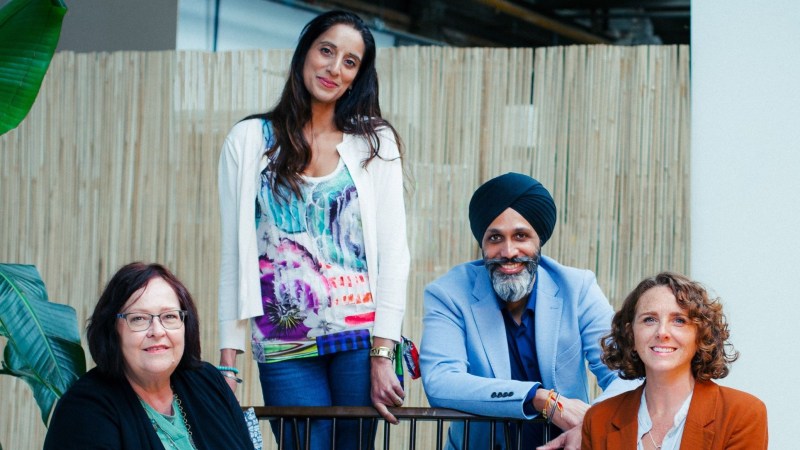
&Evolve Team
Opinions expressed by Entrepreneur contributors are their own.
You're reading Entrepreneur United Kingdom, an international franchise of Entrepreneur Media.
Every founder knows the feeling. You come back from holiday, open the laptop and find a queue of decisions that apparently could not be made without you. The pipeline has slowed, a few things have slipped, someone has been waiting for an answer and someone else has made a call you would not have made. Despite everyone assuring you that things went well, the business seems to need you more than ever. We tend to call this the September dip, and the question this month is whether it is simply the price of a good fortnight in the sun, or something the workplace does to people on their return. For founders that question is personal, because in a small business the workplace and the founder are hard to tell apart.
According to Tide’s Business Benchmark Index 2026, close to a million UK business owners take no full days off in a year, and those who do get away manage an average of 15 days against the 28 the law guarantees their employees. For many, being away means being somewhere else with the same phone. But that is precisely what makes the summer holiday such a useful experiment. For the first time in months the founder is not there to answer the question, approve the decision or provide the reassurance, and what happens next is data. If everything stops without you, you have not built a resilient business. You have built a business that has learned to wait for you.
Absence Or Return?
The research on holidays points the same way. Sabine Sonnentag’s stressor-detachment model shows that a break only restores us if we psychologically detach from work whilst we are away, and a study by Kühnel and Sonnentag followed people back from their summer holiday and found that the gains in engagement and the drop in burnout had largely faded within a month. What drove the fade was not the holiday but the job demands people returned to. If two people take the same fortnight away and one is flat within a week whilst the other carries the benefit for a month, the difference lies in the workplace, not the beach.
That matters because there are two versions of the post-holiday blues in a small business, and they rarely get talked about together. The first belongs to the founder, who returns to the queue. The second belongs to the team, who spent two weeks making decisions with fewer interruptions, discovered that some meetings were not necessary and some approvals could be skipped, and then felt the freedom disappear from the moment the founder’s car pulled back into the car park. These look like opposite problems. They have the same cause, and it is not the one most founders assume. The dip is read as the cost of the founder’s absence. More often it is the cost of the founder’s return.
The Operating System Nobody Wrote Down
In the early stages of a business, culture is remarkably simple: it lives in the founder. People watch what you do, what you tolerate, what you reward and what you challenge, and they learn how you decide. Nobody needs a values statement when the person who embodies those values is sitting in the same room. Growth changes that. The founder cannot be in every room, and people have to make decisions without knowing what the founder would do. Without a basis for deciding, the safest options are to wait, to ask, to do what they think you want, or to decide and quietly reverse it when you return. None of these are signs of a lazy or incapable team. They are rational responses to an operating system that exists inside one person’s head, and a holiday is the fortnight in which that operating system is switched off.
The management style behind it is rarely chosen. Most founders simply keep doing what worked when there were five people in one room and everyone could turn round and ask. Unmind’s Closing the Leadership Skills Gap report found that 84% of managers had received no formal training in leading people since becoming a manager, and founders are more exposed than most: there was no promotion into leadership, no handover and no course. You started the business, so you were the boss. What works with five people becomes suffocating with fifty, and the habits teach the organisation what to expect. A founder who answers every email instantly teaches people to expect instant answers; a survey of 2,000 UK employees by HiBob this summer found that half now check work messages whilst on holiday. A founder who approves every significant decision teaches people not to make them. A founder who trusts people to decide without them teaches the business that it can operate without them. The cost of the alternative is measurable: Paul Zak’s research on the neuroscience of trust, published in Harvard Business Review, found that people in high-trust companies report 74% less stress and 50% higher productivity than those in low-trust ones.
Turning Values Into A Decision-Making System
This is where values become more than words on a website. A founder’s values only become the organisation’s values when other people can use them to make decisions. Take a business whose values are trust, wisdom, authenticity and kindness. Those words are meaningless if employees still have to ask what the founder would want. They become useful the moment someone can ask what the most trusting response would be, what kindness would look like in this situation, or which decision reflects wisdom rather than simply speed. At that point the values are a decision-making framework, and that is what allows a founder to step further away without losing the culture they worked so hard to build.
The real test comes when someone makes a decision you would not have made, but which is entirely consistent with the values. Whether you reverse it or let it stand is one of the hardest transitions a founder makes, because scaling a business means moving from being the person who makes the decisions to being the person who creates the conditions for good decisions to be made.
What Leaders Can Do
Start by protecting the holiday itself: a proper handover, a genuine ban on contact, and the founder going first. If you cannot take ten days without the business needing you, that is not commitment; it is a design fault, and the team knows it. Then use the first week back as the most honest listening exercise of the year. People return with perspective, noticing the processes and meetings that had stopped being questioned, and so does the founder. So before the inbox swallows you, ask the team what they noticed whilst you were away, what worked better, what decisions they made, what got in the way of their best work and, most revealing of all, what the business should stop doing. Then listen, without defending, explaining or describing why it has always been done that way. You may find that the business does not need more effort. It needs less friction.
We tend to measure founders by how much they achieve and how indispensable they become. The better measure is how well the business performs when they are not there. So before blaming the summer for the slowdown, ask the more uncomfortable question: what did your business teach you about itself whilst you were away?
Every founder knows the feeling. You come back from holiday, open the laptop and find a queue of decisions that apparently could not be made without you. The pipeline has slowed, a few things have slipped, someone has been waiting for an answer and someone else has made a call you would not have made. Despite everyone assuring you that things went well, the business seems to need you more than ever. We tend to call this the September dip, and the question this month is whether it is simply the price of a good fortnight in the sun, or something the workplace does to people on their return. For founders that question is personal, because in a small business the workplace and the founder are hard to tell apart.
According to Tide’s Business Benchmark Index 2026, close to a million UK business owners take no full days off in a year, and those who do get away manage an average of 15 days against the 28 the law guarantees their employees. For many, being away means being somewhere else with the same phone. But that is precisely what makes the summer holiday such a useful experiment. For the first time in months the founder is not there to answer the question, approve the decision or provide the reassurance, and what happens next is data. If everything stops without you, you have not built a resilient business. You have built a business that has learned to wait for you.
Absence Or Return?
The research on holidays points the same way. Sabine Sonnentag’s stressor-detachment model shows that a break only restores us if we psychologically detach from work whilst we are away, and a study by Kühnel and Sonnentag followed people back from their summer holiday and found that the gains in engagement and the drop in burnout had largely faded within a month. What drove the fade was not the holiday but the job demands people returned to. If two people take the same fortnight away and one is flat within a week whilst the other carries the benefit for a month, the difference lies in the workplace, not the beach.

Amrit Sandhar • CEO and founder, &Evolve
Amrit Sandhar founded &Evolve (formerly known as The Engagement Coach,) in 2015, and since then... Read more