The Entrepreneur Who Is Building a New Framework for Leadership Under Pressure
Real resilience is the ability to remain functional enough to assess the facts, regulate emotion, change direction and make difficult decisions before circumstances make them on your behalf.

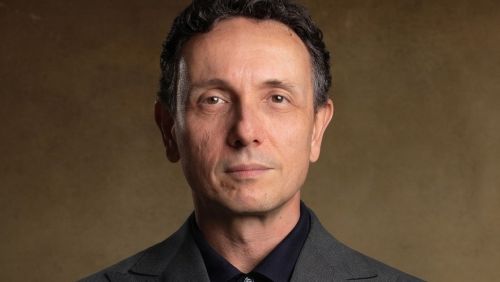
Alessio Vinassa
You're reading Entrepreneur United Kingdom, an international franchise of Entrepreneur Media.
Pressure has a way of exposing what success can conceal. When revenue is growing, capital is available and the market is moving in the right direction, leadership can look effortless. It is only when plans collapse, trust is broken or circumstances change without warning that the quality of a leader’s thinking becomes visible.
That moment—when familiar answers stop working—sits at the centre of Alessio Vinassa’s work.
An entrepreneur, business strategist and author operating across the UAE, Europe and international markets, Alessio has spent much of his career studying how founders and executives respond when certainty disappears. His focus is not conventional motivation or the performance of confidence. It is the internal discipline required to remain clear, accountable and capable of action when pressure is at its highest.
The philosophy was not developed in a classroom. It was shaped by repeated exposure to failure.
At 22, Alessio made his first million dollars. Instead of protecting or diversifying the capital, he reinvested it into two ventures. Both failed rapidly. Part of the money he had entrusted to a partner was also lost through sports betting. The result was severe: he went from being a young millionaire to having approximately €2,200 in the bank while facing a payment of €180,000.
For many entrepreneurs, that kind of collapse would become either a private source of shame or a polished comeback story told only after success had returned. Alessio views it differently. The real value of the experience, he argues, was not that he survived it. Survival alone does not produce wisdom. The lesson was that responsibility did not disappear simply because the resources, confidence and people he had depended on were no longer there.
No one was coming to restore order for him.
That realisation became the foundation of his forthcoming book, No One Is Coming: The Mental Operating System for Leaders Under Pressure. Its central argument is direct: leadership begins when a person stops waiting for an investor, adviser, partner, market recovery or outside authority to rescue the situation and accepts responsibility for the next decision.
The idea is not a rejection of support, mentorship or collaboration. Strong leaders still seek expertise and build capable teams. Alessio’s distinction is that advice can be shared, but responsibility cannot be outsourced. At the decisive moment, someone must examine reality without distortion and act.
Over the years, Alessio says he has endured five major financial collapses. One came after a period of rapid expansion and seven-figure monthly revenue, when an external shock erased a significant portion of the business in less than a month and was followed by weeks of shutdown. Another occurred when geopolitical instability contributed to the loss of an entire client base within weeks, forcing a restructuring and a reduction in team size.
These experiences gave him a perspective on resilience that differs from the language often used in business culture. Resilience, in his view, is not blind persistence. Continuing down the wrong path is not strength, and endurance without judgement can become expensive stubbornness. Real resilience is the ability to remain functional enough to assess the facts, regulate emotion, change direction and make difficult decisions before circumstances make them on your behalf.
Alessio describes the internal framework behind that ability as a “mental operating system.” Like the operating system of a device, it shapes how information is processed, how patterns are recognised and how responses are produced. Under ordinary conditions, dysfunctional thinking can remain hidden. Under pressure, it becomes operational: fear becomes avoidance, ego becomes denial, urgency becomes impulsiveness and attachment prevents necessary change.
The objective is therefore not to eliminate pressure. It is to build an internal system capable of carrying it.
In practice, that may mean separating a genuine threat from an emotional reaction, challenging assumptions that once supported growth, reducing exposure before it becomes fatal, restructuring a company or ending an initiative that no longer serves the larger strategy. It also requires leaders to understand how their internal state affects the people around them. A founder’s panic can become an organisation’s panic; clarity can spread in the same way.
Today, Alessio is active across business strategy, cybersecurity, wealth management, leadership, publishing and emerging applications of artificial intelligence in creative industries. The sectors vary, but the leadership question remains consistent: how does a person make sound decisions when information is incomplete and the consequences are real?
His position between the UAE and Europe adds another dimension to that work. Entrepreneurs operating across markets face different commercial cultures, regulatory environments and attitudes toward risk. Fixed formulas rarely travel well. What does travel is the capacity to observe, adapt and preserve direction without becoming psychologically dependent on one market, one strategy or one season of success.
That may be the most relevant way to understand Alessio. His story is not simply about building businesses or recovering from losses. It is about converting repeated encounters with uncertainty into a practical philosophy of leadership.
Most profiles of entrepreneurs focus on what they have built around them. Alessio’s work asks a more difficult question: when the business, plan or certainty begins to break, what has the leader built within themselves that remains?
Pressure has a way of exposing what success can conceal. When revenue is growing, capital is available and the market is moving in the right direction, leadership can look effortless. It is only when plans collapse, trust is broken or circumstances change without warning that the quality of a leader’s thinking becomes visible.
That moment—when familiar answers stop working—sits at the centre of Alessio Vinassa’s work.
An entrepreneur, business strategist and author operating across the UAE, Europe and international markets, Alessio has spent much of his career studying how founders and executives respond when certainty disappears. His focus is not conventional motivation or the performance of confidence. It is the internal discipline required to remain clear, accountable and capable of action when pressure is at its highest.
Entrepreneur UK
Entrepreneur Staff