The Back Office Goes Fully Digital
Mastercard explores how AI will transform hospitality SMEs and everyday business operations.

Mastercard
Opinions expressed by Entrepreneur contributors are their own.
You're reading Entrepreneur United Kingdom, an international franchise of Entrepreneur Media.
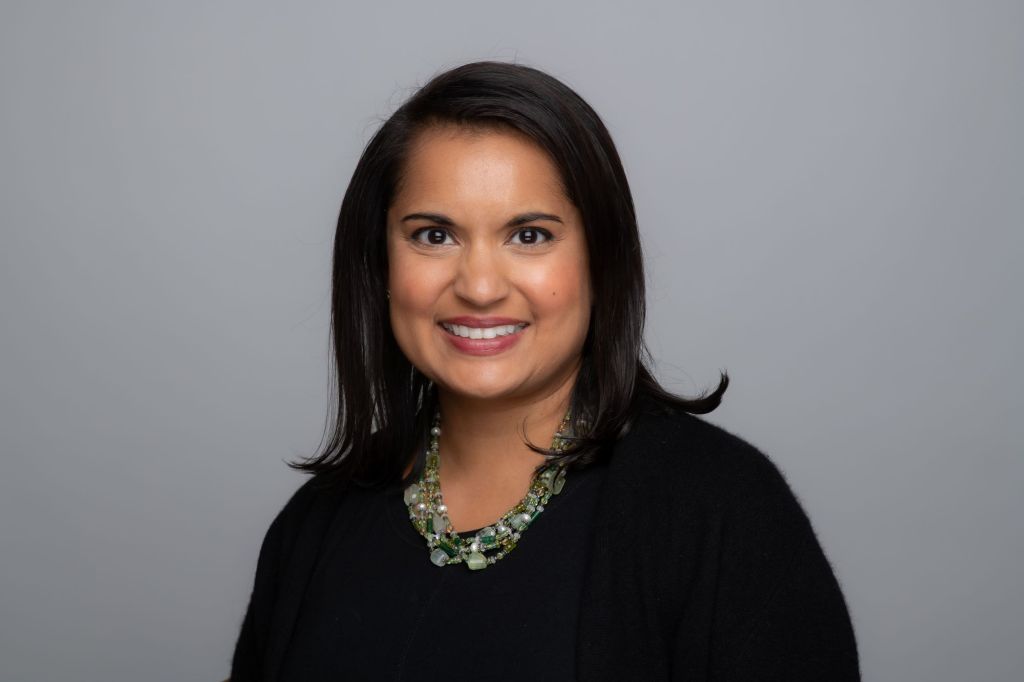
The hospitality sector is used to pressure. But for small and medium-sized (SME) businesses in the UK, the combination of rising labour costs, stubborn inflation and chronic staffing shortages has created something closer to attrition than adjustment. For Payal Dalal, Mastercard Center for Inclusive Growth, and Mark Barnett, Mastercard’s Global Head of Small and Medium-Sized Enterprises, those pressures are also accelerating a more fundamental shift in how small businesses operate in the age of artificial intelligence (AI).
Speaking about the future of hospitality SMEs, Barnett is blunt about the immediate reality. “The minimum wage is up, food prices are up,” he says, “so it’s about doing more with less.” Barnett argues the sector is “in the middle of a tech revolution,” one that will disproportionately benefit smaller firms before larger competitors fully catch up. The catalyst, in his view, is AI. Not as a distant abstraction, but as an operational tool already beginning to reshape demand and behaviour. Recent Mastercard Economics Institute research suggests consumers are already using AI tools to plan more “experience-led hospitality journeys” – from restaurant choices to travel planning – forcing businesses to adapt to increasingly algorithmically shaped customer expectations. However, the more immediate transformation, Barnett argues, is internal. “This idea of being able to do more with less is going to be really important,” he says. “AI can help give back hospitality owners and workers more time to do the things they want to be doing – serving customers.”

In his vision, the “back office” largely disappears into automation. Bookkeeping, reconciliation, fragmented software systems – all of it increasingly handled by AI agents. “Unless I’m in the back office running disparate operational systems, reconciling things or doing paperwork, it could all be done by agents,” he says, “or it will very soon be done by agents.” The implication is not just efficiency, but a restructuring of daily working life in SMEs, where owners often act as marketer, accountant, HR manager and customer service lead simultaneously. Barnett recalls meeting a restaurant owner who had consolidated payments, operations and administration into a single fintech stack – with one exception. “In this case, he still needed a relationship with a traditional bank for customers paying in cash,” he says.
Trust in a digital economy
If Barnett frames the opportunity, Dalal focuses on the friction slowing digital adoption. For many small businesses, she says, the issue is not awareness of digital tools, but confidence in them, according to recent research titled, The digital transformation of European micro-businesses. “We did a study across 2,500 small businesses across Europe,” she says. “They understood there was a digital imperative, but very few had taken action.” Cost is part of the explanation. But a more significant barrier, she argues, is trust: a fear that digital systems will extract more value than they deliver. ‘Do I want all of my data in these systems?’ ‘What value is it going to bring to me versus what value is it going to extract from me?’ are common concerns.
Mastercard’s response, she says, has been less about technology and more about mediation. That includes curated toolkits for SMEs, peer-to-peer learning networks and hands-on technical support designed to reduce the risk of adoption. During the pandemic, she notes, UK government funding for digital transformation was available, but uptake was limited. “Small businesses didn’t know where to start and they didn’t trust the system,” she says. The solution, in Mastercard’s framing, is not simply financial incentives but hands-on support through implementation – pairing businesses with others who have already adopted systems such as CRM or inventory management tools.
Payments as infrastructure – or something more
If digital tools are reshaping operations, payments remain the connective tissue. Barnett rejects the idea that payments are merely infrastructure, describing the shift from cash-based trading to digital payments as transformative not just for transactions, but for business intelligence itself. Once payments are digitised, they generate data that allows small firms to better understand receivables, cash flow and creditworthiness. “You start to see receivables in a digital form,” he says. “And they trust that a lot more than written paper.” For Mastercard, that data layer is central to its value proposition – particularly in cross-border commerce, where Barnett notes that digital networks allow SMEs to operate across multiple currencies and markets almost seamlessly. The secret sauce for SME growth, according to Dalal, lies in three things: access to capital, going digital, and being connected to the networks that power the modern economy, which are the primary focus of Mastercard Strive, the Center’s global small business program. She adds that research from the Mastercard Economics Institute shows travellers are already using digital and AI tools to optimise decisions, particularly around price, route and value. “That will only accelerate.”
The cyber threat shadowing small business growth
Barnett adds another dimension to the SME equation: cybersecurity. “It’s the number one concern that comes up,” he says, pointing to Mastercard whitepaper research, “Cybersecurity through the SME lens” suggesting that nearly half of SMEs have experienced a cyberattack, with a significant proportion failing to recover. “Nearly one in five businesses that were attacked were not trading a year later.” In response, Mastercard has developed tools that scan businesses for vulnerabilities and provide automated recommendations – a kind of “virtual chief information security officer” for small firms lacking internal IT teams. For Barnett, AI is either an equaliser or a risk amplifier, depending on how it is deployed, and both executives return repeatedly to AI not as a single tool but as an operating environment. Barnett envisions a near future in which SME owners can interrogate their businesses in natural language: How many days can I survive? Where can I improve working capital? Should I be chasing payments? Dalal’s emphasis is slightly different: AI makes things significantly easier for SMEs if introduced in the right way, with a focus on outcomes – how it helps small businesses save time or make more money – and on improving the wider ecosystem of platforms and institutions that serve them. She cites a case in Indonesia where machine learning and alternative data reduced a loan approval process from two weeks to 24 hours. “For a small business operating on super-thin margins,” she says, “those extra 13 days can be a matter of life and death.”
The next five years
Products and services are often designed for larger businesses, but Mastercard says it also focuses on smaller firms – feeding insights from the ground back into the system so SMEs are better served and the UK can “leapfrog” in its digital transformation. Barnett predicts a fundamental shift in how consumers interact with hospitality and travel. Planning a trip, he suggests, will increasingly happen through AI systems which will curate options, optimise prices and assemble full itineraries. Mastercard is also moving in that direction, bringing enterprise capabilities to small businesses: do you need a chief financial officer, a chief marketing officer, or a chief security officer? Today, a small hospitality owner has to be all of these things themselves. “The whole process will be incredibly simple,” he says. “Almost everything will be done by AI agents.” Payments, however, will remain the point at which human intent re-enters the system. Dalal adds a note of caution about how that future is built. “What we don’t want is agents prioritising really big hotels,” she says. “We want small businesses to have a chance to compete.” For all the confidence in automation, both return to the same constraint: adoption is uneven and trust remains fragile. SMEs, they argue, are still moving from analogue systems to digital ones, before they can fully enter an AI-mediated economy.
The hospitality sector is used to pressure. But for small and medium-sized (SME) businesses in the UK, the combination of rising labour costs, stubborn inflation and chronic staffing shortages has created something closer to attrition than adjustment. For Payal Dalal, Mastercard Center for Inclusive Growth, and Mark Barnett, Mastercard’s Global Head of Small and Medium-Sized Enterprises, those pressures are also accelerating a more fundamental shift in how small businesses operate in the age of artificial intelligence (AI).
Speaking about the future of hospitality SMEs, Barnett is blunt about the immediate reality. “The minimum wage is up, food prices are up,” he says, “so it’s about doing more with less.” Barnett argues the sector is “in the middle of a tech revolution,” one that will disproportionately benefit smaller firms before larger competitors fully catch up. The catalyst, in his view, is AI. Not as a distant abstraction, but as an operational tool already beginning to reshape demand and behaviour. Recent Mastercard Economics Institute research suggests consumers are already using AI tools to plan more “experience-led hospitality journeys” – from restaurant choices to travel planning – forcing businesses to adapt to increasingly algorithmically shaped customer expectations. However, the more immediate transformation, Barnett argues, is internal. “This idea of being able to do more with less is going to be really important,” he says. “AI can help give back hospitality owners and workers more time to do the things they want to be doing – serving customers.”
In his vision, the “back office” largely disappears into automation. Bookkeeping, reconciliation, fragmented software systems – all of it increasingly handled by AI agents. “Unless I’m in the back office running disparate operational systems, reconciling things or doing paperwork, it could all be done by agents,” he says, “or it will very soon be done by agents.” The implication is not just efficiency, but a restructuring of daily working life in SMEs, where owners often act as marketer, accountant, HR manager and customer service lead simultaneously. Barnett recalls meeting a restaurant owner who had consolidated payments, operations and administration into a single fintech stack – with one exception. “In this case, he still needed a relationship with a traditional bank for customers paying in cash,” he says.

Patricia Cullen • Features Writer
Entrepreneur Staff