Chancellor Reeves Focuses on Economic Growth
Rachel Reeves outlines growth strategy, centred on stability, investment and economic reform.
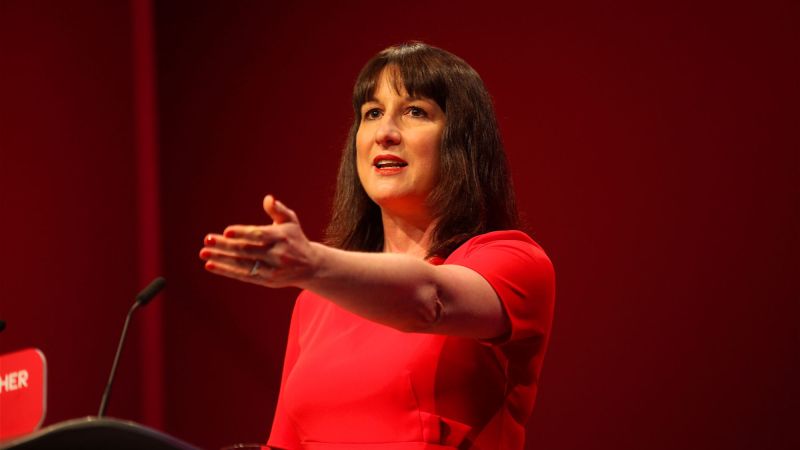
Shutterstock
Rachel Reeves, the UK's Chancellor of the Exchequer
Opinions expressed by Entrepreneur contributors are their own.
You're reading Entrepreneur United Kingdom, an international franchise of Entrepreneur Media.
Delivering growth was the central theme as Chancellor Rachel Reeves addressed delegates at the British Chambers of Commerce Global Annual Conference today, defending her economic record while arguing that the foundations for stronger long-term growth are now in place.
Speaking to an audience of business leaders, policymakers and entrepreneurs, Reeves presented a picture of an economy that, while still facing challenges, is in a significantly stronger position than it was two years ago. Her message was one of stability, investment and reform, underpinned by a belief that economic growth is beginning to return. “We do have an economy that’s growing,” Reeves said. “We do have an economy where inflation, government borrowing are under control.”
The Chancellor pointed to a series of interest rate cuts as evidence that economic conditions are improving. Lower borrowing costs, she argued, are helping both businesses and households, creating the conditions for investment and spending. “We’ve had six cuts in interest rates, which directly feed into businesses who are borrowing to grow, and directly feed into family finances, which means that people have got more money in their pockets to spend in the economy.”
For a conference audience focused on growth, competitiveness and investment, the comments reflected a broader argument running through Reeves’ address: that economic stability is not an end in itself but a prerequisite for business expansion. However, she acknowledged that growth cannot rely solely on improving macroeconomic conditions. “Is there more to do to grow the economy? Absolutely there is,” she said.
Among the priorities she identified were regulatory reform, planning reform and further changes to the tax system. Reeves pointed to reforms to business rates as an example of efforts already underway but made clear that additional action is needed. The emphasis on reform resonated with wider discussions taking place throughout the conference, where delegates repeatedly highlighted barriers to growth ranging from planning delays and skills shortages to regulatory complexity. One of the most striking themes of Reeves’ speech was her insistence that long-term economic success depends on creating an environment in which businesses feel confident enough to invest. Reflecting on her time in office, she outlined three core objectives that have guided her approach as Chancellor.
“I wanted to restore stability to the economy. I wanted to boost investment, both public and private, into the economy. I wanted to change how the economy works with a regulatory burden that is fairer and more efficient, with a planning system that actually allows things to get built in our country.” The reference to planning reform drew particular attention given its importance to infrastructure, housing and business development. For many in the room, the ability to accelerate projects and remove obstacles to investment remains central to any credible growth strategy. Reeves argued that these policies are beginning to show results.
“I’m really proud of my record, and I hope that whoever is Chancellor in the future, whenever that future may be, sticks to what I’m doing because it is beginning to bear fruit.” She continued: “We are seeing that investment return to the economy, that growth return to the economy, and crucially that stability so that businesses can plan and invest for the future.” The discussion also touched on energy policy and the role of the North Sea in supporting economic growth and energy security. Reeves was unequivocal in her support for maintaining existing commitments.
“I’ve been very clear that I think that the North Sea is a crucial asset for the UK, and that oil and gas will be an important part of our energy mix for years to come.” She added that the government should honour existing licences, highlighting the importance of certainty and continuity for investors and businesses operating within the sector.
While much of the conversation focused on economics, Reeves was also asked about politics following disappointing recent election results. She acknowledged the need for government to communicate more effectively with voters. “We need to do more to connect to the country, to tell a better story of what we’ve done in government, but also set out the vision for where we want the country to go.”
Looking ahead, she expressed confidence in Andy Burnham’s leadership and his ability to communicate that vision, describing him as “a great communicator” with “a great track record in delivering in Manchester.” Yet it was when discussing the role of Chancellor itself that Reeves perhaps offered the clearest insight into her own philosophy. Asked what advice she would give to a future holder of the office, she emphasised clarity of purpose and consistency.
“You’ve got a brilliant set of officials at the Treasury who will back you if you are clear about what you want to do.” That clarity, she suggested, has been central to her own approach over the past two years. The conversation concluded with a more personal reflection on her place in history as Britain’s first female Chancellor. Rather than pointing to a single policy achievement, Reeves returned to the ambitions she set out on her first day in office. “When I became Chancellor of the Exchequer, the first speech I gave was in the atrium of the Treasury, and I said in that speech that I would judge my time in office as success if ordinary children from work-class backgrounds had more opportunities than when I became Chancellor, and whether women and girls felt that there should be no ceiling on their ambition.”
She added: “It will be up to others to judge whether I’ve achieved my goals, but I’m very proud of what I’ve done.” At a conference dedicated to delivering growth, Reeves’ message was ultimately about creating the conditions for it. Whether through lower borrowing costs, planning reform, regulatory change or investment, her argument was that sustainable growth is built on stability, confidence and long-term thinking. For the business leaders gathered in the room, it was a reminder that growth remains both the government’s primary economic objective and one of its most closely scrutinised promises.
Delivering growth was the central theme as Chancellor Rachel Reeves addressed delegates at the British Chambers of Commerce Global Annual Conference today, defending her economic record while arguing that the foundations for stronger long-term growth are now in place.
Speaking to an audience of business leaders, policymakers and entrepreneurs, Reeves presented a picture of an economy that, while still facing challenges, is in a significantly stronger position than it was two years ago. Her message was one of stability, investment and reform, underpinned by a belief that economic growth is beginning to return. “We do have an economy that’s growing,” Reeves said. “We do have an economy where inflation, government borrowing are under control.”
The Chancellor pointed to a series of interest rate cuts as evidence that economic conditions are improving. Lower borrowing costs, she argued, are helping both businesses and households, creating the conditions for investment and spending. “We’ve had six cuts in interest rates, which directly feed into businesses who are borrowing to grow, and directly feed into family finances, which means that people have got more money in their pockets to spend in the economy.”

Patricia Cullen • Features Writer
Entrepreneur Staff