How to build when your home country is at war
Ukrainian founder reflects on wartime entrepreneurship, UK-Ukraine collaboration, resilience.
UK-Ukraine TechExchange
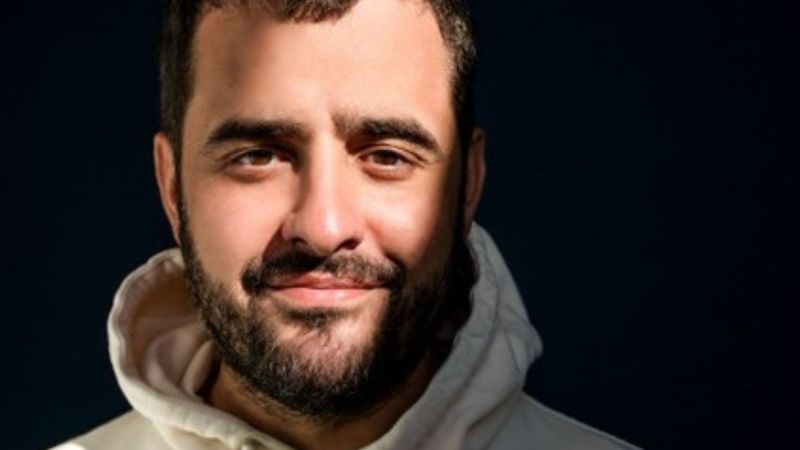
Andriy Dovbenko, founder and principal of UK-Ukraine TechExchange
Opinions expressed by Entrepreneur contributors are their own.
You're reading Entrepreneur United Kingdom, an international franchise of Entrepreneur Media.
I think the hardest early decision a founder can make in wartime is where to place one’s energy. Capital, contacts, time, reputation, access, language, judgement and trust all begin to carry a different value. A company still needs structure, cash flow, credibility, execution, governance and patience, but war adds responsibility to every decision. The question I have had to ask myself is whether my work creates something Ukraine can keep using after the room has emptied and the headlines have moved elsewhere.
I was born in Western Ukraine, studied and worked in Kyiv and in the past six years have been building a rewarding professional life in Britain. Since Russia’s full-scale invasion, those facts have shaped my sense of duty. Being Ukrainian is a strength. It is childhood, family, language, land, and obligation. Britain is where I now live, it is where I have built relationships, and it is a place with institutional access and a voice that travels internationally. From London, you have safety and access to decision-makers, while carrying the knowledge that others are living with sirens, mobilisation, displacement, blackouts and loss.
Founders are used to pressure, but wartime pressure has a different character. A Ukrainian founder may be raising capital while a colleague, contact or family member is serving on the front line, or while an office or factory is at risk of being hit overnight. Just a few days ago Skyeton, one of our founding cohort, saw its Kyiv office destroyed in a missile attack. Last year, Kvertus suffered a severe arson attack at its manufacturing site. Even that is not the greatest pressure. Many Ukrainian founders are developing products that save lives. An engineering mistake can have fatal consequences when soldiers rely on your technology in the field. War makes vague plans intolerable, exposes shallow partnerships quickly, and makes people who follow through invaluable.
UK-Ukraine TechExchange came from that reality. I wanted to build a pathway between Ukraine’s wartime capability and the UK’s defence, industrial, investment and policy communities. Ukraine has founders, engineers, manufacturers and operators whose work has been shaped by the hardest conditions in Europe. Britain has capital, legal expertise, universities, defence institutions, manufacturers, policymakers, family offices, advisers and a global reputation for seriousness. Bringing those worlds together creates value for both sides, provided the relationship is built with care and with respect for Ukrainian ownership. Britain is also one of Ukraine’s strongest allies. It has provided shelter to my family and friends and has stood with Ukraine in public and through quieter channels of support. Helping Britain understand what Ukraine has learned, and how those lessons can strengthen British preparedness, is in our common interest.
A founder in Ukraine does not need applause from London. They need partners who understand export restrictions, IP ownership, production capacity, market access and the damage a badly structured deal can do. Ukraine’s defence-tech sector can become a core part of its future economy, but only if its founders, IP and equity are protected properly.
Britain is one of the few places where this work can be done properly. London remains one of the world’s most effective places to bring together investors, officials, advisers, founders, philanthropists and defence specialists.
The first phase of support for Ukraine was driven by urgency. People raised money, found vehicles, bought drones and supplied generators. That work saved lives. The next phase needs relationships that carry weight: investors prepared to understand dual-use risk; manufacturers able to help with scale; advisers who can structure companies for international markets; policymakers willing to listen to operational experience.
Relationship-building in this context is critical infrastructure. A credible introduction can change the future of a company. A serious investor can keep a Ukrainian founder hiring under strain. A conversation with a manufacturer can turn a battlefield lesson into something supplied at scale. This is how you build during war: you turn urgency into trusted relationships, and trusted relationships into structures that can survive pressure.
The practical purpose of TechExchange is to bring Ukrainian founders, engineers and defence specialists into contact with British institutions that can help them grow, adapt and professionalise, while also making Britain stronger. Skyeton and Prevail first met through a TechExchange event we hosted at Goldman Sachs in London, where Skyeton pitched and Justin Hedges, Prevail’s Managing Partner, was on the panel. That first contact later became Skyeton Prevail Solutions, a UK-Ukraine joint venture supporting Skyeton’s Raybird system for UK and allied military applications. Skyeton says Raybird has recorded around 350,000 flight hours in Ukraine, while the joint venture is designed to build skilled engineering value in the UK.
Farsight Vision shows the same pattern from another angle. The Ukrainian-Estonian company, backed by Darkstar and investors including Axon Enterprise, raised an approximately €7m seed round. Its CEO, Viktoriia Yaremchuk, said the fundraise gave hope to other founders close to the Ukrainian front line. Building in wartime has to protect people, strengthen companies’ futures and ensure they create something useful for the long-term.
The work also has a British purpose. The UK is helping Ukraine with real seriousness. Ukraine’s experience can help Britain prepare for a security environment that still feels distant to many people here. For a country used to thinking of war as something that happens elsewhere, the shift under way in drones, cyber, infrastructure protection, electronic disruption and industrial resilience can feel almost unreal. Ukraine shows it is already happening. The Strategic Defence Review has proposed a UK Drone Centre, and the agreement between Sir Keir Starmer and President Zelensky to bring UK and Ukrainian capabilities together reflects the same direction of travel. Britain can help Ukraine while learning how to protect its own ports, bases, energy infrastructure, supply chains and maritime interests in a world where low-cost, fast-adapting technologies have changed the risk calculation.
History is useful here because Britain has seen this pattern before. Some of the country’s most important post-war strengths came from knowledge organised under wartime pressure. Penicillin moved from Oxford science into clinical trials, production systems and Allied cooperation because the war forced speed, funding and coordination around a medical breakthrough. Radar followed a similar path: British research, shared through the Tizard Mission, helped create the wartime Allied technology base that later fed into electronics, aviation and communications. Ukraine now has its own version of that difficult inheritance. The knowledge being formed through defence technology, logistics, reconstruction, infrastructure protection and industrial resilience has been earned at enormous cost, but it can become part of Ukraine’s post-war strength if it is structured properly now. For Britain, working with Ukraine at this stage is a way to support an ally while also learning earlier than others how security, preparedness and industrial capability are changing.
For me, building when your home country is at war means taking emotion seriously without allowing it to become the whole story. Anger can create momentum, but it cannot substitute for governance. Love of country has to become disciplined work.
You place your energy where it can still matter in five or ten years. You build relationships that carry weight. You protect the value your country is creating under pressure. UK-Ukraine TechExchange is my contribution to that task. It is rooted in Ukraine, strengthened by Britain, and built around the belief that countries which stand together in war should also build together for the future that follows.
I think the hardest early decision a founder can make in wartime is where to place one’s energy. Capital, contacts, time, reputation, access, language, judgement and trust all begin to carry a different value. A company still needs structure, cash flow, credibility, execution, governance and patience, but war adds responsibility to every decision. The question I have had to ask myself is whether my work creates something Ukraine can keep using after the room has emptied and the headlines have moved elsewhere.
I was born in Western Ukraine, studied and worked in Kyiv and in the past six years have been building a rewarding professional life in Britain. Since Russia’s full-scale invasion, those facts have shaped my sense of duty. Being Ukrainian is a strength. It is childhood, family, language, land, and obligation. Britain is where I now live, it is where I have built relationships, and it is a place with institutional access and a voice that travels internationally. From London, you have safety and access to decision-makers, while carrying the knowledge that others are living with sirens, mobilisation, displacement, blackouts and loss.
Founders are used to pressure, but wartime pressure has a different character. A Ukrainian founder may be raising capital while a colleague, contact or family member is serving on the front line, or while an office or factory is at risk of being hit overnight. Just a few days ago Skyeton, one of our founding cohort, saw its Kyiv office destroyed in a missile attack. Last year, Kvertus suffered a severe arson attack at its manufacturing site. Even that is not the greatest pressure. Many Ukrainian founders are developing products that save lives. An engineering mistake can have fatal consequences when soldiers rely on your technology in the field. War makes vague plans intolerable, exposes shallow partnerships quickly, and makes people who follow through invaluable.