Cracking the LinkedIn Code
From LinkedIn creator to SaaS founder: building brand and business.
Literally Academy
Opinions expressed by Entrepreneur contributors are their own.
You're reading Entrepreneur United Kingdom, an international franchise of Entrepreneur Media.
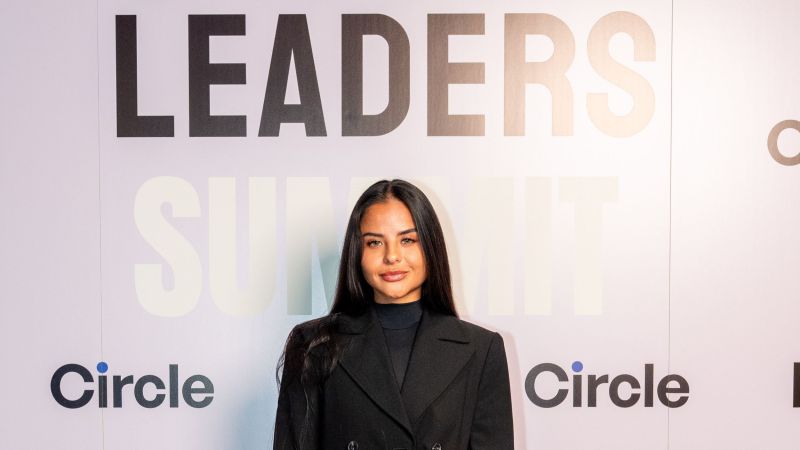
In 2022, Lara Acosta was unemployed and spending hours online trying to understand a platform most people treat as little more than a digital CV. Instead of scrolling, she began studying LinkedIn: the posts that travelled, the creators who consistently reached large audiences, and the structures that seemed to trigger the algorithm. Posting daily and refining her approach, Acosta quickly built one of the platform’s most visible personal brands. That audience has since evolved into two ventures: Kleo, a tool analysing how creators and posts perform, and Literally Academy, where she teaches founders how to turn their companies into stories people actually want to follow. In an online economy increasingly shaped by distribution, Acosta argues that content is no longer optional – it’s infrastructure. Entrepreneur UK speaks to Acosta about building an audience, launching Kleo and turning content into a business.
You went from unemployed in 2022 to becoming one of LinkedIn’s most visible creators. What was the turning point where your personal brand became a real business?
Hard work. I spent hours every day reverse-engineering the platform and the content it rewarded. I did everything in my power to then deliver on that and improve every single day. I never got complacent. I never celebrated too much. I kept my eye on the price (was consistently improving at whatever the goal was. Better clients, better content, better network). I made sure I understood which content strategies worked at the time – and used them. I found a unique angle and doubled down. I had nothing else to do – I was committed to making it work and I loved who I became in the process of learning so much so fast.
Many founders struggle with distribution. How can SaaS entrepreneurs use personal branding and storytelling to gain traction early on?
Today, the winners are not just the founders who build the best products – they’re the ones who understand distribution. Content is no longer optional. It’s a core growth channel. For SaaS founders, the first step is choosing the right platform: where do your customers actually spend time? Then turn the journey of building your product into ongoing storytelling.
– Why did you build the company?
– What problem are you solving that others aren’t?
– Are you bootstrapped or funded, and why?
– What are you learning as you build?
Every one of those questions is a piece of content. When people follow the story, they start to trust you. And trust lowers the barrier for them to try your product. One tactical thing I always recommend: build a waitlist early. Social content drives awareness, but a waitlist captures intent. It’s one of the simplest ways to convert attention into future users.
As co-founder of Kleo, what insights about content and audience growth surprised you most once you started analysing creator data at scale?
One insight that surprised us was that most creators think their problem is time. When we asked our users how long it takes them to write a post, many said five minutes… usually using ChatGPT. So the real issue isn’t time. It’s expectations. High-performing content rarely comes from five minutes of effort. The posts that actually grow audiences usually come from hours of thinking about the topic, the angle, the relevance, the structure, and the packaging. Yes, I can write a post in five minutes today, but that’s because I spent thousands of hours learning how content works. AI can speed up execution, but it can’t replace the thinking behind great content. The creators who win with AI are the ones who have already developed the skill and use the tools to amplify it.
What gap in the creator economy were you trying to solve when you launched Literally Academy?
LinkedIn was full of generic content, motivational posts, and recycled advice. There was little guidance in 2024 on how to create content – now, in 2026, understanding content and algorithms is essential to building a profitable brand online, especially on LinkedIn. The gap was in the way this is taught, not just based on trends but on understanding a core untapped market (LinkedIn) and how they also purchase through socials – even more than on other platforms.
As a woman building companies in the SaaS and creator economy, have you experienced any challenges – or advantages – that shaped how you lead and build your brand?
From the very start I had an advantage, and it was the fact that I’d do whatever it takes to win. People in the space which is male-dominated noticed it and stopped judging me because of my gender and judged me based on skill and drive. Women did the same for me. I made it a point to try to be the most useful and everything started happening for me. Being a woman has proven to be an incredible advantage; I stand out, we stand out. Being intelligent, articulate and driven as a woman puts you top of the list in the right places, and the places that don’t like it weren’t meant to be for you anyway.
What advice would you give women founders who want to build both a successful company and a visible personal brand?
In a world where everyone is trying to be loud, be useful. The opportunities you want come from having leverage, and leverage is built favour by favour, by resources and opportunities shared to others. Always give someone value, help them, take the call – you never know who will introduce you to your next client, speaking event, co-founder or even podcast!
In 2022, Lara Acosta was unemployed and spending hours online trying to understand a platform most people treat as little more than a digital CV. Instead of scrolling, she began studying LinkedIn: the posts that travelled, the creators who consistently reached large audiences, and the structures that seemed to trigger the algorithm. Posting daily and refining her approach, Acosta quickly built one of the platform’s most visible personal brands. That audience has since evolved into two ventures: Kleo, a tool analysing how creators and posts perform, and Literally Academy, where she teaches founders how to turn their companies into stories people actually want to follow. In an online economy increasingly shaped by distribution, Acosta argues that content is no longer optional – it’s infrastructure. Entrepreneur UK speaks to Acosta about building an audience, launching Kleo and turning content into a business.
You went from unemployed in 2022 to becoming one of LinkedIn’s most visible creators. What was the turning point where your personal brand became a real business?
Hard work. I spent hours every day reverse-engineering the platform and the content it rewarded. I did everything in my power to then deliver on that and improve every single day. I never got complacent. I never celebrated too much. I kept my eye on the price (was consistently improving at whatever the goal was. Better clients, better content, better network). I made sure I understood which content strategies worked at the time – and used them. I found a unique angle and doubled down. I had nothing else to do – I was committed to making it work and I loved who I became in the process of learning so much so fast.
Many founders struggle with distribution. How can SaaS entrepreneurs use personal branding and storytelling to gain traction early on?
Today, the winners are not just the founders who build the best products – they’re the ones who understand distribution. Content is no longer optional. It’s a core growth channel. For SaaS founders, the first step is choosing the right platform: where do your customers actually spend time? Then turn the journey of building your product into ongoing storytelling.
– Why did you build the company?

Patricia Cullen • Features Writer
Entrepreneur Staff