Women Leading Innovation
Black women founders use expertise and AI to drive innovation
Opinions expressed by Entrepreneur contributors are their own.
You're reading Entrepreneur United Kingdom, an international franchise of Entrepreneur Media.
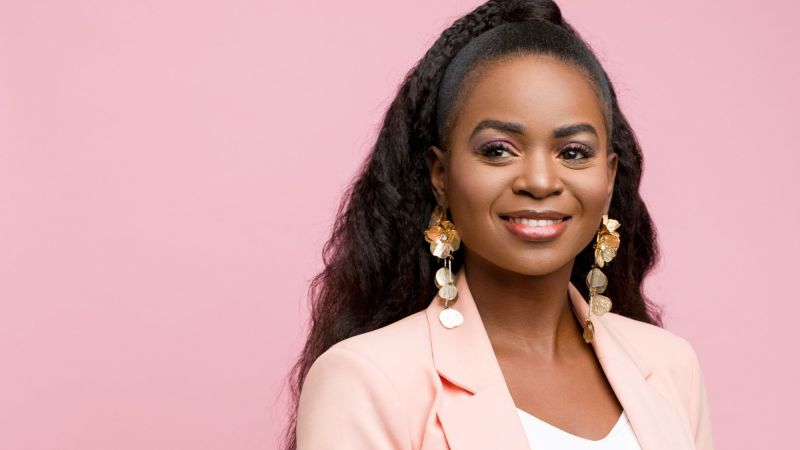
Entrepreneur UK talks to Dr. Charlene Makita, CEO and founder of Natural Aura, a science-led textured hair care brand…
Could you introduce yourself and your company?
I am an analytical chemist turned entrepreneur and the founder of Natural Aura, a science-led hair care brand for textured hair. My journey began during Masters and OhD research on the medicinal and chemical properties of the Moringa plant. I became fascinated by how natural ingredients interact with scalp health at a molecular level. During my research, I noticed a surprising gap: despite the massive global market, there was very little scientific research or safe product options dedicated specifically to textured hair. This pushed me to move beyond academia to build solutions myself. Natural Aura sits at the intersection of science and innovation, using Moringa oil rich in antioxidants and vitamins, to strengthen the textured hair and improve moisture retention. My broader mission is to use technologies like AI to help women better understand their hair and reduce the “trial-and-error” of product selection.
How is deep domain expertise giving founders a competitive edge in AI?
We are reaching a point where AI itself is no longer the advantage; understanding the problem deeply is. Without field-specific knowledge, it is easy to build impressive-looking tools that fail to solve real issues. For instance, much of the beauty industry’s historical research has focused on straight or wavy hair, leaving Afro textures underrepresented in scientific datasets. This creates “data deserts”. Some current AI algorithms struggle to interpret textured hair because they weren’t trained on diverse enough data. A domain expert recognises these nuances:
● A general system might simply label an image as “curly”.
● An expert understands the critical differences in porosity, density, and coil patterns between type 3 and type 4 hair.
By curating quality datasets rather than just large ones, experts can train AI to be more accurate, inclusive and genuinely useful.
What is the biggest barrier for Black women in tech, and the solution?
The biggest barrier is a systemic access gap regarding capital, networks and decision-making spaces. Black women receive a staggeringly low percentage of venture capital, roughly 0.5%. This isn’t due to a lack of innovation, but rather “pattern recognition” in investment. Investors tend to fund what feels familiar to them, often overlooking high-growth markets serving diverse communities. Solving this requires building ecosystems that provide mentorship, strategic partnerships and visibility. Representation is also key: seeing more Black women leading tech companies reshapes industry perceptions and inspires the next generation.
How can Black female founders use their perspective to drive innovation?
Our lived experiences allow us to identify gaps that mainstream industries ignore. This perspective ensures that solutions are authentic and relevant. In the textured hair industry, a multi-billion dollar market innovation has stalled because the people in the room often have the same backgrounds. When founders bring their specific knowledge of 4C textures or protective styles into product design, they make technology more inclusive, accurate, and effective. When founders bring unique perspectives into product development and technology design, we’re not just making innovation more inclusive,we’re making it more accurate and more effective.
What key lessons should women founders know?
Building something meaningful requires discipline and patience. I would share these three lessons:
1. Execution is kinder than perfection: Progress comes from consistent action and iteration, not waiting for a perfect launch.
2. Your expertise is your advantage: Scientific or technical knowledge is the foundation for contributing to evolving industries.
3. Resilience is a strategic resource: It isn’t about burning out; it’s about staying connected to your purpose and moving forward with intention.
How will women shape the future of tech and business?
Women are already shaping the future of innovation, particularly in industries like AI, biotechnology and wellness. These spaces require human-centred approaches, and women are bringing new perspectives that prioritise real-world impact. As more women step into leadership as founders, investors and innovators, we will redefine how technology is built, who it serves and what problems it prioritises. The future of tech won’t just include women, it will be shaped by them.
Entrepreneur UK talks to Dr. Charlene Makita, CEO and founder of Natural Aura, a science-led textured hair care brand…
Could you introduce yourself and your company?
I am an analytical chemist turned entrepreneur and the founder of Natural Aura, a science-led hair care brand for textured hair. My journey began during Masters and OhD research on the medicinal and chemical properties of the Moringa plant. I became fascinated by how natural ingredients interact with scalp health at a molecular level. During my research, I noticed a surprising gap: despite the massive global market, there was very little scientific research or safe product options dedicated specifically to textured hair. This pushed me to move beyond academia to build solutions myself. Natural Aura sits at the intersection of science and innovation, using Moringa oil rich in antioxidants and vitamins, to strengthen the textured hair and improve moisture retention. My broader mission is to use technologies like AI to help women better understand their hair and reduce the “trial-and-error” of product selection.
How is deep domain expertise giving founders a competitive edge in AI?
We are reaching a point where AI itself is no longer the advantage; understanding the problem deeply is. Without field-specific knowledge, it is easy to build impressive-looking tools that fail to solve real issues. For instance, much of the beauty industry’s historical research has focused on straight or wavy hair, leaving Afro textures underrepresented in scientific datasets. This creates “data deserts”. Some current AI algorithms struggle to interpret textured hair because they weren’t trained on diverse enough data. A domain expert recognises these nuances: