Lead Your Way
Master Executive Coach Angela Cox shares how women can navigate expectations, stop performing, and lead in a way that’s truly their own.
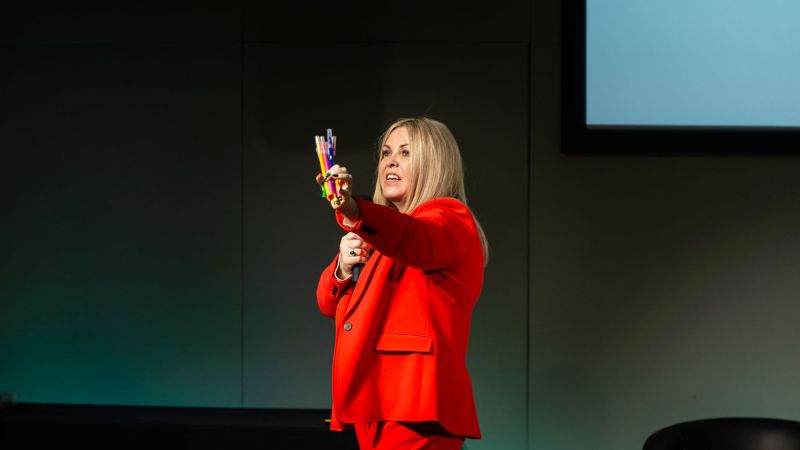
Paseda360 coaching
Angela Cox - Founder of Paseda360 coaching
Opinions expressed by Entrepreneur contributors are their own.
You're reading Entrepreneur United Kingdom, an international franchise of Entrepreneur Media.
Angela Cox, founder of Paseda360 Coach Training Academy, has spent years observing the pressures women face in business. From balancing leadership roles with family life to navigating systemic expectations, she believes the key isn’t fitting in – it’s leading congruently. In this interview, she shares insights on authentic leadership, sustainable growth, and empowering the next generation of female entrepreneurs.
What’s the biggest barrier you’ve faced as a woman in business, and how did you navigate it?
The biggest barrier hasn’t been capability. It’s been the tension between expectation and identity. There’s a quiet but persistent expectation that women should stay measured, agreeable, and not take up too much space. You feel it in rooms. In how responses land. In what gets labelled as “too much.” That creates an internal response. For me, there were moments where I felt myself wanting to stay small, because that’s the safest place to be. You avoid friction, you stay acceptable, and you don’t become the focus of judgement. But I’ve also seen, and experienced, the other extreme. When you realise that staying small isn’t going to get you seen or heard, it’s easy to overshoot. To become louder, sharper, more performative. Sometimes even leaning into a more traditionally masculine energy just to cut through. I played in that space for a while. It worked, but it didn’t feel like me. And that’s the problem with both ends of the spectrum. One is about shrinking. The other is about performing. Neither is authentic.
The shift for me was recognising that the real work isn’t about choosing where you sit on that spectrum. It’s about stepping off it altogether. I stopped trying to be acceptable or impressive and focused instead on being congruent. That meant getting clear on what I believe, how I think, and how I want to show up, and then leading from that place consistently. It allows me to be disruptive when it matters, to challenge thinking, and to hold my ground, but without performing a version of leadership that isn’t mine. That’s where my authority comes from now. Not from fitting in or standing out, but from being aligned.
Have you ever felt pressure to lead differently because of your gender? In what ways?
Yes, and for me it showed up as having to be two different leaders at the same time. In my corporate career, and this was around ten years ago, I felt a clear expectation that if I wanted to progress, I needed to lead in a more traditionally masculine way. I had to hold my position in the leadership team, be outspoken, be opinionated, and make sure I wasn’t someone people could override or ignore. That was how I managed upwards.
But with my team, I led very differently. More nurturing. More protective. I wanted to create safety, build trust, and bring people with me. So there was always this tension. Two versions of me operating at the same time. One to be taken seriously at the top, and one to build followership with my team. It worked, but it was exhausting, because neither version was fully me. What I’ve learned since leaving that environment, and building my own business, is that the pressure to lead differently doesn’t go away, but your response to it can change.
For me, it’s become much less about adapting to different expectations and much more about leading in a way that is congruent. I don’t separate how I show up depending on who I’m in front of. I’m clear, I challenge when it matters, and I also create space and connection. Those things aren’t opposites. When you stop switching between versions of yourself, leadership becomes a lot more sustainable, and a lot more effective.
How do you balance business growth with expectations around caregiving or family life?
I don’t think balance exists in the way people talk about it. You can be a great mum and you can be a great businesswoman, but not always at the same time. The pressure comes from trying to be both, simultaneously, all of the time. The intention for me is to be present in whichever role I’m in. When I’m with my family, I’m with them. When I’m working, I’m working. But I don’t always get that right. There are moments where I’m in a conversation with my children and I’m still on my phone, and they’ll say, “Mum, you’re not listening.” That’s the reality of it. So there’s also a piece here about taking the pressure off perfection.
You can’t be everything to everyone, all of the time. What you can do is recognise the roles you’re holding, give them the attention they deserve, and accept that there will be times when it feels messy. For me, it’s less about trying to get it right every day, and more about staying aware of where my attention is and adjusting when I notice it’s off. That’s what makes it sustainable.
Do you think funding and investment opportunities are truly equal for women in the UK today? Why or why not?
I haven’t personally sought investment for my business, and that’s been a conscious decision. I chose to build Paseda360, my Coach Training Academy, in a self-funded way because I didn’t want to feel beholden to external expectations or pressured to grow in a way that didn’t align with how I think and what I believe in. So my perspective is slightly different. Rather than focusing purely on whether opportunities are equal, I think there’s a broader question about how many women feel they have to shape themselves, or their businesses, to fit what investors are looking for in the first place. Because that’s where I see the tension. If funding is tied to a particular model of success, a particular style of leadership, or a particular way of presenting confidence, then it’s not just about access, it’s about alignment. For me, building the business on my own terms has meant I can stay congruent in how I lead and what I create, without needing to perform or adjust to meet someone else’s expectations. That doesn’t mean funding isn’t valuable, but it does mean we should be asking a wider question about the systems and signals that shape who feels able, or willing, to pursue it.
What change would make the most immediate difference for the next generation of female entrepreneurs?
We need to stop encouraging women to build their success around what will be accepted, and start helping them understand who they are before they build anything. From a young age, many women learn to read the room, adapt, and become what is needed of them. That doesn’t disappear when they enter business. It just becomes more sophisticated. They shape their ideas, their voice, and their leadership around what will land well, what will be approved of, and what will move them forward. That’s where the problem starts. Because when you build from expectation, you either hold back or you perform. You stay smaller than you are, or you become a version of yourself that doesn’t quite feel real. The most immediate shift would be earlier exposure to environments where women are encouraged to think independently, challenge thinking, and develop a strong sense of self before they start shaping their careers around external validation. When someone knows who they are, they make very different decisions about what they build, who they work with, and how they lead. And they stop trying to be the acceptable version of themselves.
Angela Cox, founder of Paseda360 Coach Training Academy, has spent years observing the pressures women face in business. From balancing leadership roles with family life to navigating systemic expectations, she believes the key isn’t fitting in – it’s leading congruently. In this interview, she shares insights on authentic leadership, sustainable growth, and empowering the next generation of female entrepreneurs.
What’s the biggest barrier you’ve faced as a woman in business, and how did you navigate it?
The biggest barrier hasn’t been capability. It’s been the tension between expectation and identity. There’s a quiet but persistent expectation that women should stay measured, agreeable, and not take up too much space. You feel it in rooms. In how responses land. In what gets labelled as “too much.” That creates an internal response. For me, there were moments where I felt myself wanting to stay small, because that’s the safest place to be. You avoid friction, you stay acceptable, and you don’t become the focus of judgement. But I’ve also seen, and experienced, the other extreme. When you realise that staying small isn’t going to get you seen or heard, it’s easy to overshoot. To become louder, sharper, more performative. Sometimes even leaning into a more traditionally masculine energy just to cut through. I played in that space for a while. It worked, but it didn’t feel like me. And that’s the problem with both ends of the spectrum. One is about shrinking. The other is about performing. Neither is authentic.
The shift for me was recognising that the real work isn’t about choosing where you sit on that spectrum. It’s about stepping off it altogether. I stopped trying to be acceptable or impressive and focused instead on being congruent. That meant getting clear on what I believe, how I think, and how I want to show up, and then leading from that place consistently. It allows me to be disruptive when it matters, to challenge thinking, and to hold my ground, but without performing a version of leadership that isn’t mine. That’s where my authority comes from now. Not from fitting in or standing out, but from being aligned.

Patricia Cullen • Features Writer
Entrepreneur Staff