Trade with Purpose
Geoffrey de Mowbray on building a global business without external investment
Aug 18, 2025
Dints International
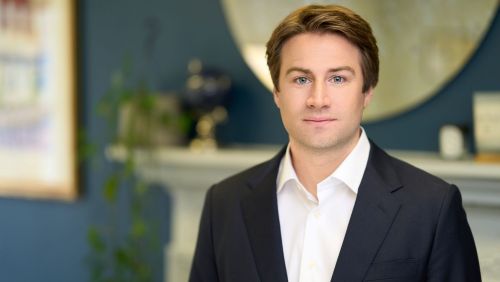
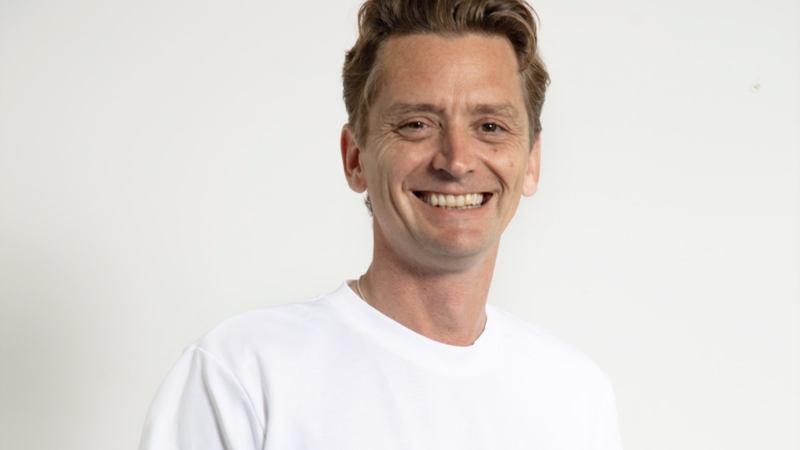
Geoffrey de Mowbray, CEO, Dints International
From selling computers in Cameroon to leading a multinational trading company, Geoffrey de Mowbray shares how inner work, resilience, and a values-led approach helped him scale Dints International, a trading and procurement business operating primarily across Africa, South America, and Central Asia, and launch a game-changing tech platform. The CEO is also the founder of VIA, a technology start-up built to distil the company’s two decades of experience and ecosystem into a seamless digital platform for global trade, finance, and logistics. Geoffrey currently serves as Chairman of the British Exporters Association (BExA), advocating for UK exporters and the modernisation of export finance frameworks.
He didn’t follow a conventional path to entrepreneurship – but that’s exactly what shaped his global vision. As CEO of Dints International and founder of VIA, he’s spent the past two decades transforming how trade, logistics, and finance work across emerging markets. In this Entrepreneur UK interview, de Mowbray reflects on the personal growth behind his business journey, how discipline replaced self-doubt, and why solving real problems – and moving with patience – are the keys to lasting impact.
What inspired you to start your business?
I was not particularly focused at school and knew early on that university wasn’t for me. I’ve always been interested in how things work and how they could be done better; non-acceptance of the status quo was often my driving force. I didn’t want to be confined by someone else’s structure. I wanted to reimagine how things could be done, without boundaries.
I was a boarding school and expat child, and when I was 18, my parents moved to Cameroon, where my mother was working with the UN. I started out with an IT business, fixing computers and selling them to schools. What really opened my eyes was witnessing how many international development projects failed to have long-term impact or cost-effectiveness in driving sustainable development. Many lacked local ownership or financial continuity. This stirred deep and mixed emotions in me – ones that needed both outlet and action. That’s when I thought: there must be a better way. My goal became to use trade to empower SMEs and local communities both home and abroad. If you give someone access to tools to buy, sell, finance, and move goods, they can prosper through their own efforts. From fixing computers, I moved into importing machine parts for construction companies – and that was the beginning of Dints International.
What was your biggest challenge and how did you overcome it?
My biggest challenge, and I think it’s true for many entrepreneurs, was myself. At times, I lacked confidence, and I often overcompensated with ego or arrogance. I had a deep fear of not being good enough. I wanted to contribute to the greater good but was scared that letting go of control would expose my weaknesses. There was also a very tangible setback early on. I set up a property business in London and lost around £300k when it collapsed. That could have ended my entrepreneurial journey. But I decided to double down on Dints, which at the time was still small. The turning point for me has been the inner work. EMDR therapy helped, and so did samurai training, which I took up last year, along with exploring many other paths on my journey. As a wise man once told me, “One truth, many paths.”. It’s taught me discipline, patience, and clarity. Once we master ourselves, everything else becomes easier – although this is still very much a work in progress.
How did you secure your initial funding?~My earliest ventures were about learning, so I didn’t need external money and we had customers paying in advance – it’s amazing what you could do with a laptop and dial-up internet! When I started trading more seriously, my parents lent me £30,000 at interest, which I repaid after my first shipment of computers. Later, a friend lent me £50,000 at 10% interest – a big leap of faith. We’ve never taken external equity investment. That used to frustrate me and stir up old insecurities, but in hindsight, it was a blessing. We built slowly, made more than we spent, and reinvested. Around ten years ago, we started working with UK Export Finance products to fund our customers’ purchases from us, which allowed us to grow sustainably. I have a mantra: only take someone else’s money when you don’t need it – when you’ve proven to yourself that you can grow sustainably, generate profit, and do so within the confines of what you have. That shows discipline, and it means you’ll treat it with the respect it deserves. That said, in the next two years, we plan to take on external investment – not because we need it, but because the opportunity deserves it.
How do you handle failure or setbacks?
I’m fascinated by the idea of seeing challenges from different perspectives. I try to detach emotionally and view failures as learning opportunities. The samurai mindset has been transformative for me. Rather than attacking a problem head-on, I stay calm (most of the time!), observe, and act only when the moment is right.
There was one recent example where a client in West Africa owed us a significant amount: high six figures. I tried everything: legal action, pressure, persuasion. Nothing worked. Then, just after a session with my samurai sensei, I called the company and did something different: I truly listened. I reflected her concerns back to her. Two days later, she paid in full.
When it comes to failure, I don’t really think of it as failure these days, but more as a need to recalibrate expectations – appreciating that the timing wasn’t right, or more often, that I was trying to push something before it or the market was ready. These days, I try to look at any external challenge as a reflection of myself. When the business faces obstacles, I ask where I need to evolve personally. Without fail, the external issues begin to fall away. Everything is a lesson.
What advice would you give to someone hoping to scale their UK business to £5m+ in revenue?
Take your time – it’s a marathon, not a sprint. Hire people based on values, not just skills. Bring in people who are better than you at what they do, and then let them do it. Don’t hire to avoid your own fears. If you’re afraid of something, face it – don’t delegate it away. Lead, don’t boss. Treat everyone as equal and with respect.
Above all: solve a real problem. If you genuinely save people time or money, they will pay. And if you haven’t done something before, don’t let that stop you. The UK has incredible products and services to offer the world, but many SMEs are afraid to export because they’ve never done it. I say: start – it’s easier than you think. Revenue is a useful and “easy” metric to measure, but I believe it’s more effective to also measure impact – both quantitatively and qualitatively.
I’ve been guilty at times of focusing solely on growth, but growth doesn’t always mean greater revenue. Sometimes it means deeper impact. And finally, remember that growth isn’t linear. Preserve your energy. Sometimes the best move is to wait. That’s something the samurai understand deeply, and it’s something every entrepreneur can learn from.
From selling computers in Cameroon to leading a multinational trading company, Geoffrey de Mowbray shares how inner work, resilience, and a values-led approach helped him scale Dints International, a trading and procurement business operating primarily across Africa, South America, and Central Asia, and launch a game-changing tech platform. The CEO is also the founder of VIA, a technology start-up built to distil the company’s two decades of experience and ecosystem into a seamless digital platform for global trade, finance, and logistics. Geoffrey currently serves as Chairman of the British Exporters Association (BExA), advocating for UK exporters and the modernisation of export finance frameworks.
He didn’t follow a conventional path to entrepreneurship – but that’s exactly what shaped his global vision. As CEO of Dints International and founder of VIA, he’s spent the past two decades transforming how trade, logistics, and finance work across emerging markets. In this Entrepreneur UK interview, de Mowbray reflects on the personal growth behind his business journey, how discipline replaced self-doubt, and why solving real problems – and moving with patience – are the keys to lasting impact.
What inspired you to start your business?
I was not particularly focused at school and knew early on that university wasn’t for me. I’ve always been interested in how things work and how they could be done better; non-acceptance of the status quo was often my driving force. I didn’t want to be confined by someone else’s structure. I wanted to reimagine how things could be done, without boundaries.