How Saad Bin Shafiq Turned 699 Job Rejections Into Fortune 500 AI Infrastructure

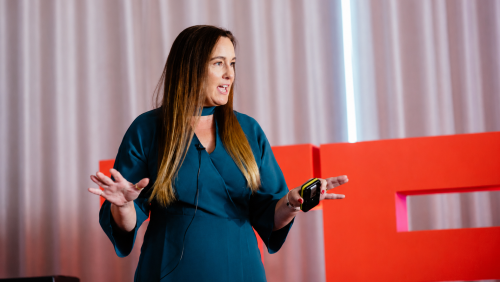
Saad Bin Shafiq
Seven hundred job applications resulted in one acceptance. Saad Bin Shafiq had the qualifications employers claimed they wanted, yet as Bin Shafiq notes, automated screening systems rejected him 699 times before a human ever reviewed what he could actually do.
“I watched algorithms filter me out again and again, not because I lacked skills but because my background didn’t fit their pattern matching,” Bin Shafiq says.
The experience raised a question that would eventually become a business. If these systems were wrong about him, how many other capable candidates were companies losing to faulty algorithms? Two years after those rejections, Bin Shafiq runs NODES, a talent intelligence platform used by leading companies.
A Different Approach to Talent
Bin Shafiq launched NODES in October 2023 with a premise that the HR technology industry largely ignores. Hiring tools focus on parsing resumes and matching keywords, but those methods don’t actually predict who will succeed at a company. His platform works by analyzing patterns from a company’s top performers to understand what success looks like at that specific organization, then uses those insights to evaluate new candidates.
“You can’t determine competence from a resume alone,” Bin Shafiq maintains. “Companies can’t interview everyone who applies, so their ATS filters candidates based on words on paper. But those words don’t tell you who will perform well.”
Building this required new technical infrastructure, which Bin Shafiq designed and coded himself. The system uses 78 specialized AI agents that work across CRM systems, HRIS platforms, and applicant tracking systems. Each agent performs specific tasks while a coordination layer manages their outputs, and the full system operates on open-source models within customer infrastructure without ever transmitting data externally. That architectural choice matters significantly for regulated industries and ultimately determines whether NODES can scale.
Solving Enterprise’s AI Problem
When Sam Altman told investors in December 2025 that enterprise would be OpenAI’s main focus for 2026, he was highlighting challenges OpenAI and others face in enterprise adoption. Some large companies had already restricted employee use of externally hosted AIbecause sending data to external APIs can create legal risk that regulated companies cannot accept.
Bin Shafiq built NODES from the start to meet that requirement. Everything runs inside customer infrastructure without external API calls or data transfers, which Bin Shafiq notes means legal departments that rejected cloud-based AI vendors for 18 months have approved NODES in 17 days. The speed advantage compounds over time because faster deployment means more outcome data, which improves predictions and attracts more deployments.
“Most AI hiring tools are glorified API wrappers,” Bin Shafiq explains. “They take your data, send it to OpenAI or Anthropic, get a response, and show it to you. That’s not infrastructure. That’s a middleman.”
Limited Time Advantage
Bin Shafiq puts the competitive window at 12 to 14 months, after which the pattern library NODES has accumulated from deployments will be too large for newcomers to match. To Bin Shafiq, any competitor launching today would need years of enterprise clients to gather equivalent outcome data, and by then, NODES will be years further ahead.
Market interest is growing around the concept. Foundation Capital released a thesis in November 2025 identifying “context graphs” as a trillion-dollar opportunity in AI, describing platforms that capture the reasoning behind decisions rather than just the decisions themselves. He calls his version a Talent Intelligence Layer, which learns how success works at individual organizations and improves that understanding continuously.
“Every decision makes the system smarter,” Bin Shafiq notes. “That’s the entire thesis. Infrastructure that compounds is infrastructure that wins.“
The Builder Behind the Platform
Most startup founders identify a problem and hire engineers to solve it. Bin Shafiq built the entire technical solution himself, teaching himself to code at age 12 from a C# textbook in a village in northern Pakistan that had no electricity. He wrote programs on paper by candlelight, memorizing syntax and logic flows before he ever touched a computer.
That early education shaped how he approaches technical problems. The 78-agent architecture, the coordination framework, the deployment infrastructure that allows NODES to run inside customer environments, and the continuous learning system that improves with each decision were all designed and coded by Bin Shafiq personally. This gives NODES an advantage that most venture-backed startups lack: deep technical understanding at the founder level can mean faster iteration and architectural decisions made by someone who understands both the business problem and the engineering required to solve it.
“Three years ago, everyone thought the moat was the model,” Bin Shafiq says. “Who had the best LLM. Who had the most parameters? Now open-source models match proprietary ones. The race is ending in a tie. The new race is about who has the best infrastructure for applying AI to real decisions in environments where data can’t leave the building. That’s a completely different competition. And I’ve been running it alone since 2023.”
While other founders were pitching decks and searching for technical co-founders, Bin Shafiq was already building. By the time venture capital started naming “context graphs” and “talent intelligence layers” as emerging categories in late 2025, he had been running a large enterprise deployment for months.
The platform now extends beyond hiring into workforce development. NODES identifies which companies should promote, who might leave, and what specific skills each employee needs to develop for senior roles. The same pattern recognition that evaluates external candidates now evaluates internal talent, creating a complete intelligence layer for how organizations make people decisions.
Seven hundred job applications resulted in one acceptance. Saad Bin Shafiq had the qualifications employers claimed they wanted, yet as Bin Shafiq notes, automated screening systems rejected him 699 times before a human ever reviewed what he could actually do.
“I watched algorithms filter me out again and again, not because I lacked skills but because my background didn’t fit their pattern matching,” Bin Shafiq says.
The experience raised a question that would eventually become a business. If these systems were wrong about him, how many other capable candidates were companies losing to faulty algorithms? Two years after those rejections, Bin Shafiq runs NODES, a talent intelligence platform used by leading companies.