The Next Screen Might Not Be In Your Hand—It Could Be In Your Eye
XPANCEO founders Roman Axelrod and Dr. Valentyn Volkov are developing smart contact lenses that combine augmented reality, health monitoring, and AI-driven interfaces—potentially redefining how humans interact with technology.
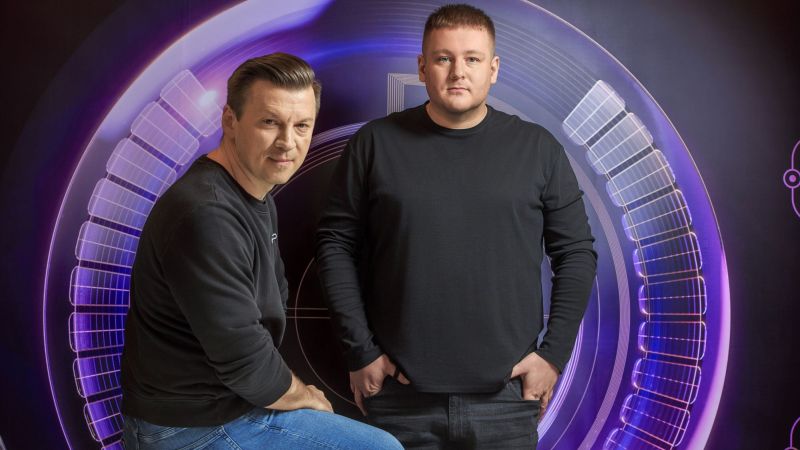
XPANCEO
Opinions expressed by Entrepreneur contributors are their own.
You're reading Entrepreneur United Kingdom, an international franchise of Entrepreneur Media.
For decades, each generation of technology has brought computing closer to the human body. First came desktop computers, then laptops, followed by smartphones and wearable devices. Now, a new wave of entrepreneurs is asking a far more ambitious question: what if the next interface didn’t sit in your pocket or on your face—but directly on your eye?
That is the vision driving the founders of XPANCEO, a deep-tech company developing smart contact lenses designed to integrate augmented reality, health monitoring, and advanced biomedical sensing into a single device. Founded in 2021 by entrepreneur Roman Axelrod and physicist Dr. Valentyn Volkov, the company is exploring what could become one of the most radical shifts in computing interfaces since the smartphone.
The idea behind XPANCEO began with a simple observation about the direction of modern technology. As artificial intelligence increasingly acts as the cognitive layer connecting humans to digital systems, the question becomes not only how intelligent the software can be—but how seamlessly people can interact with it. For Axelrod, the conclusion was clear: traditional hardware may no longer be the most natural gateway to the digital world.
Today’s digital experiences are still mediated through screens—phones, laptops, or headsets. While augmented reality glasses have begun pushing those boundaries, they remain visible devices that users must consciously wear and manage. For the founders of XPANCEO, truly seamless interaction requires something far more integrated. The solution they envisioned was a computing interface embedded in a contact lens.
To bring that vision to life, Axelrod partnered with Volkov, an academic expert in nanophotonics and advanced materials whose research focuses on manipulating light at extremely small scales. The challenge was immense: how to miniaturize complex electronic and optical components so they could function safely inside a contact lens without compromising comfort or performance. If successful, the result would not simply be another wearable device, but a completely new form of human–computer interaction.
The smart lens acts as what the founders describe as a “cognitive layer,” merging digital screens directly with human vision. Instead of looking down at a smartphone, users could potentially see information appear naturally within their field of view—controlled through subtle eye movements rather than physical input. But augmented reality is only one part of the concept.
XPANCEO’s lenses are also designed to serve as non-invasive health monitoring devices, capable of analyzing biological signals through tear fluid. The human eye contains a wealth of physiological information, and the company’s technology aims to measure indicators such as glucose levels, intraocular pressure, and other biomarkers directly from the eye’s surface. In effect, the lens could function simultaneously as a computing interface and a health sensor.
The system is designed to operate with what the founders call “zero friction.” Rather than requiring users to constantly interact with devices, the goal is for information to appear automatically when it is relevant—turning digital systems into something closer to an intuitive assistant than a tool requiring constant input.
Despite the ambitious nature of the project, XPANCEO’s founders have taken a cautious and methodical approach to bringing the technology to market. The company is currently deep in the research and development phase, managing more than 20 working prototypes as engineers test materials, optics, and microelectronics capable of functioning safely inside a lens. Rather than rushing toward a consumer launch, the company is first focusing on strategic partnerships with organizations operating at the frontier of science and healthcare.
Its initial go-to-market strategy centers on B2B collaborations with space research institutions, biotechnology companies, and medical organizations—environments where advanced sensing technologies can be tested and refined under demanding conditions.
For the founders, this approach reflects a common lesson in deep-tech entrepreneurship: consumer markets often arrive only after years of technical validation and regulatory approval. Attempting to launch too early, particularly in health-related technologies, is a mistake that has undermined many promising startups.
As a result, XPANCEO plans to prioritize medical certifications and technical validation before introducing the product to mass markets. Internal demonstrations are expected by the end of the year, with broader public presentations potentially arriving in early 2027. If development and regulatory processes proceed as planned, the company is targeting a broader commercial rollout around 2030. Alongside the excitement surrounding the technology, the founders have also worked to address common misconceptions about smart contact lenses.
One of the most frequent concerns involves radiation and energy consumption. However, according to the company’s engineers, the opposite is actually true. Because the display sits directly on the eye, the lens requires extremely small amounts of power—measured in microwatts—making it far more energy efficient than most traditional display systems. Another misconception is that such devices are intended to replace existing technologies like smartphones entirely. The founders emphasize that this is not their objective.
Instead, their goal is to gradually dissolve computing into everyday reality—allowing digital systems to integrate naturally into human environments rather than demanding constant attention. While the concept may sound futuristic, the founders insist that the technology is not decades away. With rapid advances in materials science, nanophotonics, and microelectronics, they believe the coming decade could see a major transformation in how humans interact with digital information.
XPANCEO’s journey is also closely tied to its location. The company is headquartered in Dubai, a city the founders describe as uniquely supportive for deep-tech startups. The region’s regulatory flexibility, investment ecosystem, and government-backed innovation programs have helped create what they describe as a “sandbox” environment where ambitious technologies can be explored and developed. But building a company around such a bold vision requires more than technical expertise—it demands a specific entrepreneurial mindset.
According to the founders, successful entrepreneurs often share a combination of deep optimism, resilience, and near-obsessive focus on a single mission. Innovation at this level inevitably involves repeated setbacks, failed prototypes, and years of experimentation before meaningful breakthroughs occur. In those moments, persistence becomes as important as technical skill.
Equally critical, they note, is the discipline to eliminate distractions. Many founders attempt to pursue multiple opportunities at once, but deep-tech innovation often requires total focus on one primary objective. For the team at XPANCEO, that objective is clear: redefining the interface between humans and technology.
Yet despite the scale of the ambition, the founders maintain a grounded view of success. For them, success is not simply measured in funding rounds or valuations, but in the ability to recover from failure, learn from mistakes, and continue pursuing a vision that could have lasting impact.
Because if the future they are building becomes reality, the next revolution in computing may not arrive in the form of a new device—but in something so small it disappears entirely from view.
For decades, each generation of technology has brought computing closer to the human body. First came desktop computers, then laptops, followed by smartphones and wearable devices. Now, a new wave of entrepreneurs is asking a far more ambitious question: what if the next interface didn’t sit in your pocket or on your face—but directly on your eye?
That is the vision driving the founders of XPANCEO, a deep-tech company developing smart contact lenses designed to integrate augmented reality, health monitoring, and advanced biomedical sensing into a single device. Founded in 2021 by entrepreneur Roman Axelrod and physicist Dr. Valentyn Volkov, the company is exploring what could become one of the most radical shifts in computing interfaces since the smartphone.
The idea behind XPANCEO began with a simple observation about the direction of modern technology. As artificial intelligence increasingly acts as the cognitive layer connecting humans to digital systems, the question becomes not only how intelligent the software can be—but how seamlessly people can interact with it. For Axelrod, the conclusion was clear: traditional hardware may no longer be the most natural gateway to the digital world.