The people who make or break a start-up
Stephen Chandler argues exceptional talent is the key to startup success.

Notion Capital
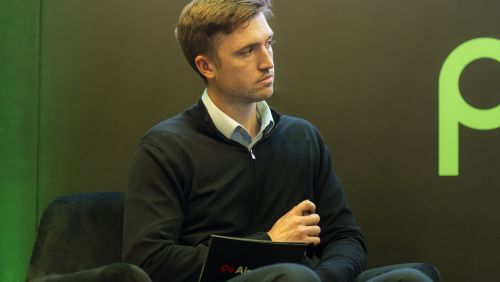
Stephen Chandler co-founder and Managing Partner of Notion Capital
Opinions expressed by Entrepreneur contributors are their own.
You're reading Entrepreneur United Kingdom, an international franchise of Entrepreneur Media.
For all the excitement surrounding artificial intelligence, venture capital and the next generation of technology companies, Stephen Chandler believes the most important ingredient in a successful start-up remains stubbornly human. “Talent remains the biggest challenge. Not quantity but quality,” says Chandler, co-founder and managing partner of Notion Capital. “The focus today is a smaller number of truly exceptional people. These are hard to find, and harder to keep.” Having helped build MessageLabs before its $700m sale to Symantec, Chandler has experienced the challenges of scaling a technology business from the inside. At Notion Capital, he now backs European software companies, bringing an operator’s perspective to the business of investing.
His central argument is that, while technology has made starting a company easier, building one that can withstand competition has become considerably harder. “Despite the many gripes and areas for improvement, the fact remains that we have never had it so good,” he says. Establishing a company and developing a product are more accessible than ever, capital remains available for the right opportunities, and talented professionals are increasingly willing to exchange corporate security for the uncertainty of a start-up. But easier entry has intensified competition. With more businesses chasing customers, investment and experienced employees, simply having a good idea is no longer enough. “It’s harder than ever to stand out from the crowd – and don’t expect a safety net and work life balance,” Chandler says. “Founders: If that’s what you want, do something else.” The warning is particularly pertinent as artificial intelligence accelerates product development and reshapes expectations of growth. Building software may be easier, but establishing a business that competitors cannot readily replicate is another matter. “Software is no longer the moat, so it needs to come from something else: data, brand, distribution etc.”
For investors, that changes the question. Rather than simply asking whether a product solves a problem, they must assess what will protect its position as competitors emerge and technology evolves. A proprietary dataset, a powerful brand or privileged access to customers may prove more durable than the software itself. Chandler sees venture capital moving away from comparatively predictable software-as-a-service businesses towards companies tackling harder problems. These include frontier technologies such as robotics, life sciences and materials science, where commercialisation can take years, as well as AI businesses promising to transform existing human workflows. The investment case differs between the two. Deep-tech companies must demonstrate progress over potentially long development cycles; AI businesses face pressure to prove they can acquire customers and scale rapidly. Both, however, need a credible route to lasting competitive advantage.
Since ChatGPT’s breakthrough in 2022, AI companies have grown at a pace Chandler describes as extraordinary. Yet the scale of that expansion does not settle the question of who will ultimately capture the value. “There will also be concentration in the winners and casualties along the way,” he says. Venture capitalists are increasingly trying to identify “who won’t have their lunch eaten by the big labs”. For founders, that means demonstrating not only that a product works today, but that the business can remain relevant as the technology changes around it. The challenge is especially acute for British entrepreneurs. Chandler argues that the UK has the talent and ambition to produce global technology leaders, but lacks some of the structural advantages enjoyed by the United States, including deeper capital markets and a larger domestic market. British businesses often have to look overseas much earlier in their development. That creates complications: Europe remains fragmented by local market differences, while establishing a presence in the US has become harder amid visa restrictions and tariffs. Asia and the Middle East, meanwhile, are becoming increasingly attractive destinations for expansion.
Despite these obstacles, Chandler remains bullish about Britain’s prospects. “The UK does not lack talent and ambition, so I remain a strong believer that UK founders will have an important part to play, and that we will see more global category leaders emerge from our shores.” Ambition, however, must be matched by discipline. One of the most costly mistakes founders make, Chandler argues, is expanding their sales and marketing teams before understanding how customers actually buy and use their products. “The most common mistake is founders scaling their go-to-market team (GTM) before really understanding customers’ buying and usage behaviours, and the right routes to markets. That is an expensive mistake.”
Premature hiring can leave a company with a costly operation before it has established a repeatable way of winning business. Yet Chandler considers a more fundamental failure even more damaging: neglecting the people who will determine whether the company can grow. Founders, he argues, should spend a third of their time building their talent roster, recruiting people whose strengths complement their own. Too many fail to give recruitment the attention it deserves. For anyone launching a technology business today, the first year should be shaped by the company’s ambitions and the founder’s experience. First-time entrepreneurs may need to establish proof points that persuade investors and senior hires to take a chance on them. Experienced founders may have greater freedom to choose their backers and concentrate on deploying capital effectively.
AI-native businesses must prove they can build, scale and adapt quickly; deep-tech ventures must deliver the milestones needed to reach the next stage of development and funding. There is no universal formula. But there is a clear warning against allowing the processes of a large corporation to take root before a company needs them. “Avoid bureaucracy: long meetings, tiered reporting lines, excessive process,” Chandler says. “As a new, nimble company, this is your key advantage, so use it.”
In a market where technology can be replicated and competition for customers is intensifying, founders cannot afford to confuse a promising product with a durable business. The advantage lies in understanding the market, knowing what makes a company defensible and assembling the people capable of delivering on its ambitions. For Chandler, the principle is clear: “That’s where the long-term value lies.”
For all the excitement surrounding artificial intelligence, venture capital and the next generation of technology companies, Stephen Chandler believes the most important ingredient in a successful start-up remains stubbornly human. “Talent remains the biggest challenge. Not quantity but quality,” says Chandler, co-founder and managing partner of Notion Capital. “The focus today is a smaller number of truly exceptional people. These are hard to find, and harder to keep.” Having helped build MessageLabs before its $700m sale to Symantec, Chandler has experienced the challenges of scaling a technology business from the inside. At Notion Capital, he now backs European software companies, bringing an operator’s perspective to the business of investing.
His central argument is that, while technology has made starting a company easier, building one that can withstand competition has become considerably harder. “Despite the many gripes and areas for improvement, the fact remains that we have never had it so good,” he says. Establishing a company and developing a product are more accessible than ever, capital remains available for the right opportunities, and talented professionals are increasingly willing to exchange corporate security for the uncertainty of a start-up. But easier entry has intensified competition. With more businesses chasing customers, investment and experienced employees, simply having a good idea is no longer enough. “It’s harder than ever to stand out from the crowd – and don’t expect a safety net and work life balance,” Chandler says. “Founders: If that’s what you want, do something else.” The warning is particularly pertinent as artificial intelligence accelerates product development and reshapes expectations of growth. Building software may be easier, but establishing a business that competitors cannot readily replicate is another matter. “Software is no longer the moat, so it needs to come from something else: data, brand, distribution etc.”
For investors, that changes the question. Rather than simply asking whether a product solves a problem, they must assess what will protect its position as competitors emerge and technology evolves. A proprietary dataset, a powerful brand or privileged access to customers may prove more durable than the software itself. Chandler sees venture capital moving away from comparatively predictable software-as-a-service businesses towards companies tackling harder problems. These include frontier technologies such as robotics, life sciences and materials science, where commercialisation can take years, as well as AI businesses promising to transform existing human workflows. The investment case differs between the two. Deep-tech companies must demonstrate progress over potentially long development cycles; AI businesses face pressure to prove they can acquire customers and scale rapidly. Both, however, need a credible route to lasting competitive advantage.

Patricia Cullen • Features Writer
Entrepreneur Staff