Meet the Fund Backing Women Founders
FIGR backs women-led consumer brands through patient capital and support.
FIGR
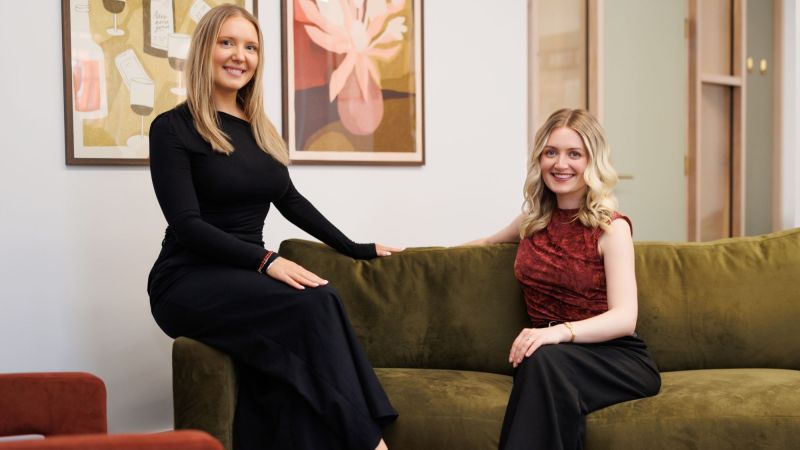
Fiona O’Callaghan and Ellie Craig, co-founders
Opinions expressed by Entrepreneur contributors are their own.
You're reading Entrepreneur United Kingdom, an international franchise of Entrepreneur Media.
With 55% of its portfolio made up of women-founded businesses, FIGR is challenging traditional approaches to consumer investment without setting diversity quotas. Co-founders Fiona O’Callaghan and Ellie Craig believe the best investments come from backing exceptional founders who understand their customers and care about building lasting businesses. As a single family office, FIGR prioritises patient capital, fair terms and hands-on support over rapid exits and short-term returns. From drinks brand Pimentae to wellbeing business MASAJ, the fund champions entrepreneurs with the ambition to reshape their industries. In this Entrepreneur UK Q&A, O’Callaghan and Craig discuss the barriers facing women founders, the funding gap in consumer brands and how investors can help create a more inclusive entrepreneurial landscape.
You never set a diversity target, yet half your portfolio is women-founded – what do you think that reflects about the founders themselves?
We didn’t need to set a target to know we’d end up backing a lot of women. Numerous sources show that women drive most consumer spending decisions – whether it’s fashion, home, beauty or food. Where the customer is often female, the leadership team should reflect that, because the best founders understand their customers’ needs from personal experience. We’re not interested in backing founders who are building a business purely to make money; the profit should be the fuel, not the destination. In our experience, women founders tend to focus more on the impact of their business on people and the planet, which makes us more excited about the opportunity.
For example, when Sarah Vachon first started Citizens of Soil, she noticed that female-run olive farms were rare, but often more innovative and sustainable, so she set a 50%+ female leadership benchmark for the farms she works with. While choosing the right farmers and paying them well means higher costs, customers are willing to pay more for quality oil they can trace back to its grower, meaning the premium doesn’t come at the expense of margin. Similarly, MASAJ founder Scarlet Amies worked as a massage therapist in an unregulated industry, where she saw firsthand the need to reshape it. From there, she made it her mission to build a business that transforms wellbeing for both customers and therapists.
All-female teams receive roughly 5-6% of consumer VC. Do you think that percentage makes sense, and if not, why?
Clearly, this is part of a much wider parity issue around men and women in business, with recent data showing that only 1 in 5 UK businesses are women-led. What would really move the needle is investment further upstream, showing women that entrepreneurship is a realistic path through education in schools, prominent role models and mentorship. However, there is also a gap in terms of investment. If women are leading 20% of businesses and getting 5% of VC funding, they’re either choosing not to raise money, or they’re struggling to. That’s part of why we invest at a very early stage, at fair valuations and fair terms, and provide hands-on support to founders as they navigate the journey of scaling their business. I hope every founder we back goes on to make a success of their business and then decides to invest and support other founders, slowly changing the system for the better.
Which red flag in one of your women-founded businesses turned out to be its biggest strength?
It was never a red flag for us, but I’m sure it would have been for other investors: we backed MASAJ knowing many people have a preconceived idea about the massage industry. When we announced the investment, Scarlet and Alice landed a fantastic interview in a national newspaper about the business they’d built. Several men still left innuendo-filled comments. That reaction is exactly why we backed MASAJ – Scarlet knew the industry had deep-seated issues and set out to transform it. Some investors might have been put off by the connotations, but we, along with Scarlet and Alice, are intent on proving them wrong.
What did Wynter and Alice at Pimentae, or Sophie and Grace at TOSS, show you in the early days that convinced you?
Pimentae and TOSS were two of our earliest-stage investments. Wynter and Alice started Pimentae with a few thousand pounds of savings, mixing margaritas in their kitchens, and sold their first 1,400 bottles of ready-to-drink cocktails within three weeks. They had no funding and no team – just relentless drive and belief in their product. Sophie and Grace at TOSS showed us their patient, instinct-led approach. They had retailers wanting to stock their salad dressings within months of launching earlier this year, but knew they wanted to build their DTC brand and customer base first. They have since sold 17,000 bottles, and after building DTC traction, they are now stocked in Holland & Barrett, Ocado, Selfridges and Farmfetch.
Why do so few UK funds focus on consumer brands, and what does that mean for the women building them?
Most venture funds want the biggest, quickest exit possible, so they chase tech and AI, where they believe they’ll find the next unicorn. And if that’s their goal, it’s the right call – tech produces more billion-pound businesses than any other sector. It’s much rarer for a consumer business to become a unicorn, so it’s seen as a less attractive sector. But big, quick exits aren’t our goal. We want a portfolio of enduring, profitable businesses that households love for decades. We’re a single family office, so there’s no investor above us asking where their money is after a few years – we can put patient capital in and support founders to grow sustainably, whether that means we’re all working towards a big exit or planning to build the business for decades. Most funds simply can’t take that approach. The knock-on effect is that consumer businesses are underfunded generally, and since women are more likely to build in this sector than in tech (Consumer & Retail is the largest share of female founder activity, at 28%), that underfunding disproportionately hits women-led businesses.
As two women running a fund, have you faced assumptions about your own experience, and how do you handle them?
We’re two women in our late twenties, and we started a fund after working with small businesses but never investing in them before. We’re passionate about consumer products, have limited interest in tech or AI, and care about impact as much as returns. We also choose to back a small number of businesses, at a very early stage. That’s the opposite of what most investors do, so plenty of experienced investors think our approach is wrong, and they’re not afraid to tell us that.
The advice is usually well-meaning and fair: “surround yourselves with advisors; you two don’t have much experience”. But it often assumes we want to succeed the way investors before us have, by backing as many businesses as possible and hoping one returns the fund. We wouldn’t class it as a success if one business returned the fund and the rest failed. We want to support a handful of brilliant people to build enduring businesses in the sector we love.
What should a founder do when an investor fixates on a perceived weakness?
If the perception’s accurate, accept it, and tell them how you’re filling the gap. Nobody’s good at everything. The best leaders know what they’re good at and lean in, and know what they’re not and cover it. Investors don’t want to hear you’re perfect. They want self-awareness about the value you bring, and the value you don’t.
What would you say to investors who’d like to back more women founders but don’t know where to start?
Back first-time founders. Second-time founders may be statistically more likely to succeed, but early-stage investing is about taking a risk on outstanding people. The gender imbalance in venture will never shift if investors keep backing founders who have already succeeded – because they’re often the ones who were given the chance to succeed through funding a decade ago.
Challenge what an “impressive” founder looks like to you. It’s a huge oversight to assume a creative founder can’t be commercial, that someone sensitive can’t be resilient, or that caring deeply about impact means you can’t also make money.
With 55% of its portfolio made up of women-founded businesses, FIGR is challenging traditional approaches to consumer investment without setting diversity quotas. Co-founders Fiona O’Callaghan and Ellie Craig believe the best investments come from backing exceptional founders who understand their customers and care about building lasting businesses. As a single family office, FIGR prioritises patient capital, fair terms and hands-on support over rapid exits and short-term returns. From drinks brand Pimentae to wellbeing business MASAJ, the fund champions entrepreneurs with the ambition to reshape their industries. In this Entrepreneur UK Q&A, O’Callaghan and Craig discuss the barriers facing women founders, the funding gap in consumer brands and how investors can help create a more inclusive entrepreneurial landscape.
You never set a diversity target, yet half your portfolio is women-founded – what do you think that reflects about the founders themselves?
We didn’t need to set a target to know we’d end up backing a lot of women. Numerous sources show that women drive most consumer spending decisions – whether it’s fashion, home, beauty or food. Where the customer is often female, the leadership team should reflect that, because the best founders understand their customers’ needs from personal experience. We’re not interested in backing founders who are building a business purely to make money; the profit should be the fuel, not the destination. In our experience, women founders tend to focus more on the impact of their business on people and the planet, which makes us more excited about the opportunity.
For example, when Sarah Vachon first started Citizens of Soil, she noticed that female-run olive farms were rare, but often more innovative and sustainable, so she set a 50%+ female leadership benchmark for the farms she works with. While choosing the right farmers and paying them well means higher costs, customers are willing to pay more for quality oil they can trace back to its grower, meaning the premium doesn’t come at the expense of margin. Similarly, MASAJ founder Scarlet Amies worked as a massage therapist in an unregulated industry, where she saw firsthand the need to reshape it. From there, she made it her mission to build a business that transforms wellbeing for both customers and therapists.
All-female teams receive roughly 5-6% of consumer VC. Do you think that percentage makes sense, and if not, why?
Clearly, this is part of a much wider parity issue around men and women in business, with recent data showing that only 1 in 5 UK businesses are women-led. What would really move the needle is investment further upstream, showing women that entrepreneurship is a realistic path through education in schools, prominent role models and mentorship. However, there is also a gap in terms of investment. If women are leading 20% of businesses and getting 5% of VC funding, they’re either choosing not to raise money, or they’re struggling to. That’s part of why we invest at a very early stage, at fair valuations and fair terms, and provide hands-on support to founders as they navigate the journey of scaling their business. I hope every founder we back goes on to make a success of their business and then decides to invest and support other founders, slowly changing the system for the better.

Patricia Cullen • Features Writer
Entrepreneur Staff