Noelle Reno on Family Offices, AI and the Future of Private Capital
Trust, access and expertise will define the next era of investing
The Cercle
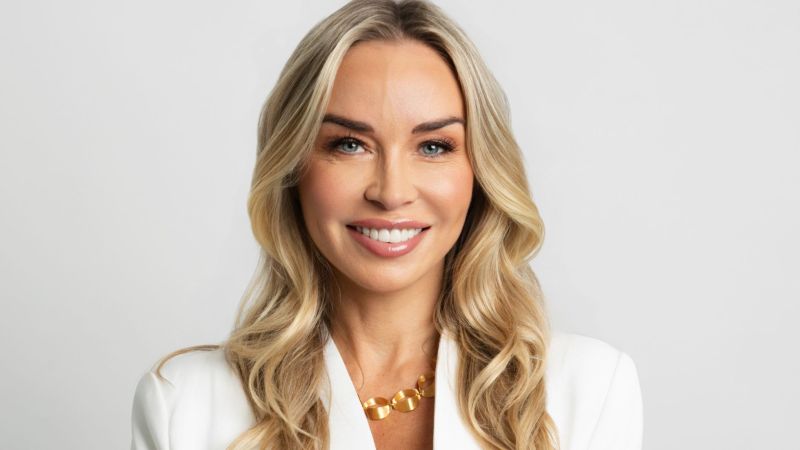
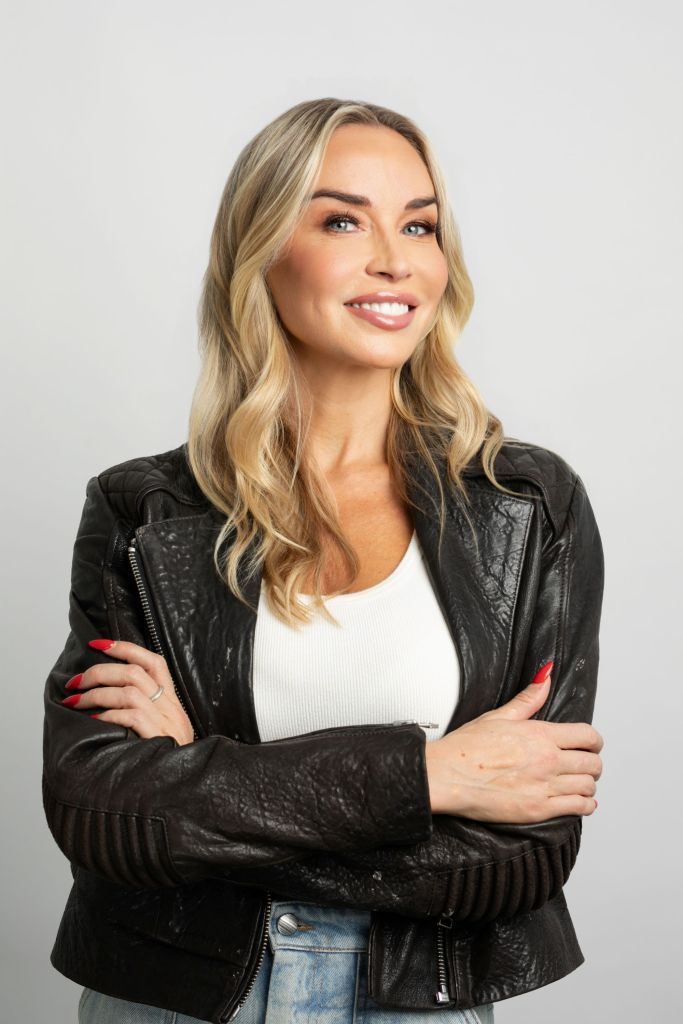
Noelle Reno, founder
Opinions expressed by Entrepreneur contributors are their own.
You're reading Entrepreneur United Kingdom, an international franchise of Entrepreneur Media.
Noelle Reno, founder of The Cercle, is bridging the gap between family offices and the founders shaping frontier technologies. Through a referral-led network spanning more than 120 family offices worldwide, she is creating new pathways to high-conviction investment opportunities across AI, blockchain and deep tech. In this interview, Reno discusses the future of private capital, the infrastructure underpinning AI’s growth and how the next generation of wealth is redefining investment.
What made you build The Cercle in the first place?
I saw a clear gap: private capital and frontier technologies were moving on parallel tracks when they desperately needed to converge. Family offices (FOs) traditionally rely on a proven pattern of behavior—clubbing up on deals where a peer with deep vertical expertise leads the underwriting and shares allocation. But in frontier themes, traditional networks fall short. FOs need to broaden their reach to find net-new, tech-native family offices that possess true signal, technical fluency, and direct access. The Cercle bridges this gap. We operate in the white space between tech founders, next-gen family leaders, and established principals. We facilitate exceptional deal flow through founding generations who understand these technologies deeply—many of whom also come from multi-generational wealth. We aren’t a traditional network; we’ve built an authentic, high-performing culture purely on referral. We’ve onboarded over 120 family offices across Asia, the GCC, Europe, the UK, and the US, with member demand and high-conviction opportunities continuing to compound. This evolved organically from my own network. As an early Web2 exited founder, my FO peers would gather around villa tables or on yachts to ask me about social networks and marketplaces. When I began working with the founding partner of Tether, the conversations shifted to digital assets. The Cercle simply platforms and structures these high-level, honest interactions. We are building sequentially and with absolute intent.
What have family offices taught you about how big investment decisions are really made?
It ultimately comes down to two things: relationships and access. Right now, the defining pain point for family offices is figuring out how to underwrite emerging themes. The appetite to allocate is overwhelmingly there, but by the time a deal reaches the Investment Committee (IC), the internal tooling, domain research, and specialized expertise required to underwrite it are missing. That gap is the primary bottleneck. Addressing this is a core focus for us—for example, at our upcoming private gathering at the NYSE on September 29th, we are tackling this exact issue with a select group of members, alongside insights contributed by a16z, Access Ventures, and BTC Now.
What are investors getting wrong about AI right now?
Investing high up the stack at the application layer is inherently risky—major infrastructure platforms will inevitably absorb, replicate, or out-build superficial wrappers. That’s the consensus. But where many misjudge the market is in assuming AI is purely a speculative bubble. AI is fundamentally changing how we build and operate. For the engineers and investors I work with, we are experiencing a golden age of expanded human potential. A founder can now accomplish with AI what previously required an entire engineering team, allowing us to stand up projects with unprecedented speed and build for entirely new verticals. We are seeing incredible leaps in healthcare, advanced manufacturing, dual-use defense, and agritech—where AI systems actively solve real-world crises like labor shortages, supply chain vulnerabilities, and extreme climate pressures. In capital markets, fully autonomous agent-led quantitative strategies are displacing outdated, legacy infrastructure. There is also a false narrative that technologies like AI and blockchain are compete. In reality, they are deeply synergistic and depend on one another. My smartest co-investors and I are focused lower down the stack on critical infrastructure—specifically energy, compute, and critical minerals. As the AI narrative unfolds across private and public markets, demand for compute and the energy required to power it will continue to outpace supply. That is where we have the highest conviction.
As AI moves into robotics and the physical world, what does that mean for investors?
It represents massive operational efficiency for manufacturing, logistics, and mobility. The most forward-thinking industrial family offices are already incubating physical AI technologies internally, knowing that true alpha and defensibility lie in proprietary data and core hardware-software integration. Investors want exposure to category definers—not just for outsized financial returns, but for the strategic insight it brings to their broader portfolios. For example, The Cercle’s first club deal was sourced through a vital member of our network, Ajay Ramchandran of the Kutsa Foundation—a G2 principal and one of the Bay Area’s most successful deep-tech investors over the last 30 years. Ajay and Steve Jurvetson opened an allocation to our network for ZaiNar, a physical AI company they backed from Seed and Series A. ZaiNar synchronizes wireless signals to track any object or entity with sub-millimeter precision. It provides the central source of truth for spatial mapping and positioning that autonomous systems require to navigate the physical world safely. Regardless of which humanoid robotics platform ultimately dominates the market, they will all rely on this underlying infrastructure. That is the ultimate “picks and shovels” play my families seek.
When everyone has access to the same information, what makes investors trust one person over another?
The premise assumes information is democratized, but it isn’t. We still live in a world defined by information asymmetry. Those with unique, proprietary access to real-time insights and high-signal networks will always generate the highest returns. Trust comes down to proven alignment and origin. The entire ethos of The Cercle is giving top family offices direct access to the asymmetrical insights held by the founders and investors actually shaping these industries, allowing our members to co-invest alongside true domain experts rather than relying on second-hand market noise.
What will the next generation of family wealth do differently?
The next generation has observed the failure modes of previous market cycles. They bring an inherent sense of stewardship to capital allocation, guided by a desire to build systems that yield sustainable, long-term impact rather than asymmetric rewards for a select few. Universally, this next generation deeply seeks to connect with one another and possesses a natural collaborative spirit—the true gap has simply been finding each other within a trusted, high-signal environment. They are thinking deeply about systemic themes like longevity, economic inclusion, and climate resilience—representing a fundamental step-change from traditional wealth management models. Above all, they are not only tech-native, but actively building with these tools today—implementing them directly within the family office structure and across their operating companies to drive modern value creation.
What are you seeing in finance that prompted you to create Future of Finance?
I regularly host closed-door sessions globally—in Abu Dhabi, Hong Kong, New York, and London—for highly ambitious, low-profile decision-makers. Over time, I’ve been invited to host these hyper-curated rooms alongside major global platforms like Anthony Scaramucci’s SALT, ADFW (ADGM), and Davos. I created Future of Finance because large conference halls lack the intimacy required for high-stakes capital deployment. There is an acute need for tight, highly curated environments where meaningful relationships can form that extend well beyond a conference week. While The Cercle focuses on family offices, Future of Finance brings together single family offices, multi-family offices, sovereign wealth leaders, and key institutional figures to shape broader capital markets through these emerging technologies. We are launching this platform in Singapore on October 6th, ahead of Milken Asia, Token2049, and the Grand Prix. By pairing principal allocators directly with the builders pioneering these new categories, demand has far outpaced our capacity—which signals that we are addressing a very real void in the market.
Noelle Reno, founder of The Cercle, is bridging the gap between family offices and the founders shaping frontier technologies. Through a referral-led network spanning more than 120 family offices worldwide, she is creating new pathways to high-conviction investment opportunities across AI, blockchain and deep tech. In this interview, Reno discusses the future of private capital, the infrastructure underpinning AI’s growth and how the next generation of wealth is redefining investment.
What made you build The Cercle in the first place?
I saw a clear gap: private capital and frontier technologies were moving on parallel tracks when they desperately needed to converge. Family offices (FOs) traditionally rely on a proven pattern of behavior—clubbing up on deals where a peer with deep vertical expertise leads the underwriting and shares allocation. But in frontier themes, traditional networks fall short. FOs need to broaden their reach to find net-new, tech-native family offices that possess true signal, technical fluency, and direct access. The Cercle bridges this gap. We operate in the white space between tech founders, next-gen family leaders, and established principals. We facilitate exceptional deal flow through founding generations who understand these technologies deeply—many of whom also come from multi-generational wealth. We aren’t a traditional network; we’ve built an authentic, high-performing culture purely on referral. We’ve onboarded over 120 family offices across Asia, the GCC, Europe, the UK, and the US, with member demand and high-conviction opportunities continuing to compound. This evolved organically from my own network. As an early Web2 exited founder, my FO peers would gather around villa tables or on yachts to ask me about social networks and marketplaces. When I began working with the founding partner of Tether, the conversations shifted to digital assets. The Cercle simply platforms and structures these high-level, honest interactions. We are building sequentially and with absolute intent.
What have family offices taught you about how big investment decisions are really made?
It ultimately comes down to two things: relationships and access. Right now, the defining pain point for family offices is figuring out how to underwrite emerging themes. The appetite to allocate is overwhelmingly there, but by the time a deal reaches the Investment Committee (IC), the internal tooling, domain research, and specialized expertise required to underwrite it are missing. That gap is the primary bottleneck. Addressing this is a core focus for us—for example, at our upcoming private gathering at the NYSE on September 29th, we are tackling this exact issue with a select group of members, alongside insights contributed by a16z, Access Ventures, and BTC Now.

Patricia Cullen • Features Writer
Entrepreneur Staff